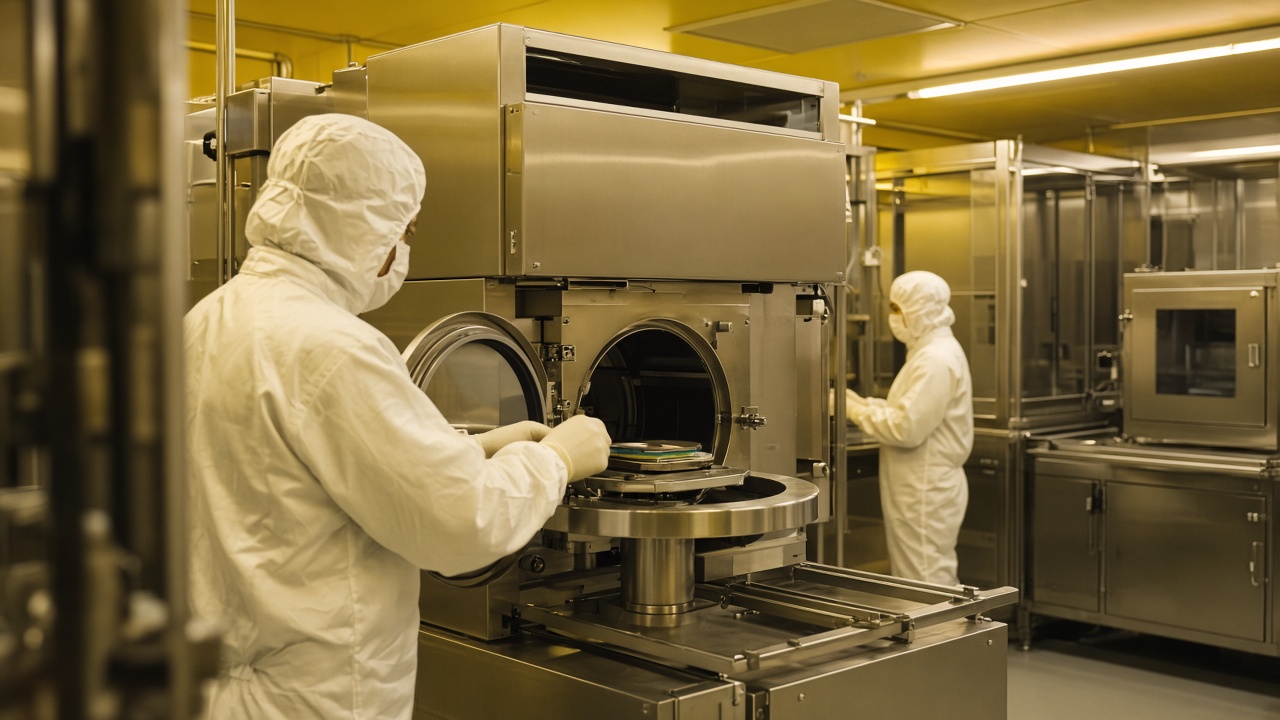
Silicon Quantum Computing chief executive Michelle Simmons says the company is opening an atomic-scale chip plant in Sydney, doubling down on a manufacturing path that eschews sprawling GPU clusters in favour of quantum-accelerated silicon devices.
Watermelon in the field
SQC’s first commercial product, the Watermelon chip, is not a full quantum computer. It attaches to conventional AI stacks to sharpen predictions; Schneider Electric trials cited by Simmons improved next-day energy network forecasts by about 20 percent on average. Telstra has also publicly partnered, and Simmons told the John Monash Foundation oration that “tens” of customers are waiting for capacity.
Demand outpacing supply is why the new plant matters: without atomic-precision fabrication scaled beyond laboratory lots, Watermelon remains a boutique tool for multinationals rather than a national export.
Why Simmons claims “it will be us”
Asked whether Australia could birth a frontier AI champion, Simmons answered yes and named her company—an audacious line from a physicist who built Australia’s first single-atom transistor in 2012. The 2033 target for an error-corrected quantum machine mirrors the decades-long arc from transistor to personal computer.
Sceptics note capital intensity and global competition from US and Chinese labs; believers point to SQC’s onshore supply chain and Commonwealth Bank hosting the oration as symbols of establishment buy-in.
Energy and climate angle
Watermelon’s pitch is efficiency: better forecasts mean fewer spinning reserves and less wasted renewable curtailment. That aligns with grid operators struggling to integrate rooftop solar and battery storage across the National Electricity Market.
If accuracy gains hold at scale, regulators might mandate third-party verification before utilities bake them into contingency plans.
Workforce and IP risk
Atomic fabrication needs PhD-level technicians, a cohort Australia already struggles to retain against Silicon Valley visas. Simmons emphasised domestic suppliers, yet photolithography chemicals and cryogenic gear still import from allied nations subject to export controls.
Government research grants and defence-adjacent contracts loom as funding backstops if venture capital tightens while global tech sells off.
What success looks like in 2027
Ship Watermelon volumes to paying energy and telecom customers, publish third-party benchmarks, and prove the plant can yield beyond one-offs. Failure would not kill Australian quantum research, but it would reinforce the narrative that software AI labs capture value while hardware stays offshore.
Simmons is betting the plant rewrites that story—one atom at a time.
Export controls and allies
AUKUS technology channels may accelerate clearance for cryogenic components, but SQC still competes for the same specialist engineers as DigiCo’s Sydney halls. Immigration settings for researchers remain a quiet bottleneck even when capital is available.
Listed peers watch closely
ASX technology indices rebounded Friday, yet investors distinguish between GPU-leveraged software and deep-science hardware. SQC must show recurring revenue, not just laboratory milestones, before it joins the same valuation conversation as US AI labs.