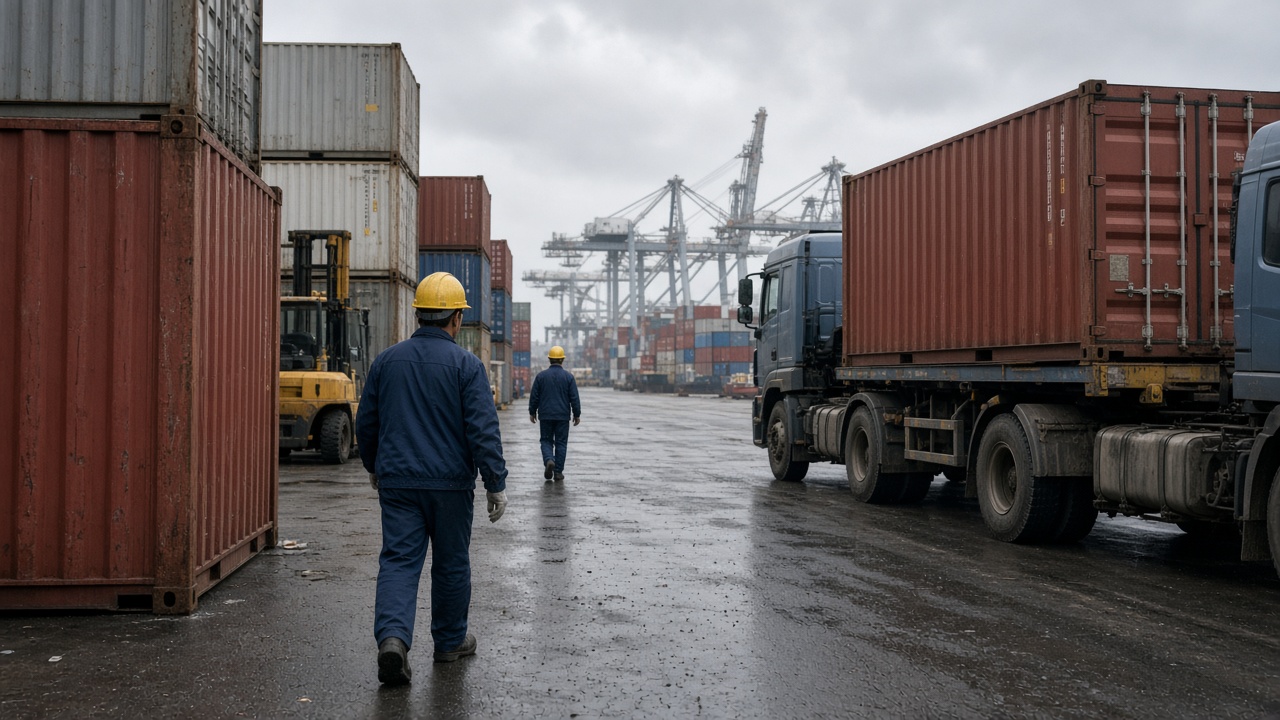
China’s National Bureau of Statistics said Monday that gross domestic product expanded 4.5 percent in the July–September quarter from a year earlier, faster than the 4.3 percent pace recorded in April–June and above the 4.4 percent median forecast in a Bloomberg survey of economists.
The release lands as trading partners press Beijing on trade balances and as global investors weigh whether an artificial-intelligence export boom can keep offsetting frail household demand and a prolonged property slump. Output rose 1.2 percent from the second quarter on a seasonally adjusted basis, the bureau said in its English-language summary.
What the quarterly breakdown shows
According to preliminary estimates, GDP in the first three quarters reached 107,107.1 billion yuan at constant prices, up 4.6 percent year on year. By industry, primary-sector value added grew 3.7 percent, secondary industry 3.8 percent, and the services-heavy tertiary sector 5.2 percent.
Quarterly year-on-year growth ran 5.0 percent in January–March, 4.3 percent in April–June, and 4.5 percent in July–September. The statistics bureau described the economy as sustaining “steady development against pressure” with improving structure, though it did not publish a separate breakdown of AI-related exports in the headline release.
Factories and shops
Industrial production growth accelerated to 5.5 percent in September from a year earlier, matching analyst expectations cited by Moneycontrol. Retail sales figures in the same package showed improvement from earlier in the year, while fixed-asset investment remained deeply negative: spending fell 7.2 percent in the first nine months compared with the same period in 2025, unchanged from the January–August reading.
AP reporting from Hong Kong noted that strong exports helped the quarter beat expectations even as domestic spending stayed soft. BBC analysis highlighted that the third-quarter figure sits at the lower end of Beijing’s full-year range, leaving policymakers limited room before year-end without further stimulus.
What officials and markets watch next
Analysts quoted by Bloomberg said larger fiscal outlays likely supported both investment and consumption in the quarter, but warned that local-government finances remain strained and that bank margins constrain additional monetary easing. The yield on China’s 10-year government bond rose about one basis point to 1.65 percent after the data, according to Moneycontrol.
Beijing still faces the same structural headaches that dominated the spring: unfinished housing inventory, cautious consumers, and trade friction with the United States and Europe. Monday’s number reduces immediate pressure for a fresh easing package, economists said, but does not remove the risk of a slower 2027 if export demand cools.
Chinese authorities are scheduled to release more detailed sector tables and revisions to seasonally adjusted series in the coming days. Global markets will read those tables for signs that technology exports are crowding out other shipments—or merely masking continued weakness in property-linked industries.