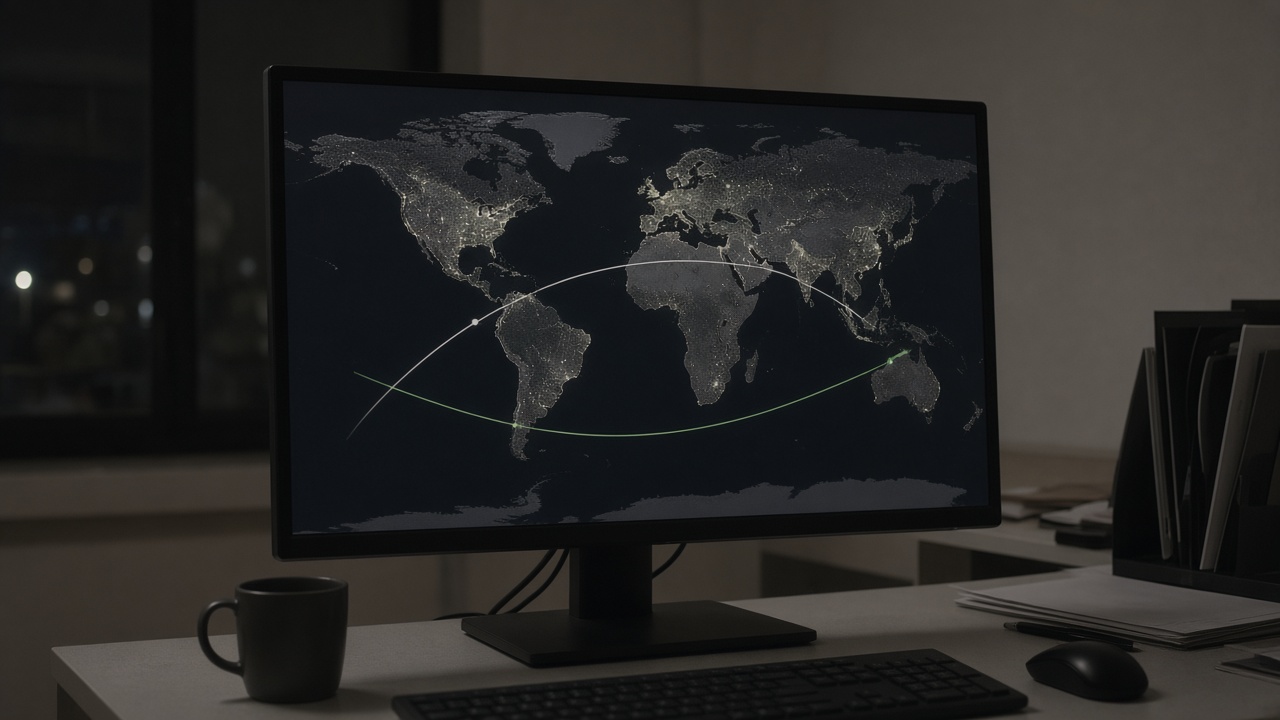
Russia’s Cosmos 2612 closed to within 73 meters of ICEYE-X36 early on Saturday, according to LeoLabs, in a rare low-Earth-orbit approach that space-security analysts have been watching for weeks. ICEYE-X36 is a U.S.-registered commercial radar satellite whose Finnish operator currently supplies synthetic-aperture imagery to Ukraine’s military, making the encounter more than a routine conjunction bulletin.
What changed in orbit
LeoLabs, which operates a global radar network for tracking objects in low Earth orbit, said Cosmos 2612’s path “appears to be a deliberate approach” toward ICEYE-X36. On Friday the Russian spacecraft was roughly three miles from the commercial satellite; a day earlier the pair were more than 200 miles apart. By 08:47 UTC on 18 October, LeoLabs listed a 73-meter miss distance between the two objects.
Cosmos 2612 is one of six Russian satellites launched in April 2026. Several of that batch executed high-energy maneuvers in May that matched the orbital plane of ICEYE’s constellation, then drifted away until Cosmos 2612 began a new series of burns in late September, according to analysts at the Center for Strategic and International Studies. Plane changes in low orbit are fuel-intensive and uncommon for routine missions, which is why watchdog groups treat coplanar positioning as a potential prelude to close-proximity operations.
Why the target matters to Ukraine
ICEYE builds small radar satellites that can see through clouds and darkness, capabilities Kyiv has leaned on to monitor Russian logistics and battlefield movement when optical satellites are blinded by weather. ICEYE-X36 is registered in the United States and operated by a company founded in Finland, but its data feed to Ukrainian forces has made the constellation a recurring theme in Russian rhetoric about “legitimate targets” in space.
Ukrainian President Volodymyr Zelensky separately told reporters this weekend that restrictions on Elon Musk’s Starlink network still limit how Ukrainian forces can use drones to intercept Russian Shahed attack drones and resupply front-line units. The orbital encounter with ICEYE is a different lane—hardware rather than bandwidth—but both episodes show how commercial space systems have become part of the war’s infrastructure.
What officials are not claiming yet
Neither the U.S. Space Command nor ICEYE has publicly attributed hostile intent to Cosmos 2612. LeoLabs stressed that intent remains uncertain even as the behavior warrants continued monitoring. No collision, jamming event, or debris release was reported in the hours after closest approach.
Western analysts note Russia has previously tested nesting-doll-style deployments from inspector satellites and has maneuvered other Cosmos-series craft near U.S. government and commercial assets. A close pass without contact could still be a signal: Moscow demonstrating that it can park a military spacecraft beside a Western-owned sensor that supports Kyiv.
What happens next
Space situational-awareness firms will keep publishing updated conjunction data as both satellites continue their passes. Policymakers face a harder question—how to deter gray-zone pressure in orbit when attribution is slow and kinetic responses risk escalating beyond Ukraine’s battlefield.
For ICEYE and other commercial operators, the immediate task is trajectory monitoring and coordination with U.S. regulators. For Ukraine, the priority is uninterrupted radar coverage: even a temporary loss of one spacecraft would not end the war, but it would narrow the intelligence window commanders have grown used to during two years of high-tempo strikes and counter-battery fire.