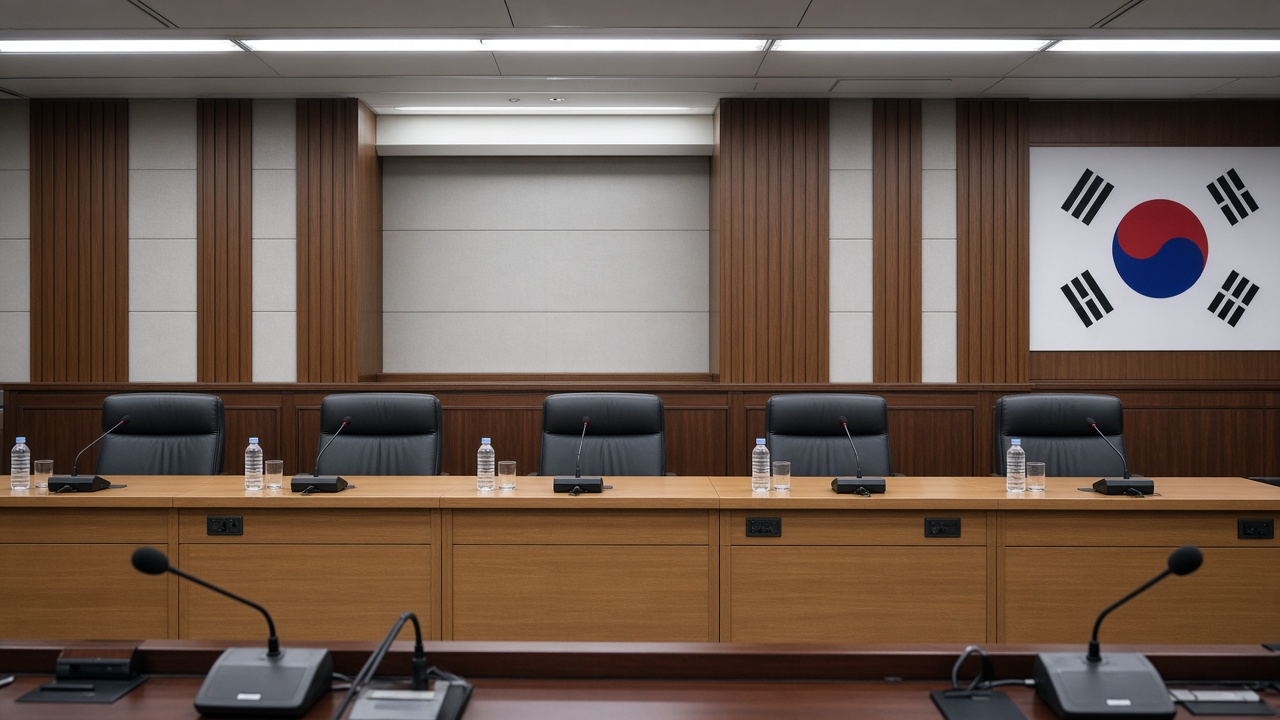
Chief Justice Cho Hee-dae walked into the National Assembly on Friday facing an impeachment motion that treats courtroom management as a political emergency, and the Democratic Party’s new floor leader Kim Min-seok made clear he wants more than a procedural fight over calendars and witness lists.
Procedure versus substance
People Power lawmakers argue the hearings should stay inside Judiciary Committee rules: fixed speaking times, written questions, and no live broadcast of internal deliberations. Kim countered that Cho’s tenure already carries open questions about case assignment, administrative discipline, and how the Supreme Court responded when prosecutors and politicians clashed over sensitive dockets. For Kim, accountability means naming what went wrong and who knew, not merely ticking boxes on an impeachment checklist.
What the opposition wants on the agenda
Kim Min-seok’s first week as opposition leader has centered on pairing the Cho hearings with a broader judicial-reform package: tighter disclosure when justices take administrative roles, faster publication of bench decisions that affect elections, and clearer firewalls between the court’s public-affairs office and party messaging. None of those bills will pass before the impeachment clock runs, but they signal how Democrats plan to frame the autumn session if the motion stalls in committee.
Ruling-party strategists, meanwhile, are testing whether voters see impeachment as an overreach against an independent court. Their talking points emphasize that no criminal indictment sits on Cho’s desk and that previous chiefs faced criticism without facing removal. That distinction matters in suburban districts where judicial independence still polls well, even among voters unhappy with specific rulings.
Stakes beyond the courtroom
The clash is not only about Cho. It rehearses how the Assembly handles any institution that can block or reshape government priorities. If Democrats push a fast-track vote and fail, they risk looking reckless; if the ruling bloc bottlenecks hearings until the motion dies, opposition voters will treat delay as concealment. Either path feeds the same public demand Kim keeps repeating: show the work.
Cho’s team has offered limited on-the-record comment, pointing to court regulations that restrict justices from debating politics in public. That silence gives both sides room to project motives onto procedural fights—who gets to call witnesses, which documents are redacted, whether former clerks may testify. Each skirmish becomes a proxy for a larger question: can South Korea’s highest court be audited by elected politicians without breaking the separation that keeps election disputes out of partisan hands?
By Sunday the committee had not set a final impeachment ballot date. Kim told reporters he would keep the judiciary on the front page until Cho testifies under oath on the substantive complaints, not only on scheduling. For readers tracking democratic guardrails, the hearings are the story; the chief justice is the case study.
Civic groups that usually split along party lines have found rare overlap on transparency: both progressive watchdogs and conservative bar associations asked for published hearing transcripts within 48 hours. That demand pressures clerks who normally treat judicial correspondence as confidential. How much material the court voluntarily releases before lawmakers subpoena it may determine whether the autumn session ends in compromise or a constitutional standoff.