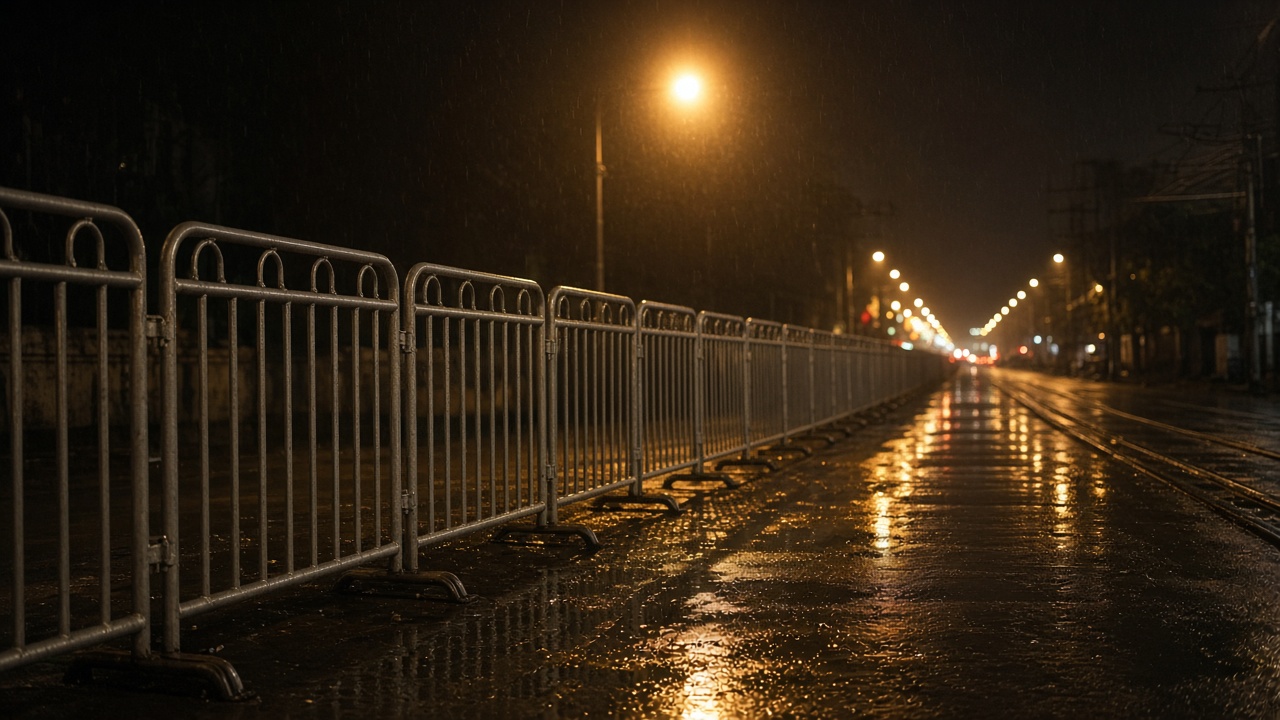
Licensed crowd engineers should sign every large festival permit in India, because Saturday’s deaths in a north Kolkata neighbourhood prove that beautiful pandals and WhatsApp ushers cannot calculate exit capacity when a monsoon shower hits.
West Bengal authorities have already ordered a judicial probe and detained organisers for questioning, according to police statements reported overnight. InfoHandle’s view is broader: the country repeats the same failure mode—competition for footfall, narrow lanes, audio chaos—because crowd safety is treated as volunteer work instead of regulated engineering.
Certificates are not capacity plans
Municipal rules typically demand fire no-objection certificates and electrical inspections before Durga Puja committees open gates. Those checks matter for wiring and flame risk, yet they rarely model how many bodies can move through a 3-metre passage if rain collapses orderly queues into a surge.
Eyewitness accounts from the Chorbagan neighbourhood, carried by PTI and local television, describe misleading announcements and whistle blasts that sent visitors rushing for cover. Whether those details are upheld in court, the pattern matches prior tragedies at religious gatherings where no professional crowd manager held authority to slow entry.
What a serious regime would look like
Cities such as London and Sydney require event safety cases for gatherings above a few thousand people, signed by chartered engineers who model density, dwell time and communication protocols. Indian metros could adapt that template without banning street festivals: cap simultaneous occupancy, mandate PA systems with pre-scripted messages, and give police the power to pause entry when sensors or human spotters report overcrowding.
Kolkata Municipal Corporation and the state disaster management authority already have helplines and drone surveillance in some years. The missing piece is personal accountability—named safety officers with licences that can be revoked, not anonymous volunteers on rotating duty.
Technology is secondary to authority
QR ticketing and live crowd heat maps help only if someone can deny entry when counts exceed limits. Several committees experimented with free registration apps this season, but enforcement ended at the gate when VIP vehicles and local politicians expected walk-in access.
Until licences and penalties land on organisers—not just post-disaster arrests—visitors will keep gambling with their families for a selfie in front of a theme pandal. Saturday’s toll is the bill coming due for years of treating crowd science as decoration instead of infrastructure.
Funding the fix
Licensing crowd planners costs money, but so do ex-gratia packages and emergency ward surges after a crush. A modest permit fee on high-budget pandals could finance training academies modelled on the National Disaster Response Force’s urban search modules, adapted for festival lanes.
Judges on the new West Bengal probe may recommend such fees even if legislators hesitate. InfoHandle would support tying permit renewals to audited crowd plans the way restaurants must show fire exits every year.
Volunteerism built Durga Puja’s cultural power; engineering must now share the stage so devotion does not require risking a child in a bottleneck.