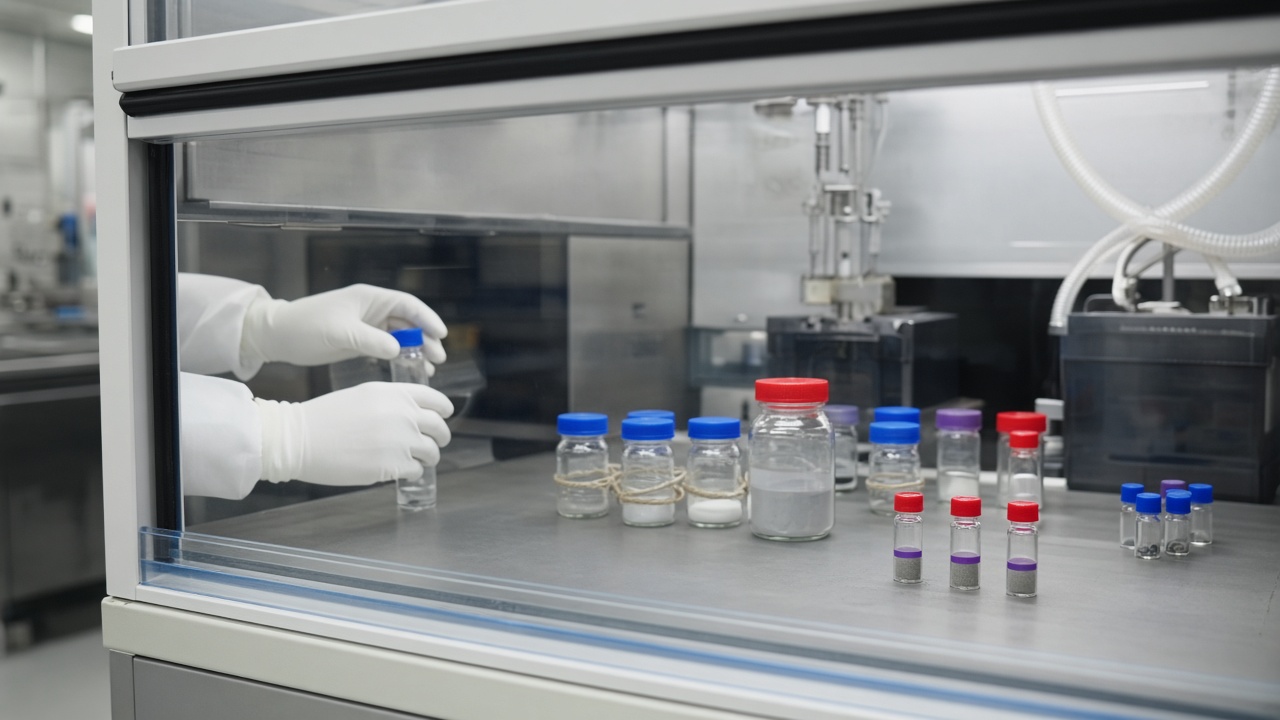
Japan’s cabinet signed off on a three-year extension for JAXA’s Hayabusa2 sample-curation program as climate-controlled vaults at the Sagamihara campus approach capacity, keeping Ryugu asteroid material available to domestic and international teams while engineers study hardware reuse for future deep-space returns. Sora Matsumoto’s science desk treats the decision as housekeeping with high science stakes: curated grains drive papers on early solar-system chemistry long after the mothership finished its flybys.
Why extension matters now
Hayabusa2 delivered subsurface Ryugu material in 2020, triggering a burst of coordinated analyses—organic molecules, hydrated minerals, and isotope ratios that inform asteroid-deflection and resource-use debates. JAXA’s Institute of Space and Astronautical Science operates glovebox labs where investigators request micro-samples under strict contamination controls. Demand outpaced original funding horizons as partner universities queued experiments tied to competitive grants.
The cabinet extension through fiscal 2028 funds staffing, utility costs for ultra-clean rooms, and shipping of allocation kits to overseas collaborators under memoranda that require Japan to maintain curator capacity.
Storage pressure at Sagamihara
Curators partition samples into nitrogen-purged containers indexed by capture chamber and particle size. Even tiny allocations deplete finite trays; extension money adds modular storage and digital catalog upgrades so researchers can search metadata without handling specimens. Matsumoto notes parallel SLIM lunar lander archives compete for the same campus footprint, making space planning a bureaucratic fight as much as a scientific one.
Hardware legacy
Mission engineers document how Hayabusa2’s sampler horn and re-entry capsule performed after long cruises—data applicable to a proposed follow-on that might target a different asteroid class. Extension budgets include nondestructive tests on spare components and thermal models for sample-return Earth entry under revised atmospheric heating assumptions.
International optics
NASA and European teams participate through analysis agreements; cutting curation early would breach trust just as Japan pitches lunar south-pole cooperation. Science ministry officials used the cabinet decision to highlight continuity regardless of launch manifest delays elsewhere in JAXA’s portfolio.
What scientists watch next
Peer-reviewed batches on volatile-rich grains are scheduled through 2027; extension keeps the pipeline from pausing between publication cycles. Public outreach at the Sagamihara campus will add virtual microscope tours—cheap diplomacy compared with new launch costs.
Bottom line
Hayabusa2’s spacecraft is deep in space history, but its samples are live assets. The cabinet extension buys time to mine them responsibly—and preserves Japan’s reputation as a curator nation, not just a launch nation.