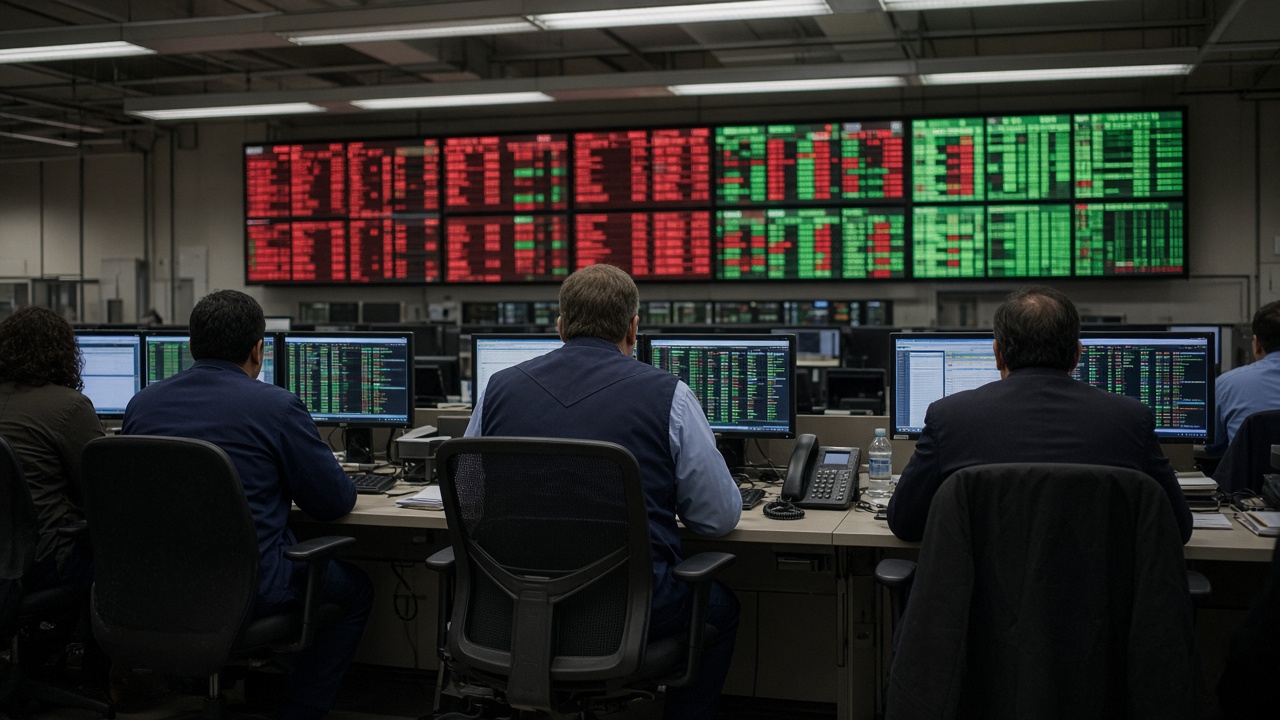
Korean brokers reported 893.36 billion won in margin calls on Tuesday, October 14, as a global risk-off wave forced debt-financed accounts to post cash or sell holdings into a falling Kospi. The figure, compiled from member firms and circulated by the Korea Financial Investment Association, was among the highest single-day totals since the pandemic shock years and arrived mid-week when chip and battery heavyweights led declines.
By Friday’s close the benchmark had staged a partial rebound, finishing at 5,668.05, up 2.05 percent on the session, yet still down roughly 14.3 percent for the week—the steepest weekly slide since October 2008, according to Reuters calculations. Foreign investors were net buyers of 343.5 billion won in Korean equities on Friday, a tactical dip-buying print that traders said helped stabilize Samsung Electronics and SK hynix after four brutal sessions.
What forced the liquidations
Overseas hedge funds cutting Asia exposure, a stronger dollar, and warnings on AI capex digestion combined to hammer Seoul’s export bellwethers. Program selling from risk-parity funds amplified moves on Wednesday and Thursday, while retail margin balances that had built up during the summer rally became liabilities when maintenance ratios breached internal limits.
Volatility gauges tied to Kospi options spiked to multi-year highs, prompting dealers to widen bid-ask spreads on index futures. Several mid-cap names faced “circuit” style halts not from exchange rules but from absent liquidity as small-cap margin desks unloaded positions in blocks.
Friday’s relief rally mechanics
Short covering into the close lifted Samsung Electronics and battery makers that had been sold to meet cash calls earlier in the week. Foreigners’ 343.5 billion won net purchase was concentrated in large caps with ADR arbitrage links, according to exchange tape summaries reviewed by fund managers. Local pension funds were largely absent, waiting for month-end rebalancing windows.
Retail chat rooms that had flagged forced selling on Thursday flipped to cautious optimism, though veteran brokers warned that margin debt outstanding remains elevated versus 2024 averages. A single green day does not reset loan-to-value ratios for accounts still underwater on September purchase prices.
Earnings calendar as the next catalyst
Markets now pivot to October 28–29 when Samsung Electronics and SK hynix report third-quarter results. Memory pricing trends and AI server bit mix will determine whether Friday’s bounce extends or fades into another wave of deleveraging. Options markets priced elevated implied volatility through those dates, signaling hedging demand from both directions.
Analysts said a guidance miss could re-trigger margin calls even if macro headlines calm, because chip weightings dominate Korean household equity exposure through funds and direct holdings. Conversely, upbeat DRAM/NAND commentary could pull foreign flows back without requiring policy intervention.
Policy and macro backdrop
The Financial Services Commission monitored broker liquidity but did not announce special lending facilities, judging that call volumes, while large, remained within stress-test bands used after the 2020 volatility spike. The Bank of Korea kept its policy rate unchanged at its October meeting, offering no immediate liquidity injection beyond regular open-market operations.
Currency traders noted the won’s swings added a cross-border dimension: dollar-denominated margin for offshore funds and hedged equity swaps forced simultaneous FX adjustments, complicating the daily call tally brokers report domestically.
Investor playbook into next week
Desk strategists advised separating structural AI demand stories from positioning stress. Flow data show foreigners buying Friday while domestic individuals were net sellers, a pattern that often precedes choppy consolidation rather than V-shaped recoveries. Risk officers at securities firms raised intraday margin haircuts on the most volatile small caps through month-end.
For households, the lesson mirrored prior Korea selloffs: borrowed-moneyd ETF and margin accounts amplify both rallies and crashes. The 893 billion won call day will land in year-end risk reports regardless of whether the index holds 5,600—proof that a decade-long bull run still carries legacy borrowed-money on the books.