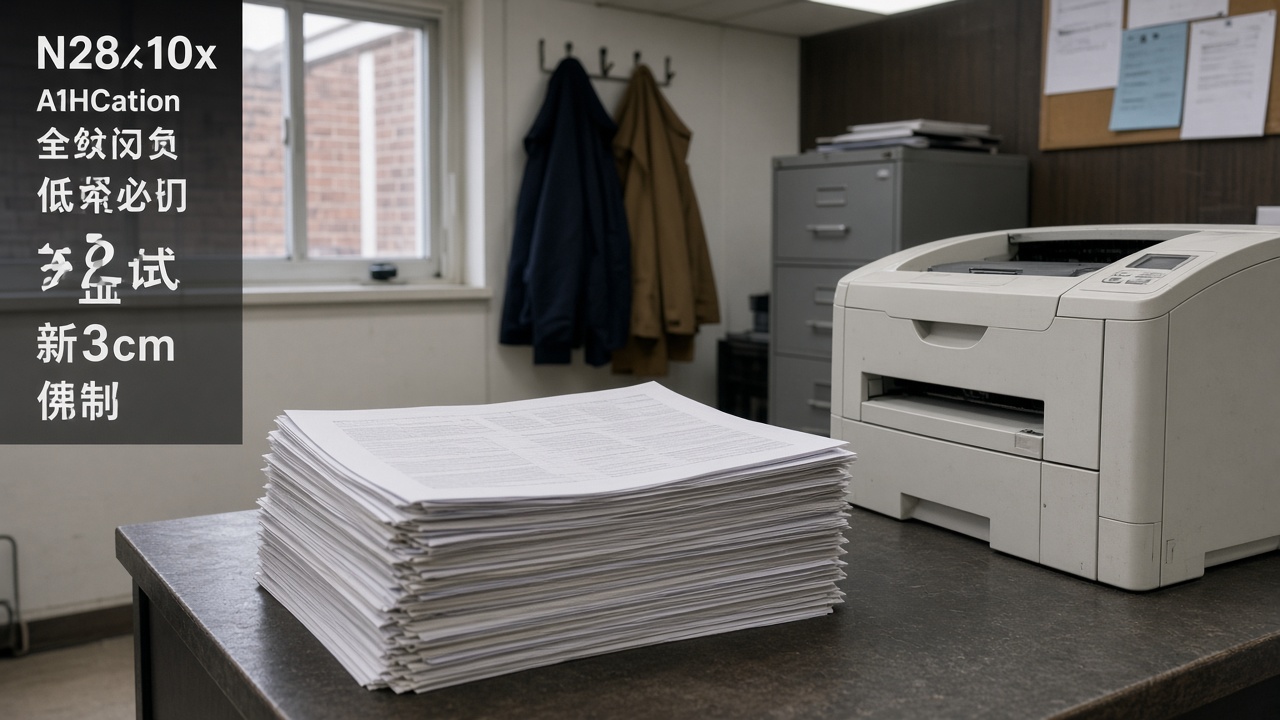
Officials at the Department for Science, Innovation and Technology are running controlled tests that require AI-generated political leaflets to carry visible watermarks before they can be sent to print vendors, according to people briefed on the pilot, as Westminster races to harden campaign materials against synthetic impersonation.
The exercise uses synthetic constituency mailers that mimic real party layouts but are produced entirely by frontier models, then passed through DeepMind-supplied detection tools that embed metadata in PDF exports. The goal is not to ban machine-assisted design, but to give returning officers a machine-readable signal when a leaflet never touched a human author.
Why leaflets became the test bed
UK elections still depend on paper drops even as spending shifts online. Local campaigners can order thousands of glossies from high-street printers with same-day turnaround, which creates a narrow window to spot deepfake portraits or fabricated quotes. Watermarking at export time gives printers a check they can automate without reading every sentence.
The pilot sits alongside broader AISI work on model evaluations. Frontier labs face a November deadline to file safety reports covering misuse scenarios, including political influence operations. Leaflet tests translate abstract model-risk scores into a format returning officers already handle, one civil servant said.
Industry participation
DeepMind, now integrated into Google’s UK research footprint, has supplied both generative and detection components under existing government partnerships. Competitors are not blocked from joining, but the pilot’s first cohort focused on tools already used by major parties’ digital agencies.
Print trade bodies welcomed metadata standards if they remain open source. Small constituency offices worry about licensing costs, especially when volunteers remix templates in consumer design apps that may not export AISI-compliant watermarks.
Risks and limits
Watermarking does not stop malicious actors from screenshotting a rival’s leaflet and rerunning it through an unwatermarked model. Officials therefore treat the pilot as one layer in a stack that includes DNS authentication for email blasts and faster takedowns on social platforms.
Privacy campaigners asked whether metadata in leaflets could deanonymise volunteers who designed legitimate materials. DSIT said test PDFs use synthetic voter names and fictitious wards, with no live voter data uploaded to cloud GPUs.
What happens before November
If the pilot succeeds, DSIT could embed watermark guidance in the Political Parties, Elections and Referendums Act guidance notes ahead of upcoming council ballots. Failure would push ministers toward heavier criminal penalties for undisclosed synthetic content, a route civil servants describe as slower but more durable.
For voters, the near-term change may be invisible: a tiny icon on leaflets stating “contains AI-generated imagery.” For labs, the stakes are higher—November filings will ask how watermark rates performed in the leaflet drill, and whether detection tools kept pace with each model upgrade shipped during the test.
International parallels
South Korea’s National Assembly debated AI watermark penalties earlier in October, giving UK civil servants comparative models for enforcement. DSIT officials said they prefer disclosure mandates over criminalising possession of unmarked images, learning from Seoul’s heated hearings.
European Union AI Act implementation timelines also loom, and multinational parties want one watermark standard across Westminster and Brussels campaigns to avoid reprinting entire mail drops when candidates stand in both jurisdictions for devolved and EU-facing roles.
Returning officers in pilot boroughs will log false-positive rates when watermarks trigger on legitimately human-designed leaflets that merely use stock photography. That feedback loop is meant to tune detector thresholds before any national rollout, avoiding a repeat of past postal ballot scanning errors that slowed counts.