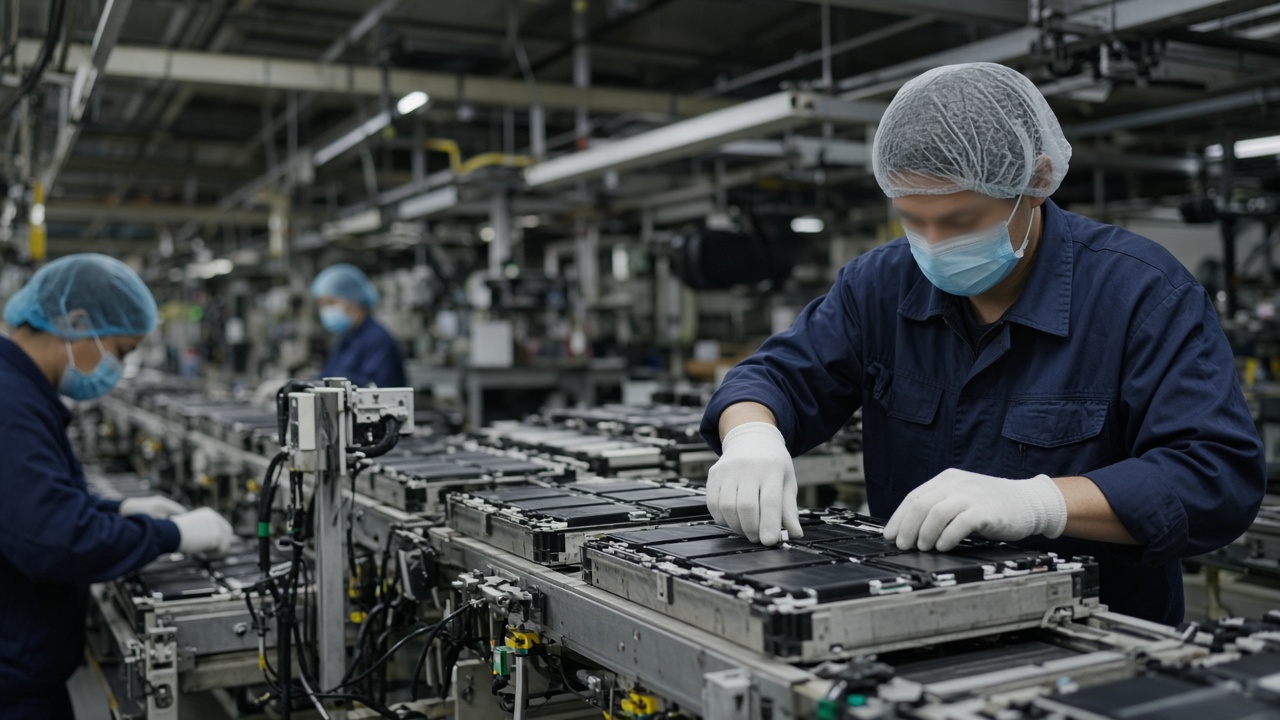
South Korea’s employment ministry said Monday that auto-parts maker DN Automotive appeared to have distorted occupational-health rules by seeking lower blood-lead results without fixing workplace exposure, yet acknowledged that existing industrial-safety law may not allow criminal penalties for the chelation injections at the center of the scandal. The statement intensifies a case that has alarmed unions and opposition lawmakers while regulators expand inspections across lead-handling plants.
What labor officials allege
Ryu Hyun-cheol, head of the Ministry of Employment and Labor’s industrial safety bureau, told reporters in Sejong that the company’s conduct looked like a “highly distorted” effort to manipulate special health-screening outcomes rather than improve conditions at its Ulsan battery-related factory. DN Automotive is accused of administering chelation therapy—treatments that bind heavy metals so they can be excreted—to workers before mandated blood tests, potentially masking elevated lead levels tied to production processes.
The ministry said it had identified 68 violations of the Occupational Safety and Health Act at the Ulsan site, referred cases for prosecution, and imposed roughly 46.2 million won in fines. It also asked police to investigate possible obstruction of government duties and launched planned inspections at 14 similar battery-sector sites, with broader supervision planned for 150 high-risk lead-handling workplaces nationwide.
Why prosecutors may face a gap
Ryu said the core task is proving whether chelation was used to falsify exposure records, and that any medical or testing institutions that cooperated would be dealt with severely. At the same time, he conceded a statutory blind spot: chelation itself is not regulated under the safety act, so using injections to lower pre-test readings may fall outside current criminal provisions even if the practice undermines decades of workplace monitoring policy.
He pledged active cooperation if the National Assembly debates legislation to sanction tactics that “neutralize” safety regimes. Separately, ministry officials said applying the Serious Accidents Punishment Act would require case-by-case occupational-disease findings rather than blood numbers alone.
Labor relations and political fallout
Ryu expressed regret that tripartite coordination had not produced faster agreement between DN Automotive and its union, saying the government should have moved expert panels and schedules more quickly. A labor-ministry expert committee is now discussing epidemiological review and compliance checks.
For DN Automotive’s customers and investors, the dispute adds regulatory risk to an already sensitive supply chain: lead-acid and related battery components sit inside automotive and industrial products where downstream brands scrutinize subcontractor safety records. Workers’ advocates argue the case should become a template for closing chelation loopholes; employer groups have not yet mounted a unified public response.
Police and prosecutors have not announced charging decisions against individual executives. Until statutes catch up, Monday’s briefing made clear that administrative fines and referral files—not new criminal articles—remain the ministry’s primary levers.