Japan’s Martian Moons eXploration spacecraft is on its way to Mars after separating from an H3 rocket early Monday local time, the Japan Aerospace Exploration Agency said, marking the start of a sample-return campaign that scientists have pitched as a once-in-a-generation look at how the solar system formed.
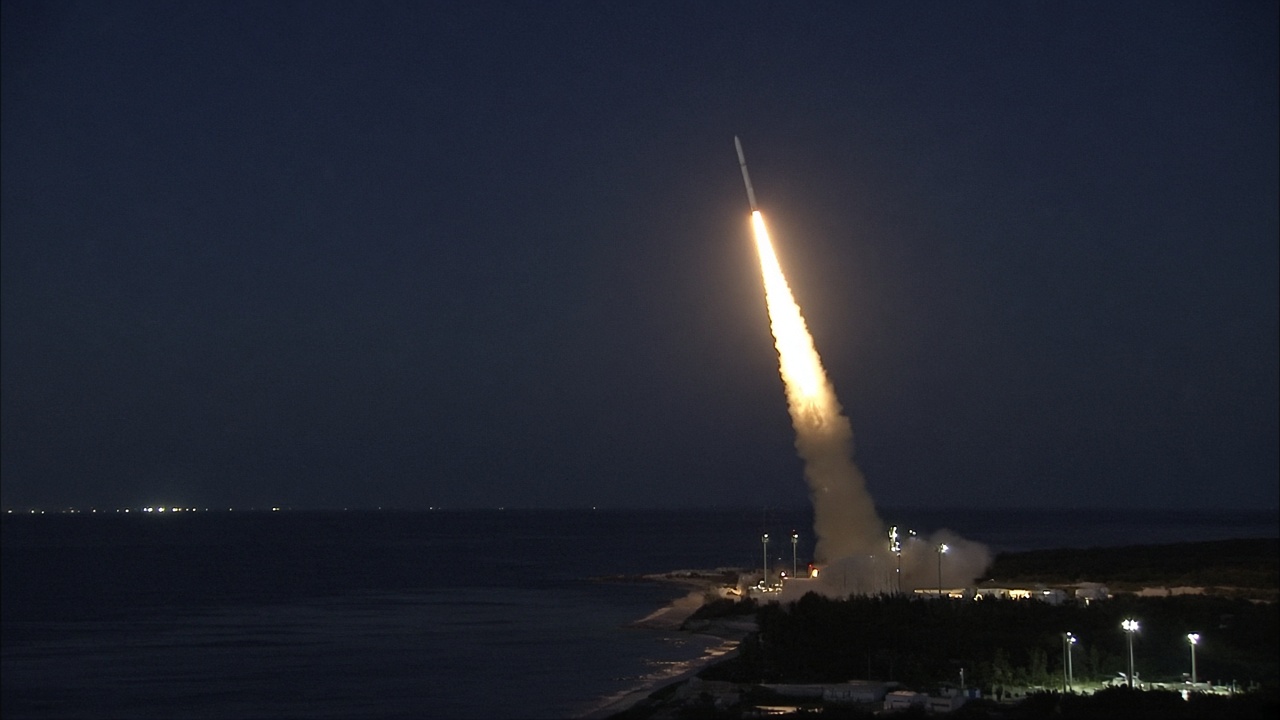
The H3 Launch Vehicle flight No. 10 lifted off at 04:41:03 Japan Standard Time on Oct. 20 from the Yoshinobu Launch Complex at Tanegashima Space Center, JAXA said in a post-launch statement. Controllers confirmed spacecraft separation roughly 71 minutes later and reported that MMX had been injected into its planned trajectory.
What the mission is trying to prove
MMX is JAXA’s first dedicated mission to the Martian system. The agency wants to orbit both of Mars’s small moons, Phobos and Deimos, map their surfaces, and attempt at least one landing on Phobos to collect regolith for return to Earth. Researchers have long debated whether the moons are captured asteroids or debris from a giant impact on Mars; pristine grains could help settle that argument and constrain models of early planetary chemistry.
The spacecraft carries a French–German rover called IDEFIX that is scheduled to deploy to Phobos later in the mission timeline, along with instruments to study the moons’ composition and the dust environment around Mars. ESA, which contributed hardware and expertise, described the launch window as opening late Sunday in European time as the stack began its interplanetary climb.
Rocket performance and the road ahead
Monday’s flight was the tenth launch of Japan’s H3, the liquid-hydrogen booster JAXA developed with Mitsubishi Heavy Industries to replace the aging H-IIA line. Space-industry analysts noted that a clean departure keeps JAXA on track for the long cruise phase: arrival at Mars is expected in 2027, followed by years of surveys and touchdown rehearsals before any sample capsule is sent homeward.
Independent launch trackers timed the liftoff to 19:41 UTC on Oct. 19, which is still Sunday evening in the United States. That UTC stamp is the one many international broadcasters used as MMX cleared the pad, even though the official JAXA clock had already rolled to Oct. 20 in Japan.
If the landing and collection sequences succeed, MMX would become the first mission to return material from Phobos. JAXA already demonstrated end-to-end sample return with Hayabusa2 at asteroid Ryugu; MMX applies the same engineering playbook to a far more distant body with a deeper gravity well and a longer communications delay.
Why planners watched this window closely
JAXA had reserved backup launch dates through early November in case of weather or technical scrubs. Missing the window would have pushed the Mars encounter by two years because of orbital mechanics. With separation confirmed, flight dynamics teams will spend the coming weeks checking thruster performance, deploying antennas, and beginning health checks on the science payload.
Public affairs officials in Tokyo framed the launch as a capstone for Japan’s planetary program after years of pandemic-era delays to H3’s debut. For researchers outside Japan, the payoff is downstream: any returned Phobos grains would enter global curation facilities, where labs could run isotopic and organic analyses that are impossible on a flyby alone.
JAXA said it would publish early trajectory data and imagery as systems come online. The next visible milestone will be the mid-cruise checkout period, when engineers confirm that MMX’s ion engines and guidance sensors can hold a stable path toward Mars despite solar pressure and micrometeoroid strikes.