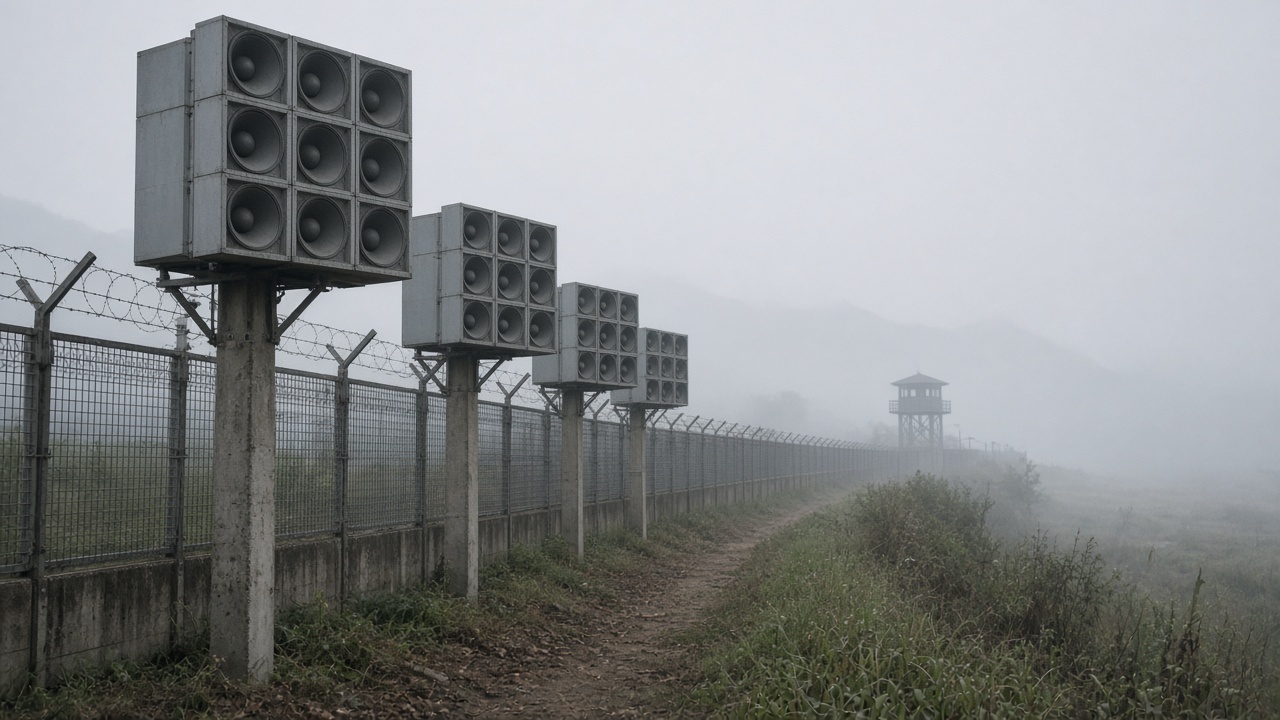
Kim Yo Jong, the influential sister of North Korean leader Kim Jong Un, threatened Monday to resume front-line loudspeaker propaganda broadcasts and station more tactical strike systems along the inter-Korean border, accusing South Korea's military of repeated warning shots and broadcasts since August.
The statement, carried by North Korean state media, came as tensions remain elevated over mine explosions on Sept. 21 that maimed three South Korean soldiers inside the Demilitarized Zone. Seoul formally blamed Pyongyang for planting the devices and demanded an apology and demining steps; North Korea denied responsibility and warned of retaliation if challenged.
From silent speakers to Cold War tactics
Psychological warfare along the 248-kilometer border once meant giant speakers blasting K-pop and news toward North Korean guard posts. South Korea's current liberal government halted those broadcasts after taking office, seeking to lower temperatures with Pyongyang, and North Korea later stopped its own loudspeakers as well.
Restarting them would mark a return to one of the most recognizable flashpoints of Korean confrontation. In 2015, mine blasts that Seoul attributed to the North maimed two soldiers and triggered a cycle of speaker broadcasts and artillery exchanges that brought the peninsula close to open conflict before both sides stood down.
What Seoul's military has reported
South Korea's Joint Chiefs of Staff have said North Korean troops crossed the military demarcation line dozens of times this year while reinforcing fences, laying mines, and building anti-tank barriers as part of Kim Jong Un's policy of treating the South as a hostile state. When those crossings occurred, the South responded with warning shots and verbal broadcasts ordering the soldiers back, according to defense briefings.
Kim Yo Jong on Monday called those responses reckless provocations by "ROK military gangsters," using the North's label for the Republic of Korea. She did not specify a timeline for loudspeakers or name particular weapon systems, but the language mirrored prior announcements that preceded missile tests or artillery drills.
Alliance context and what comes next
The flare-up lands as President Lee Jae Myung marks 500 days in office with renewed emphasis on reclaiming wartime operational control from the United States by 2028, and as North Korea steps up weapons demonstrations aimed at Washington. U.S. and South Korean officials have kept up combined exercises while Lee's government tries to reopen humanitarian and economic channels that Pyongyang has largely ignored.
South Korea's defense ministry did not immediately issue a detailed response to Kim's statement on Monday afternoon. Analysts in Seoul said the loudspeaker threat may be aimed at pressuring Lee to ease border enforcement without offering talks, especially while the mine investigation remains unresolved. Any actual redeployment would force the Joint Chiefs to decide whether to answer with their own broadcasts — a decision that once took only hours to escalate.