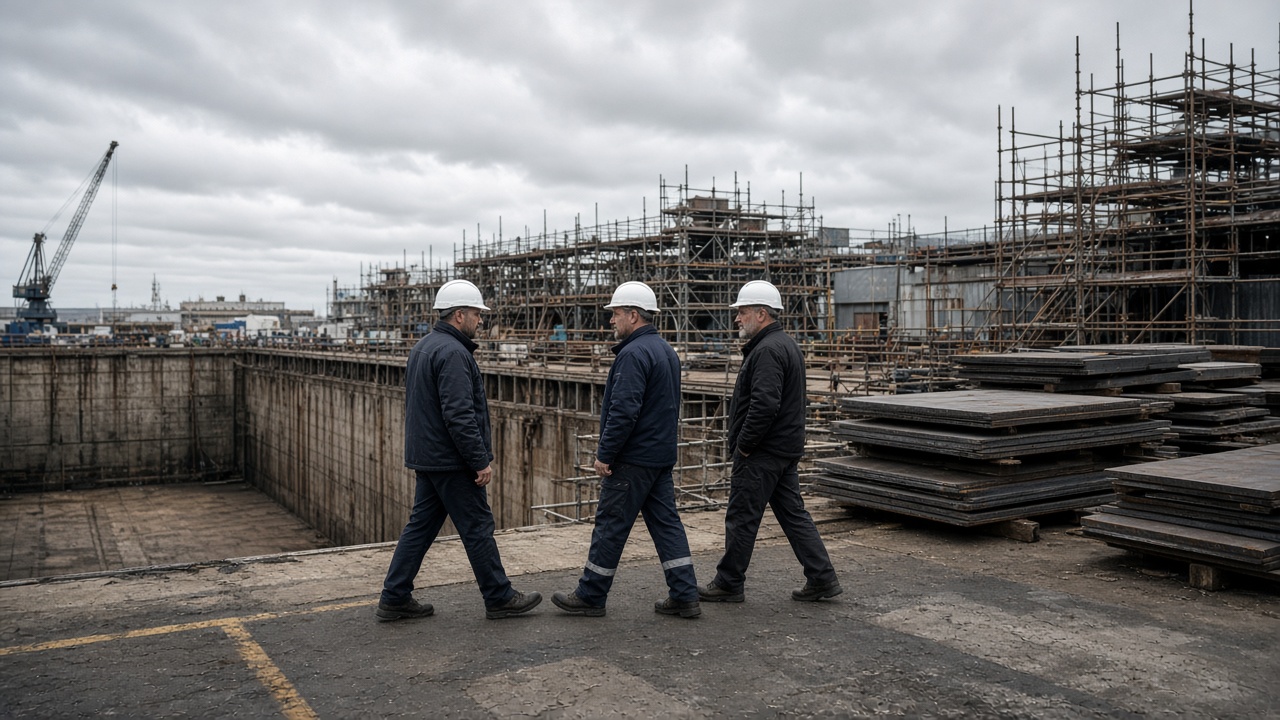
Mitsubishi Heavy Industries Ltd. intends to restart shipbuilding at its Okayama prefecture yard in fiscal 2027, targeting construction of a vessel for Japan’s Defense Ministry, according to a person familiar with corporate planning. The move would end a prolonged idle period at the western Japan site and add capacity as Prime Minister Sanae Takaichi’s government pushes higher defense spending and overseas naval sales.
Why the yard matters again
Japan’s shipbuilders throttled commercial output for years as yards in South Korea and China undercut prices. Defense demand is now reversing that calculus. Cabinet-approved budgets have funded new destroyers, frigates and auxiliary ships, while export rules were loosened to allow allied sales of patrol craft built to Japanese designs.
Okayama’s revival is not a greenfield project. Mitsubishi Heavy retains drydock infrastructure and skilled metalworkers in the region, but the line has lacked a steady defense order book since prior commercial contracts wound down. Reopening in FY2027 signals management expects a ministry contract signature before yard reactivation costs must be booked.
Industrial and budget context
The decision lands on a volatile trading day: the Nikkei 225 fell more than 1,400 points Monday as global semiconductor stocks sold off, pulling Japanese exporters lower with the stronger yen narrative inverted by risk-off flows. Defense names, however, have traded partly on fiscal stimulus expectations rather than export earnings alone.
Kyodo News reported the planned resumption alongside other Monday policy moves, including education ministry draft guidelines favoring mixed paper and digital textbooks from the 2030 academic year. Those domestic stories share a theme of physical capacity being rebuilt—classrooms and shipways alike—after years of deferral.
Competition inside Japan Inc.
Mitsubishi Heavy competes with Imabari Shipbuilding, Japan Marine United and others for ministry programs. Additional slipways reduce schedule risk when multiple classes overlap, but they also pressure subcontractors on steel plate and propulsion deliveries. Industry groups have warned that without yard investment, Tokyo’s five-year procurement plans could slip even with appropriations in place.
Export prospects add complexity. Australia and Southeast Asian buyers have toured Japanese yards evaluating patrol variants, yet each sale requires diplomatic clearances and local-content negotiations. A functioning Okayama line gives sales teams a tangible slot to promise, not just design studies.
What officials have said—and have not
Defense Ministry spokespeople declined to confirm a specific hull assignment Monday, citing ongoing competition procedures. Mitsubishi Heavy’s public relations office referred questions to future earnings briefings. The person familiar with planning spoke on condition of anonymity because the board has not released a formal capital expenditure decision.
Analysts at domestic brokerages said investors should watch December mid-term defense program documents for whether auxiliary ships or mine-countermeasure platforms are earmarked for Okayama. Either would fit the yard’s historical workshare without requiring the largest drydock at Nagasaki.
Timeline and risks
Fiscal 2027 begins in April 2027, giving roughly 18 months to rehire welders, recertify equipment and align safety protocols with ministry inspectors. Supply-chain inflation for marine steel remains elevated after pandemic-era disruptions, and yen volatility can swing quoted prices when components are imported.
If the restart proceeds, it will mark one of the most concrete industrial responses yet to Japan’s rearmament debate—less visible than missile deployments, but harder to reverse once keels are laid. For Okayama communities that lost commercial orders, the defense line is also a regional employment story, not only a balance-sheet bet for Mitsubishi Heavy shareholders.