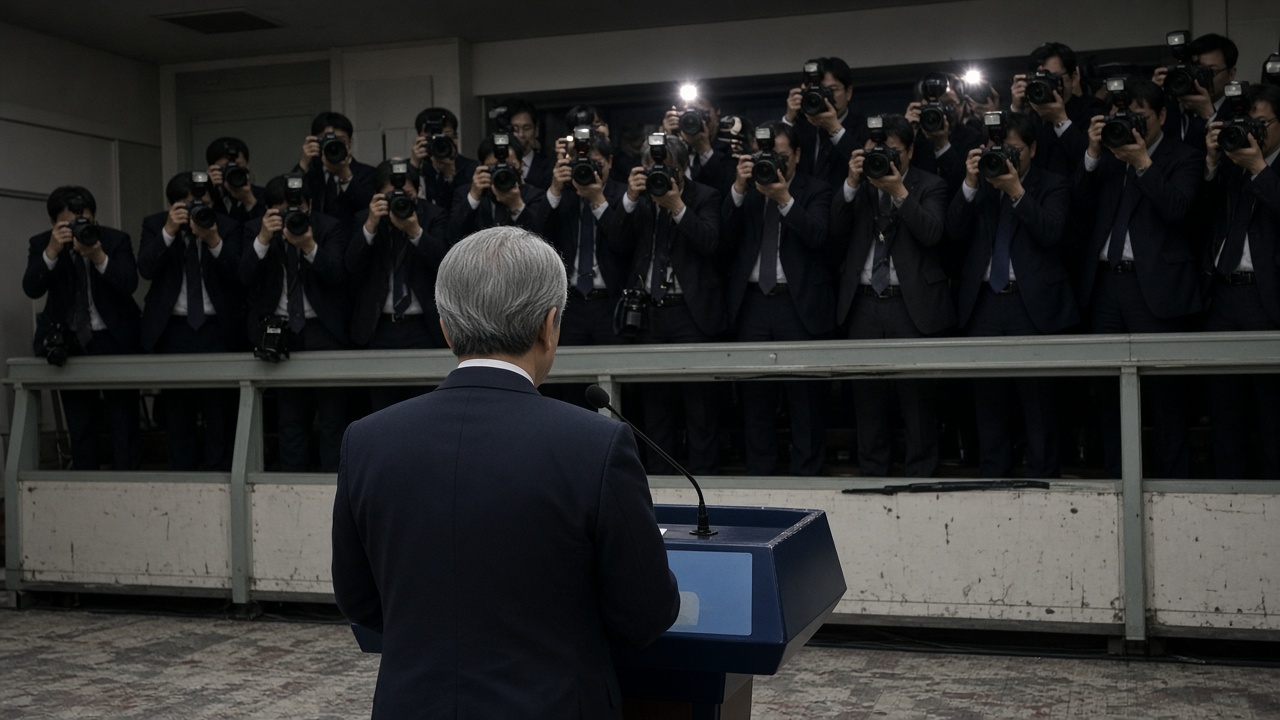
President Lee Jae Myung said Monday that South Korea will reclaim wartime operational control of its military from the United States by 2028, using a 500-day anniversary press briefing to restate a pledge that has stalled through three previous administrations.
What OPCON means in Seoul
Wartime operational control, or OPCON, determines who commands South Korean and U.S. troops during a conflict. Seoul already controls its forces in peacetime, but a combined framework led by a U.S. general would take over if full-scale war broke out on the peninsula.
Lee argued the arrangement is a legacy of the 1950–53 Korean War and inconsistent with South Korea’s status as the world’s twelfth-largest economy. “We are a sovereign, independent country, and we must get OPCON back to meet the basic requirements of a state,” he told reporters in the Chunchugwan press hall at the presidential office in central Seoul.
He said “reclaiming” or “returning” OPCON is more accurate than “transfer,” because authority originally belonged to Seoul. Conservative critics have warned that rushing the handover could weaken deterrence against North Korea’s nuclear and missile programs.
Lee’s case for readiness
Lee said annual South Korean defence spending is roughly 1.5 times North Korea’s entire economic output, and that comparisons should focus on modern weapons capabilities rather than raw counts of planes or ships. He described Pyongyang’s nuclear arsenal as weapons of last resort while pledging continued budget increases.
On alliance friction, Lee downplayed disputes over South Korean investment commitments in the United States and reported tension between intelligence agencies. “It is not normal for relations between countries to be completely peaceful and free of problems,” he said, according to the Korea Times.
He added that discussions with Washington on the timetable were “generally progressing well,” without publishing a joint implementation schedule. U.S. Forces Korea and the Pentagon typically defer to State Department and alliance managers on OPCON timelines.
Political timing
Monday’s remarks land amid renewed border hostility after South Korea blamed North Korea for landmine blasts that injured three soldiers in September. Kim Yo Jong, sister of leader Kim Jong Un, threatened Monday to resume loudspeaker propaganda broadcasts and deploy additional tactical weapons along the demilitarised zone.
Lee’s Democratic Party faces National Assembly budget hearings this week, and OPCON rhetoric helps him reassure progressive supporters who want a more autonomous defence posture without abandoning the U.S. alliance outright.
What comes next
Full OPCON transition requires certified command-and-control systems, intelligence-sharing protocols and repeated joint exercises—checkpoints previous governments missed. Defence Ministry officials must still brief lawmakers on concrete milestones before 2028.
If talks slip, Lee risks the same political embarrassment that befell predecessors who announced target years only to postpone them after North Korean provocations or alliance reviews. For now, he has turned a calendar anniversary into a public deadline Washington will be pressed to acknowledge.