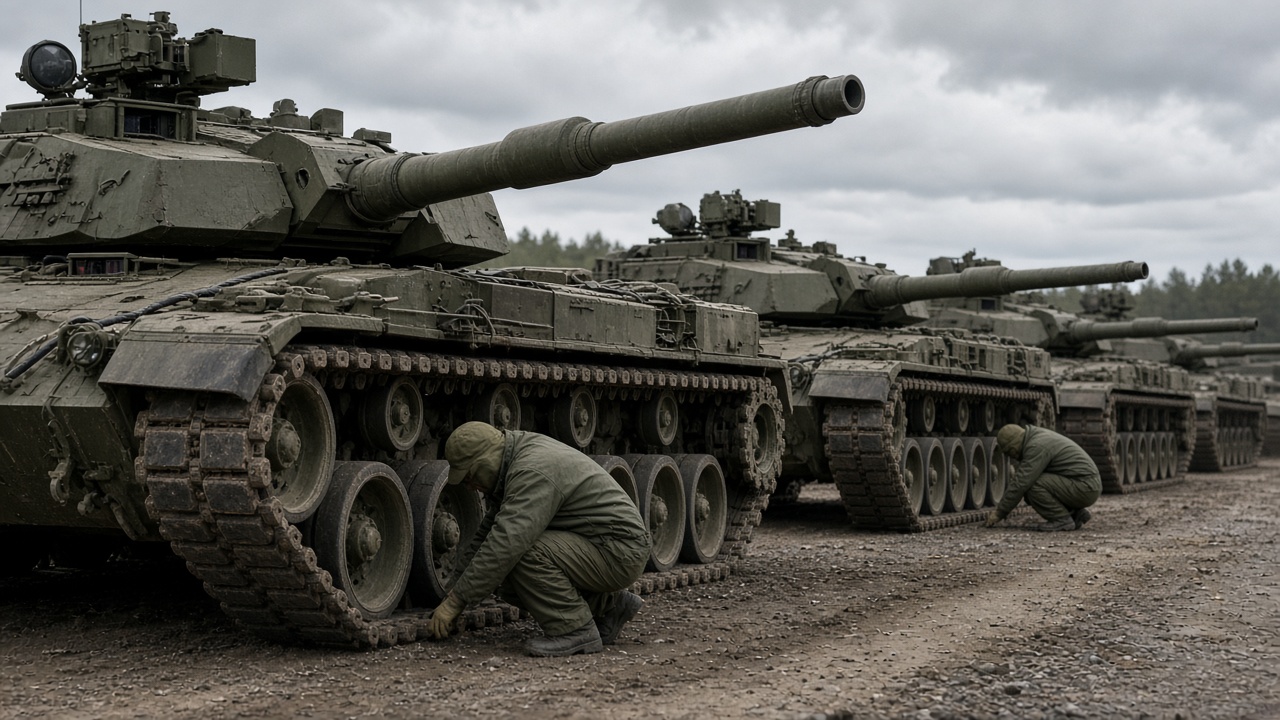
Taiwan’s army warned legislators on Monday that 48 M1A2T Abrams tanks have rolled past their two-year factory warranty while more than 150 requests to unfreeze defense spending remain stuck in committee, leaving a NT$1.35 billion (US$41.8 million) spare-parts package for the U.S.-built fleet in limbo. Without the 1,513 line items officials want to buy, commanders say sustainment for Taiwan’s newest armored brigades could slip just as cross-strait pressure stays elevated.
What the army says it still needs
In a written report to the Legislative Yuan, the army command said it planned to procure level-two maintenance kits, critical components such as recoil mechanisms, and war-reserve stocks including AGT-1500 gas turbine engines. The shopping list covers 247 types of parts drawn from U.S. technical manuals and battlefield experience shared by American representatives, according to the briefing materials cited by Taipei media.
The first 38 tanks arrived in 2024; a follow-on batch brought the operating fleet to 48 vehicles now outside warranty coverage. Army planners argue that delaying orders will ripple through depots that already juggle legacy M60 and CM-11 fleets while preparing for combined arms exercises along the island’s western plains.
Why the money is frozen
Taiwan’s central government budget for fiscal 2026 finally cleared the legislature in mid-August after a record 351-day review, but opposition lawmakers attached freezes on multiple Ministry of National Defense lines. Among them is roughly 10 percent of spending tied to the Taiwan Tactical Mission Network and Team Awareness Kit programs, which ground-force commanders use to build a common operational picture.
Since the new legislative session opened on September 29, conveners of the Foreign Affairs and National Defense Committee — Chinese Nationalist Party (KMT) lawmaker Hsu Chiao-hsin and Democratic Progressive Party (DPP) lawmaker Wang Yi-chuan — have not scheduled a dedicated hearing to review unfreeze requests, leaving more than 150 proposals untouched. With only about two months left in the fiscal year, army officials told lawmakers that even a late thaw might not leave enough procurement lead time to close the gap before warranties expire on additional batches.
Readiness politics in Taipei
Defense analysts in Taipei have framed the Abrams freeze as a test of whether partisan budget fights will trump hardware the United States already approved for export. DPP legislators argue the tanks are a visible symbol of Washington’s commitment; KMT members have questioned whether Taiwan is over-indexing on heavy armor when drones and missiles dominate modern drills.
For unit commanders, the more immediate worry is mundane: without recoil-system spares and engine modules on shelves, training rotations could be curtailed and cannibalization rates could climb. The Ministry of National Defense has not publicly threatened to sideline tanks, but Monday’s report makes clear that sustainment risk rises each week the committee table stays empty — a bureaucratic bottleneck with battlefield echoes.
Legislative aides said the packed autumn calendar — including local election campaigning and debates over health-insurance subsidies — has crowded out defense hearings that usually sail through in quieter years. Army logistics officers nonetheless plan to brief committee staff again if conveners set a date, hoping to separate Abrams sustainment from unrelated disputes over digital command networks.