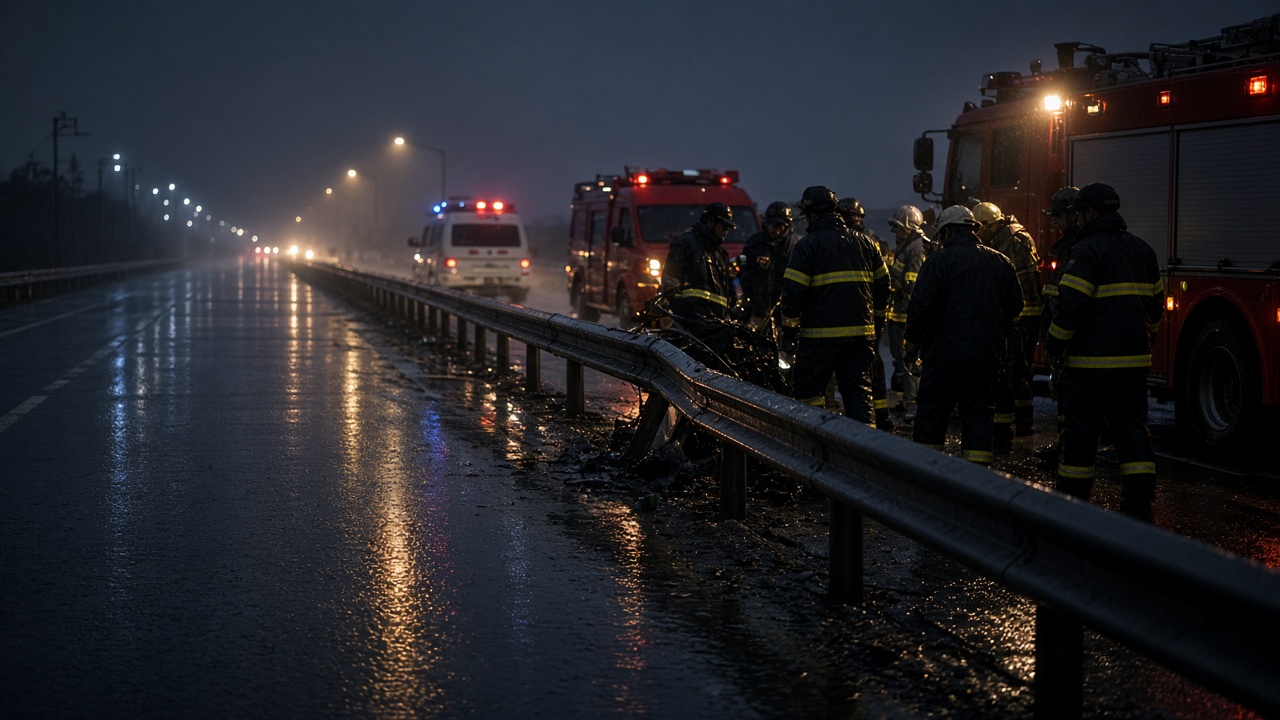
A sport utility vehicle assigned to U.S. Forces Korea struck a guardrail and flipped onto its side on the Gyeongbu Expressway near the Chilgok logistics interchange at about 5:07 a.m. Sunday, killing one Korean Augmentation to the U.S. Army soldier and leaving a second KATUSA in serious condition, according to South Korean police and SBS News.
The SUV was traveling toward Busan when it left the roadway, authorities said. A U.S. national serving with USFK who held a valid South Korean driver’s license was at the wheel, police confirmed. Both KATUSA passengers were men in their twenties.
What investigators say so far
Police in North Gyeongsang Province opened a standard traffic-fatality inquiry and have not publicly named the driver or the deceased soldier, citing notification rules for military families. USFK public affairs had not posted a detailed statement on its English-language site by mid-morning Monday in Seoul.
Early reports from Yonhap-linked outlets described the vehicle as an unmarked or privately registered SUV rather than a marked military convoy truck, but police have not released registration paperwork. Investigators are reviewing dash-camera and toll-gate records from the Chilgok segment, a heavily used corridor linking the Seoul metropolitan area to Busan and U.S. bases in the southeast.
Why the crash resonates in Seoul
Accidents involving USFK personnel periodically reignite debate in the National Assembly over jurisdiction, licensing, and compensation when Korean civilians or KATUSA soldiers are hurt. The Status of Forces Agreement leaves most on-duty crashes to U.S. military courts, while purely off-duty traffic cases can still draw intense media scrutiny when a Korean national dies.
KATUSA soldiers serve as linguists and support staff embedded with American units; the program is competitive, and fatalities on domestic highways are rare enough that Sunday’s crash led morning television bulletins alongside autumn flooding in the capital region.
What happens next
Police said they are reconstructing speed and lane position before the guardrail impact. USFK typically cooperates with Korean traffic investigators while conducting its own safety review when a government vehicle or privately leased car is involved.
Funeral arrangements for the soldier who died will be coordinated between the Republic of Korea Army and the victim’s unit, officials said. The injured KATUSA remained hospitalized Monday with non-public details on his prognosis.
Further updates are expected once police complete alcohol and mechanical inspections and USFK determines whether the trip was official duty or personal leave.
Sunday’s crash came on a rain-slicked stretch of the expressway as autumn storms moved across the peninsula, though police have not said weather contributed to the rollover. Tow trucks cleared the SUV by mid-morning, and one southbound lane reopened after barrier repairs.