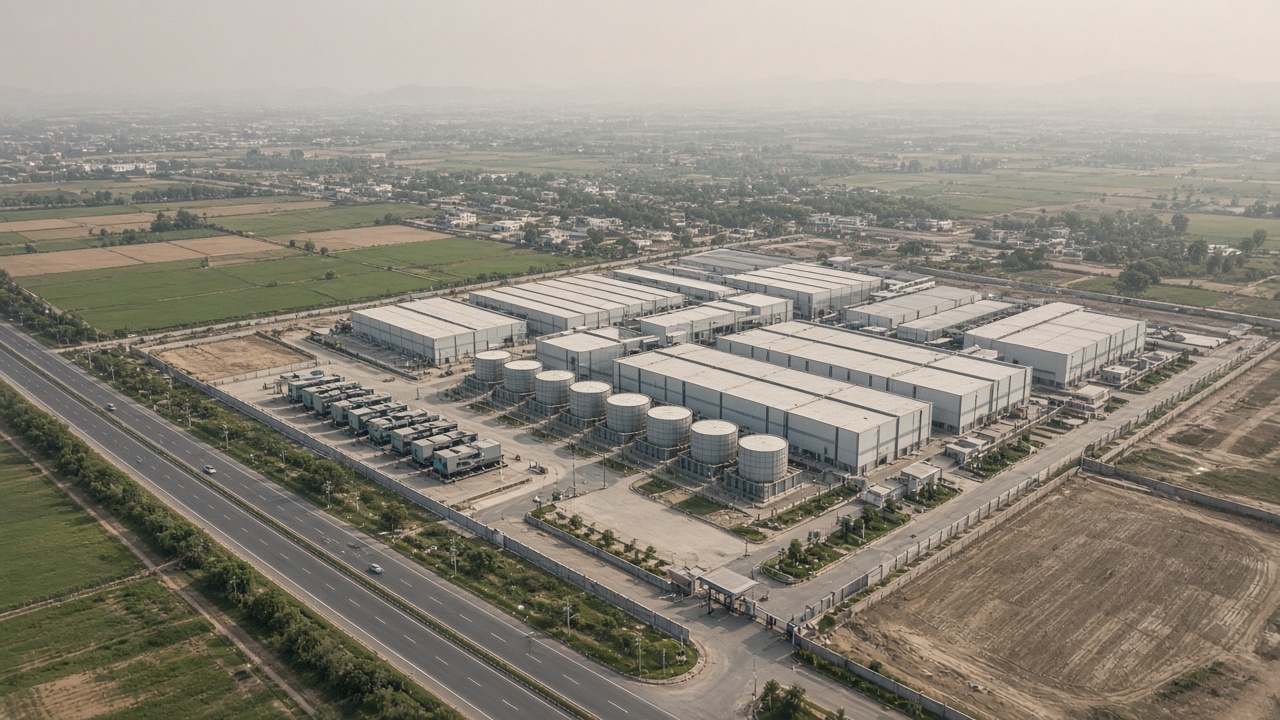
NITI Aayog's Frontier Tech Hub published a Data Centre Evaluation Framework on 14 October, giving state governments a scorecard to judge whether local grids, water supplies and fibre routes can sustain hyperscale campuses before ministers sign incentive letters.
Why states need a checklist
India's installed data-centre capacity has grown from about 375 megawatts in 2020 to roughly 1.5 gigawatts in 2026, driven by cloud and AI demand. The rush created bottlenecks where developers announced projects in districts that lacked redundant power or wastewater permits.
The framework, drafted with MeitY, the power ministry and DPIIT, asks states to model peak load, renewable availability and latency to submarine cables. It is voluntary but likely to anchor cabinet discussions when tax holidays for foreign cloud providers expire decades from now.
Scoring dimensions
States receive worksheets on land zoning, captive renewable procurement, water recycling and disaster risk. A low score does not ban investment, but it triggers mandatory mitigation plans—such as mandating closed-loop cooling in water-stressed talukas.
Officials said the tool shifts rhetoric from "India is open for data centres" to "this taluka can host 50 megawatts without brownouts." That nuance matters as AI tenders, including CDAC's 10,000-GPU buy, require dependable hosting sites.
Link to national AI ambitions
Tax relief until 2047 for eligible foreign cloud providers already nudged investment, yet states compete with uneven readiness. Telangana and Maharashtra lead on fibre diversity; others offer land without transmission upgrades.
Frontier Tech Hub fellows argued that publishing scores could steer capital toward regions with spare renewable capacity, aligning with India's decarbonisation pledges.
Industry reaction
Developers welcomed standardized environmental data requests, which previously arrived in incompatible formats from pollution boards. Environmental groups want mandatory public hearings when scores flag high water use.
Smaller colocation providers worry the framework favours hyperscalers with sustainability teams; NITI officials said modular edge sites can use a lite version of the scorecard.
Next steps
Expect pilot assessments in two coastal and two inland states before the winter invest summit season. If scores go public, bond investors underwriting data-centre REITs will finally compare states on infrastructure, not just tax breaks.
Comparison with peers
Officials compared India's 1.5-gigawatt installed base with markets such as Virginia and Singapore that crossed similar thresholds years earlier but with denser fibre backbones. The scorecard asks states to publish spare transformer capacity and wastewater discharge permits alongside marketing brochures.
Renewable purchase obligations feature prominently because hyperscalers now negotiate for wind-solar hybrids before signing land leases. States that score poorly on grid stability may still host edge sites, but AI training clusters will gravitate toward hubs with redundant transmission.