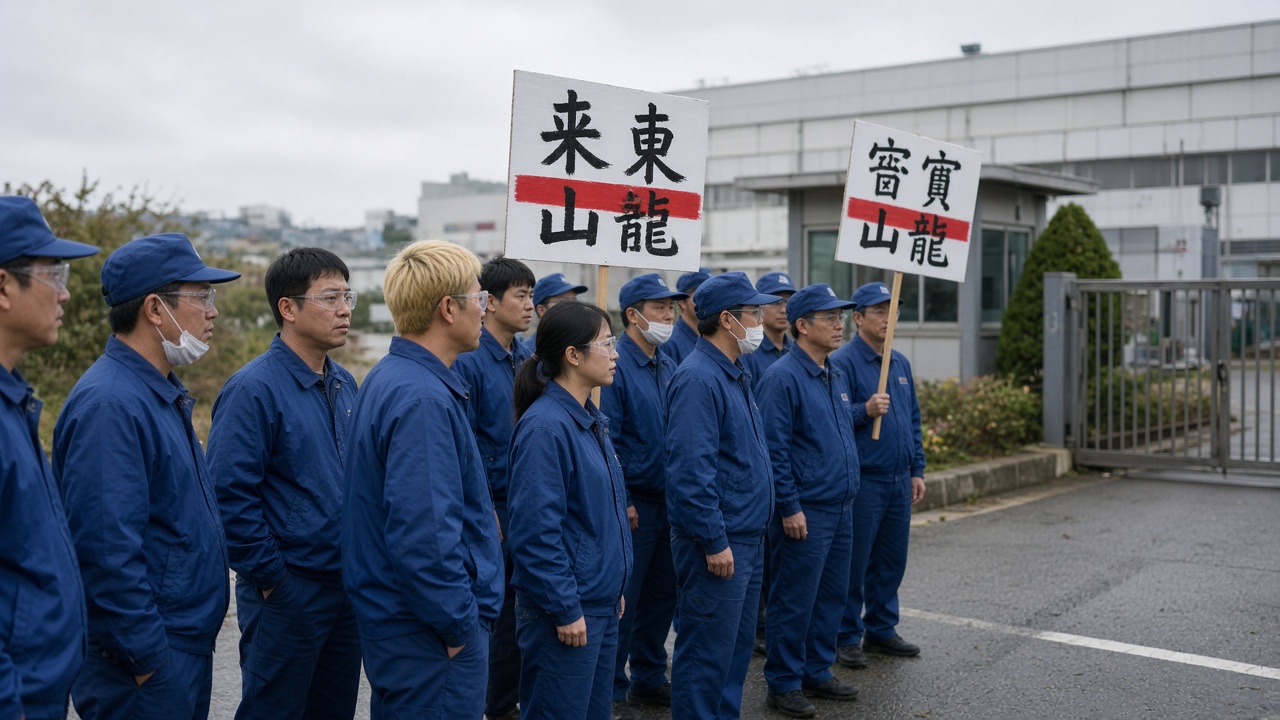
Micron Technology's enterprise union at the Taoyuan DRAM plant said Tuesday that members will walk off the job on Thursday, 22 October, after months of failed talks over bonuses tied to the U.S. memory maker's AI-driven profits, putting Taiwan's largest foreign chip investor on notice days before a second mediation session at its even bigger Taichung site.
The Taoyuan union secured the legal right to strike on 7 October when 88.3 percent of voting members backed industrial action, according to figures the union reported to Taiwanese media. Union leaders had kept the calendar open while pressing Micron's board for a counterproposal; on Tuesday they fixed the walkout date, escalating a dispute that has run in parallel with President Lai Ching-te's public call for both sides to negotiate in good faith.
What workers want
Together, the Taoyuan and Taichung unions represent more than 80 percent of Micron's roughly 15,000 employees in Taiwan, industry publications have reported. Their joint demands include a one-time fiscal 2026 bonus equivalent to about 83 months of pay per worker, calculated from 15 percent of global operating profit, followed by quarterly profit-sharing from fiscal 2027 onward.
Union chairman Lin Che-jui has argued that Micron's existing incentive programs leave fab staff far behind executives and behind profit-sharing norms at Samsung and SK hynix. Micron said in September it would pay bonuses worth up to 68 months of salary, an offer workers rejected as opaque and insufficient while AI demand lifts company earnings.
Thursday's calendar
The Taoyuan walkout lands on the same day the Taichung union meets Micron for a second government-mediated session. If mediation fails there, the larger site could hold its own strike vote, potentially widening any production impact across Micron's Taiwan footprint, where the company fabricates an estimated half to 60 percent of its global output.
TrendForce and other supply-chain analysts have said the operational effect depends on how many engineers stay out, how long lines idle and what contingency staffing Micron deploys. Taiwan's Ministry of Labor has urged the company to table concrete proposals rather than rely on one-off payments.
Political and investor context
Lai attended the opening of Micron's expanded Taichung packaging plant this month and asked management and unions to settle differences without harming Taiwan's semiconductor reputation. The timing is sensitive: foreign investors are watching whether labor peace holds as Taiwan pitches itself as the indispensable node for high-bandwidth memory used in AI servers.
Micron chief executive Sanjay Mehrotra told analysts on the 30 September earnings call that fiscal 2026 incentive pay was increased worldwide. A company spokesperson said Tuesday that Micron hears employees' concerns and remains committed to good-faith engagement with both unions, without detailing new numbers ahead of mediation.
What happens next
Unless negotiators bridge the gap before Thursday morning, Taoyuan pickets could appear at the plant gates while Taichung talks continue under labor officials' supervision. Customers and motherboard makers will watch shipment schedules, but the immediate test is whether Micron moves its bonus formula closer to the 15 percent profit-sharing line workers have drawn in public.
For Taipei policymakers, the strike is a reminder that record chip profits do not automatically quiet shop-floor anger. For Micron, a prolonged stoppage at either site would be the most serious labor confrontation in its Taiwan history just as competitors race to add HBM capacity.