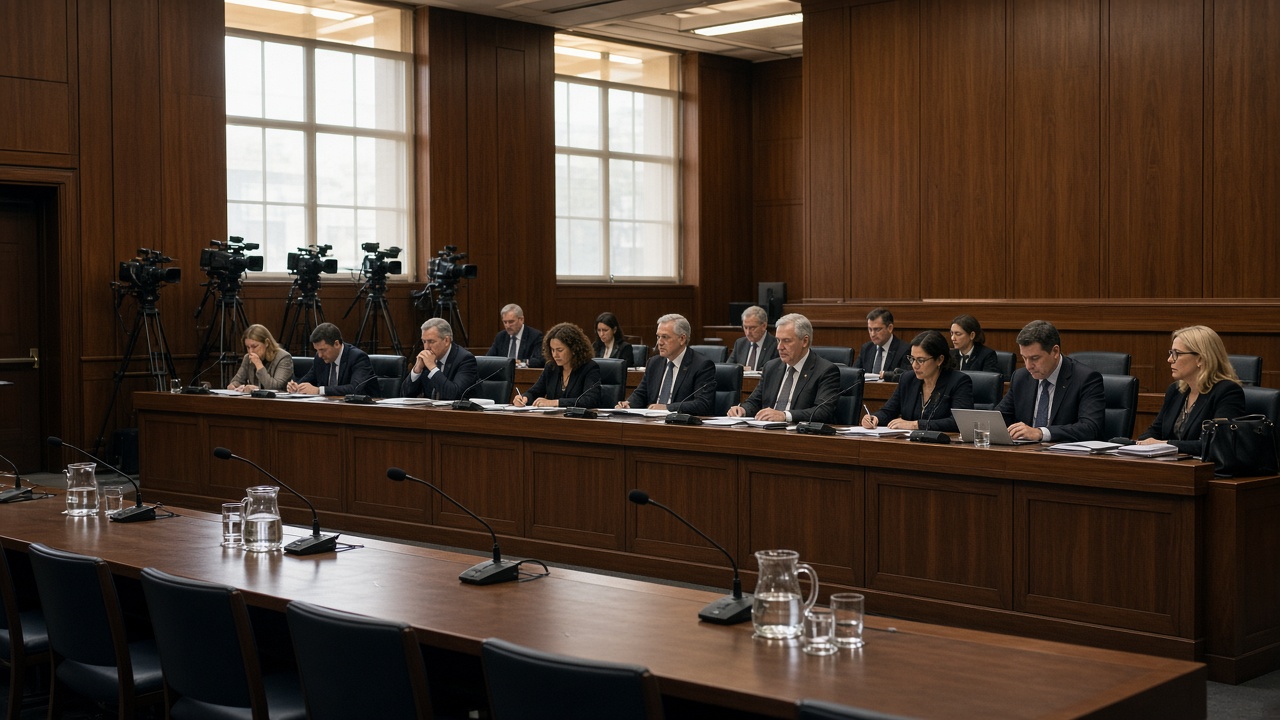
Legislators questioned National Communications Commission nominees Monday about how Taiwan’s broadcasters should police AI-generated political advertisements as December’s unified local elections draw near. Nominees told the Judiciary and Organic Laws and Statutes Committee that deliberately false news intended to harm the public qualifies for existing fact-check duties, while synthetic audio remains a gray zone absent clear labeling rules.
Deepfake duty in the spotlight
Deputy nominee Hsiao Ping said broadcasters must verify sources before airing political segments, a stance lawmakers from both camps welcomed amid rising deepfake clips on social platforms. Chair nominee Yuan Hsiu-hui, a former judge, pledged independence from party influence despite questions about her prior Democratic Progressive Party membership. Opposition legislators asked how the commission would sanction cable news that amplifies unverified campaign material without waiting for court rulings.
Election calendar pressure
With county mayor and council races set for late November, committees want enforcement guidance before absentee ballots mail. Nominees promised to coordinate with the Central Election Commission on disclaimer standards for synthetic media, though they stopped short of endorsing criminal penalties proposed in draft amendments. Civil society groups watching the hearing urged faster takedown channels for known fake candidate videos.
Platform versus broadcaster debate
Lawmakers split over whether the NCC’s remit should extend to over-the-top streaming apps that many voters use instead of terrestrial TV. Nominees said legal opinions are pending from the Ministry of Digital Affairs, avoiding a jurisdictional fight on live television. They agreed, however, that radio stations must log political ad buyers now that cheap voice-cloning tools circulate in group chats.
What confirmation means practically
If the legislature confirms the slate, the commission could issue interpretive letters before Champi’s rain bands arrive, giving stations a template for storm coverage as well as campaign season. Until then, networks rely on voluntary guidelines from fact-checking partners. For voters, Monday’s hearing signaled that regulators see synthetic persuasion as an election integrity issue—not a futuristic curiosity.
Next steps
Committee chairs scheduled a second round of questions on fines and appeal timelines. Campaign teams should expect commissioners to request ad creative files earlier than in past cycles, especially for ads featuring candidate likenesses. Clearance of the nominees would end a prolonged vacancy that delayed spectrum auctions; election security, however, dominated the afternoon’s agenda.
Watchdog groups submitted written testimony urging the commission to publish a public registry of political ad buyers within 48 hours of first airdate, a transparency measure already used in several municipal races. Nominees said they would study the proposal but noted staffing constraints before year-end.
Partisan context without blocking reform
Despite sharp questioning, both ruling and opposition legislators agreed that synthetic media poses a credibility threat to broadcast news, a rare alignment in a polarized chamber. Nominees pledged to recuse from cases involving parties they once advised, addressing conflict concerns raised about Yuan’s prior judicial appointments. Staff lawyers will draft guidance on labeling AI-assisted b-roll in news packages, distinguishing legitimate production tools from deceptive impersonation.
Enforcement tools available now
Commissioners can already fine stations that air unverified defamatory segments; lawmakers asked whether those fines should rise when deepfakes target candidates. Nominees stopped short of endorsing higher penalties but said they would expedite complaints tied to election periods. Cable operators requested clarity on whether they must block retransmission of viral clips pulled from social platforms—a murky area when anchors discuss trending videos during talk shows.
Timeline before ballots mail
Central Election Commission officials attending the hearing said ballot printing begins soon and cannot wait for new laws. They urged broadcasters to adopt voluntary delay standards: hold suspicious audio for 30 minutes while fact-checkers respond. Nominees supported the idea as interim practice even if legislation lags. For Taiwan’s media regulators, the hearing was less about ideology than about shipping concrete instructions before December campaigns peak.
Committee staff will circulate a draft confirmation calendar by Friday, aiming for floor votes before legislators leave Taipei for district campaigning next month.