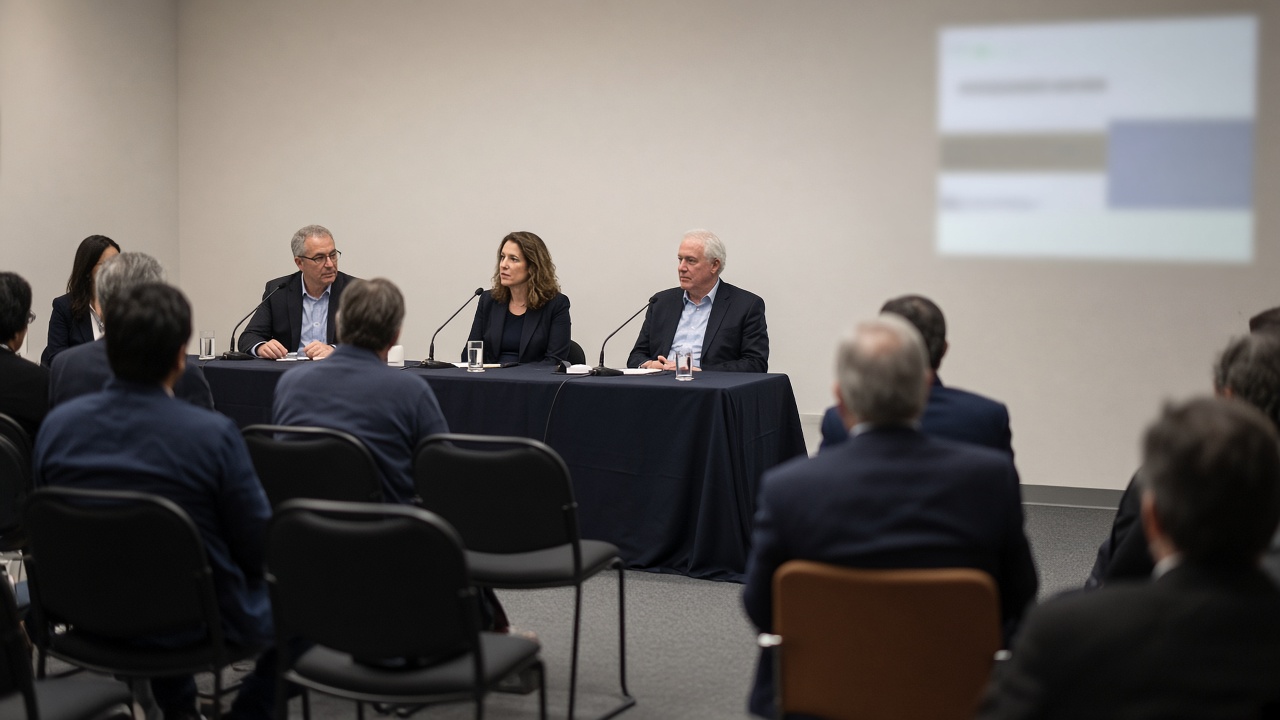
Scholars at a Democratic Progressive Party forum on Monday called on Taiwan to stand up AI-assisted detection labs and expand media-literacy training, warning that Beijing is using cheap generative tools to flood social channels with election-related deepfakes ahead of November’s local races. Party officials hosted researchers from St. Thomas University in Minnesota, Shih Hsin University, and civil-society groups to map how synthetic audio and mismatched campaign graphics spread faster than fact-checkers can respond.
What panelists said about tactics
Professor Yeh Yao-yuan cited U.S. disclosures that Chinese actors exfiltrated hundreds of millions of voter records, arguing Taiwan’s smaller population makes tailored persuasion cheaper. Shih Hsin associate professor Liu Yu-hsi described AI-generated flyers for village chief candidates where names and precinct labels did not match official rolls, a tell-tale sign of automated production. Association secretary Wang Chih-sheng said the strategic goal is not only to elect preferred candidates but to erode trust in democratic procedures over years.
Proposed government responses
Panelists urged the Executive Yuan to fund shared detection infrastructure that media outlets and community groups can query, rather than leaving each platform to build proprietary classifiers. They recommended secondary-school curricula that connect AI literacy to civic education, including exercises where students spot synthetic voice clips. DPP China Affairs director Wu Chun-hsi reminded attendees that cognitive warfare often pairs military signaling with information operations, requiring coordinated responses across defense and civilian agencies.
Platform and legal angles
National Communications Commission nominee hearings running this week intersect with the debate, as lawmakers ask how broadcasters should label synthetic content in political ads. Civil society groups want clearer penalties for distributing known deepfakes about candidates, while free-speech advocates caution against over-broad takedown rules. Monday’s forum did not resolve that tension but pushed for rapid annotation standards before absentee ballots mail.
What makes 2026 different
Researchers said China’s economic slowdown has squeezed traditional cash-for-influence channels, making generative AI attractive because marginal costs approach zero. Taiwan’s dense social-media usage and active group chats amplify errors: a single synthetic clip can traverse LINE groups faster than television rebuttals. The panel cited village-level races as especially vulnerable because candidates lack professional communications staff.
International cooperation
Yeh urged Taiwan to share detection signatures with U.S. and Japanese partners, noting that models trained on Mandarin disinformation can benefit other democracies facing similar actors. He proposed a research exchange on watermarking standards for campaign materials, an idea DPP officials said they would raise with the Ministry of Digital Affairs. No new legislation was announced Monday, but party leaders promised follow-up briefings for county campaign teams.
What voters will see on the ground
Fact-checking nonprofits plan pop-up clinics at night markets in contested cities, demonstrating how to reverse-image search flyers and report suspicious pages to the 111 government hotline. Whether detection labs materialize depends on budget writers in the current legislative session. For now, Monday’s forum shifted the campaign conversation toward preparedness, arguing that Taiwan’s defense against AI meddling is as much about classroom habits as about firewalls.
Party messaging discipline
DPP officials asked candidates to watermark official campaign photos and publish hash values online so supporters can compare social posts against authentic files. The party’s China affairs team will distribute weekly threat briefings to campaign managers in six metropolitan races deemed high risk for synthetic smears. Opposition parties were not invited to the forum but said they would issue their own anti-deception playbooks, underscoring bipartisan concern even amid heated local contests.
Detection technology limits
Researchers cautioned that watermarking alone cannot stop malicious edits if voters consume re-shared clips inside closed chat groups. They urged telecom operators to flag bulk forwards of political video and to cooperate with fact-checkers on rapid response channels. Funding for shared detection servers, they argued, is cheaper than repeating post-election audits that struggle to trace content once it has fragmented across platforms.
Party volunteers at the forum practiced live demonstrations of voice-cloning apps, showing how three seconds of audio from a mayor’s press conference can be repurposed into fake hot-mic clips. Attendees received printed checklists to post inside campaign offices, a low-tech backup in case messaging apps crash during storm-related outages later this week.