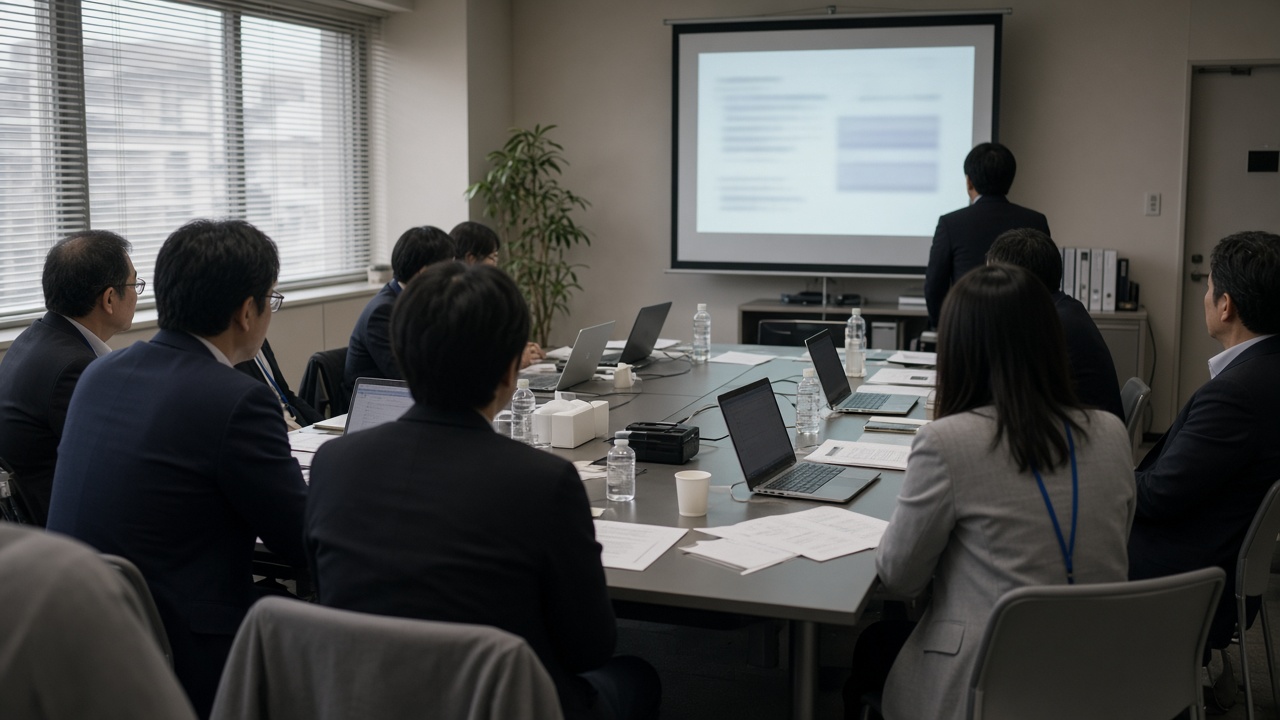
Taiwan’s Administration for Digital Industries said thirteen domestic software companies returned from a Tokyo roadshow with active matchmaking leads through SCSK, Itochu Technology Solutions, and AWS Japan distributor channels after a week of AI, cybersecurity, and enterprise-workflow pitches. The agency, part of the Ministry of Digital Affairs portfolio, framed the mission as proof that Taiwanese vendors can move from trade-show booths to procurement conversations with Japanese systems integrators.
Who traveled and what they sold
Participants included firms specializing in enterprise AI assistants, learning-management platforms, semiconductor equipment security, and data-governance tooling, according to an agency news release issued Monday in Taipei. Delegates joined a Taiwan-Japan AI partner forum on Oct. 14 where more than thirty Japanese integrators held face-to-face meetings. Solutions on display ranged from shop-floor analytics for precision manufacturers to SEMI E187-aligned security assessments aimed at chip equipment suppliers.
Channel strategy through AWS Japan
Agency officials said AWS Japan helped bridge independent software vendors to local distributors DIS and Networld, giving smaller Taiwanese firms access to resale networks they could not reach alone. The model lets Japanese customers buy Taiwanese software with yen billing and domestic support contracts, reducing procurement friction. Several vendors reported follow-up meetings scheduled in Osaka and Nagoya for November, though the agency cautioned that deals still require customer-specific pilots.
Cybersecurity as a second hook
Beyond AI, the delegation exchanged notes with Japan’s Information-technology Promotion Agency and the Semiconductor Equipment Association of Japan on supply-chain security standards. Taiwanese vendors pitched third-party validation services aligned with SEMI E187, a angle that resonates as fabs push suppliers to document firmware integrity. The agency said it is planning a joint seminar around next April’s Japan IT Week to keep momentum.
Why Japan matters for Taipei policy
Japan is Taiwan’s largest destination for outbound digital-service collaboration outside English-speaking markets, and political leaders on both sides have emphasized supply-chain trust after pandemic-era disruptions. For Taiwanese firms capped by domestic market size, a single Japanese pilot can exceed annual revenue from home-government contracts. The agency’s goal is to convert this week’s meetings into signed statements of work before fiscal year-end on either side.
Risks vendors cited privately
Participants told reporters that Japanese procurement cycles remain long and documentation-heavy, requiring localized user interfaces and rigorous quality manuals. Language support and overnight incident response are common deal breakers. The agency promised translation vouchers and intro sessions with bilingual lawyers for firms that advance to term-sheet stage.
What comes next in Taipei
The digital industry agency will host a debrief webinar for investors and customers on Oct. 24, publishing anonymized pipeline values to gauge whether the mission beat last year’s Korea roadshow. Firms that secured integrator introductions must report pilot timelines by December to remain eligible for follow-on export coaching grants. For Taiwan’s software sector, the trip is less about headline contracts and more about embedding local AI and security tools inside Japanese enterprises that already buy Taiwanese hardware.
Participant feedback
Delegates said Japanese buyers asked for proof of ISO 27001 certifications and penetration-test summaries before scheduling second meetings, requirements Taiwanese vendors increasingly meet after domestic regulator scrutiny. Several firms paired with local systems integrators to offer yen-denominated service desks, addressing a complaint from prior missions where contracts stalled on currency and tax paperwork. Agency coaches will help translate statements of work into Japanese business format, a service that previously cost startups thousands of dollars per engagement.
Comparison with hardware exports
While semiconductors dominate Taiwan’s trade surplus, services exports have grown slower despite strong engineering talent. Officials hope software missions can diversify revenue without competing directly with U.S. cloud hyperscalers on infrastructure. Success will be measured in recurring maintenance fees rather than one-time license sales, a shift several participants said they embraced after watching hardware margins compress during prior downturns.
Export credit insurers attending the debrief said they are designing short-term policies to cover pilot delays caused by Japan’s lengthy security reviews, removing one reason startups declined overseas trials in the past.