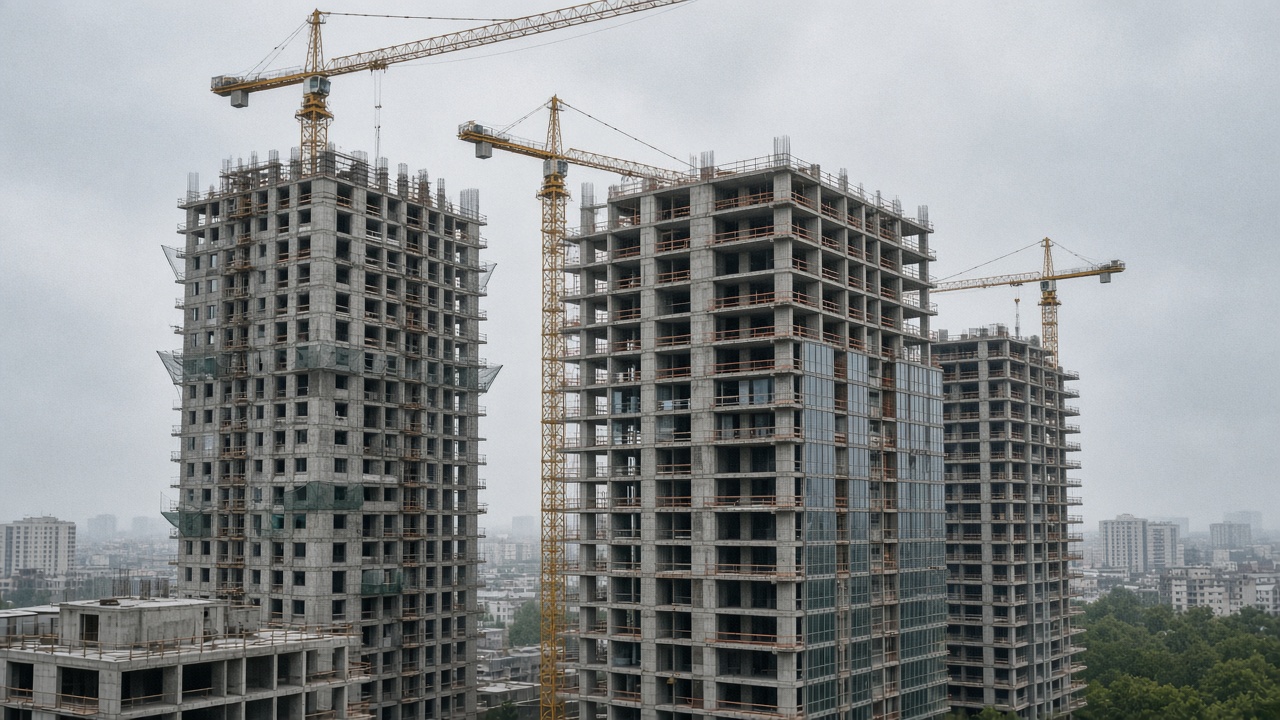
The Real Estate Economic Institute said the average price of a newly marketed condominium in Tokyo and the three surrounding prefectures hit 114.94 million yen in the April–September half of fiscal 2026, the first time the first-half figure has cleared 100 million yen as builders pass through higher steel, concrete, and wage costs to buyers who still queue for central locations.
What the survey measured
The institute tracks publicly listed new units in Tokyo, Kanagawa, Saitama, and Chiba. Its release on Tuesday showed a 21.1 percent year-on-year jump for the six-month window, extending a four-year run of record first-half averages. Analysts caution the headline is an arithmetic mean skewed by a handful of ultra-luxury towers in Minato and Chuo wards; the median transaction price sits lower but has risen in parallel.
Developers cited longer approval cycles for fire-safety upgrades, yen weakness that raises imported fixture costs, and a shallow pool of skilled curtain-wall installers. Several midsize builders told investors they are trimming unit counts per project to keep total project budgets fundable while preserving margin on each sale.
Who is still buying
Domestic dual-income households upgrading from rental apartments remain the core bid, especially where employers allow partial telework and commutes shrink. Foreign buyers are a smaller slice but visible in waterfront redevelopment zones where English-language sales centers reopened after pandemic closures.
Banks have tightened debt-to-income screens as the Bank of Japan keeps short-term rates above zero, yet qualified borrowers still secure fixed-rate mortgages below historical peaks. The tension is monthly payment size: even with low rates, a 100-million-yen principal implies a payment that filters out first-time buyers without parental support.
Supply pipeline
Urban land plots are scarce. When a large station-front parcel hits the market, bidding wars among developers lift land-share prices that flow straight into list prices 36 months later. Suburban projects along private railway lines market family-sized units at lower per-tsubo costs, but those lines saw smaller percentage gains because competition among builders is thinner.
Investors watch inventory months: if unsold stock rises while prices stay elevated, developers may offer interior upgrades or delay launches. So far, Tokyo’s central wards show limited discounting, suggesting absorption remains healthy among cash-rich upgraders.
Policy and tax backdrop
Parliament’s debate on cutting the consumption tax on food to 1 percent from April does not directly change housing tax treatment, but household budgets are recalculated anyway. If shoppers expect modest grocery savings, some may redirect margin to down payments; others may pause large purchases until they see final bill language.
Property registration taxes and mortgage tax breaks are unchanged in the current legislative package. Ministry of Land, Infrastructure, Transport and Tourism officials continue to push energy-efficiency labeling, which adds upfront costs builders say they cannot fully absorb.
Risks to the trend
A sustained rise in long-term government bond yields could lift mortgage rates faster than wages, especially for variable-rate borrowers. Construction cost deflation is unlikely near term; any relief would come from productivity tools or imported modular panels, still a niche in high-rise work.
For corporate Japan, expensive housing near headquarters acts as a silent recruiting tax. Firms expanding regional hubs pitch lower living costs; Tokyo developers respond with smaller “smart” units rather than price cuts.
Bottom line
Greater Tokyo’s new-condo average crossing nine figures in a fiscal first half is less a speculative frenzy than a cost-pass-through story with location premia intact. Until land auctions cool or wages accelerate broadly, list prices are more likely to plateau than retreat.