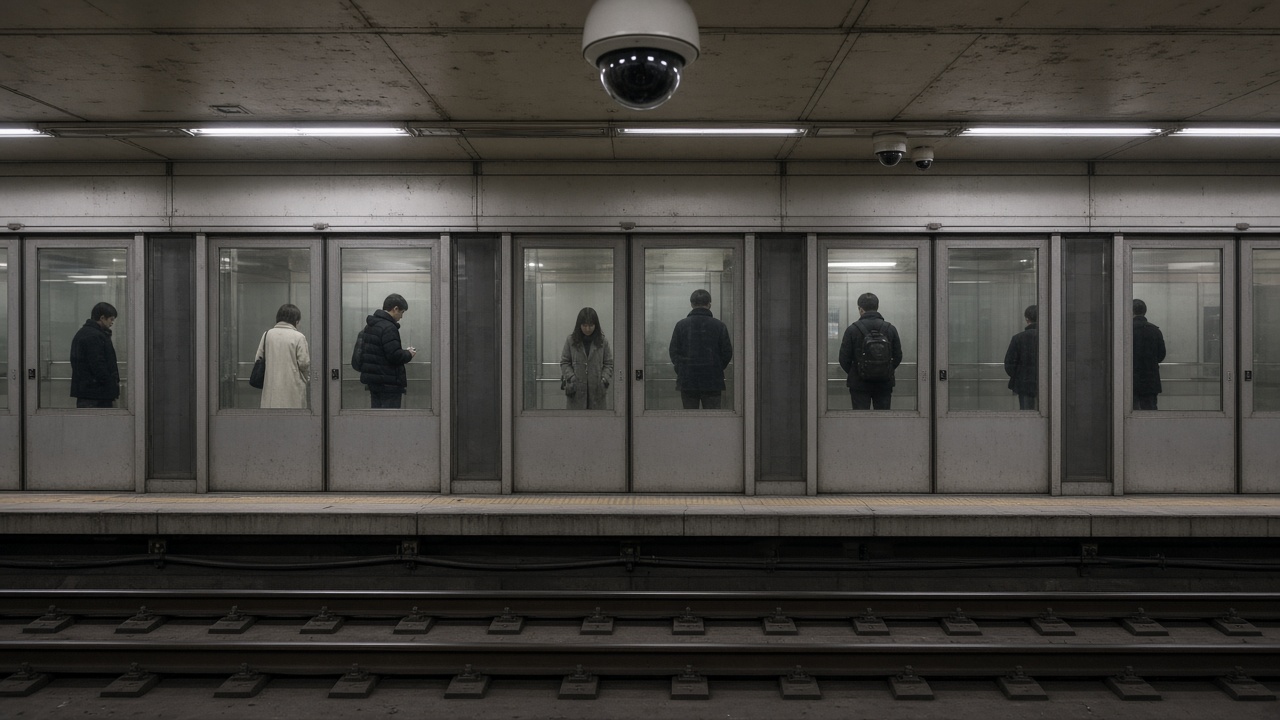
KT Corp. completed a 5G upload upgrade along Seoul Metro Line 9 on Wednesday, giving platform CCTV cameras enough backhaul to stream 4K feeds to the line’s security center during morning rush without the frame drops that plagued copper-linked sites last winter.
The project swapped microwave relays at nine underground stations between Sinnonhyeon and Sports Complex, raising sustained uplink capacity to 400 megabits per second per platform bank. Line 9, operated by a private consortium, carries more than 400,000 riders on weekdays and has been a test bed for “smart station” pilots since the city required AI-assisted crowd analytics after the 2022 Halloween crush in Itaewon.
Why upload speed mattered
Existing LTE links could handle standard-definition archives overnight but choked when security staff pulled live multi-camera views during incidents. A February smoke alarm at Express Bus Terminal station forced operators to rely on station agents’ radios because centralized monitors froze—a failure report Line 9 shared with the Ministry of Science and ICT in April.
KT used mid-band 5G spectrum already licensed for public-safety partnerships, segregating CCTV traffic on a network slice so passenger Wi-Fi on the same platforms would not compete for airtime. The carrier said installation work ran only during the 1 a.m. to 4 a.m. maintenance window over six weeks to avoid service disruptions.
Citywide implications
Seoul Metropolitan Government’s digital twin office plans to ingest the sharper feeds into a congestion model that triggers station announcements when platform density crosses thresholds. The model still needs human confirmation before automated gate closures— a safeguard added after privacy advocates raised concerns about facial recognition.
Other lines are watching costs. Line 9’s consortium paid roughly 12 billion won for the upgrade, with KT contributing base stations in exchange for a seven-year maintenance contract. Korail’s Line 1 modernization team toured the Sports Complex equipment room last month, according to officials who briefed reporters on Wednesday.
Vendor chain
Samsung Electronics supplied upgraded edge gateways, while a local systems integrator handled camera firmware that supports H.265 compression. KT said the same architecture can backhaul environmental sensors measuring platform temperature and humidity, data the fire department requested after a spate of summer heat illnesses.
Passengers will not notice a marketing splash—the change is invisible until something goes wrong. For Line 9 security staff, the win is simpler: when an alarm rings at 8:15 a.m., the monitors are supposed to show every angle in real time, not a spinning buffer icon.
Passenger data controls
KT said passenger handset traffic on Line 9 remains on a separate LTE carrier aggregation layer, with no deep packet inspection of browsing history. The Ministry of Science and ICT reviewed the architecture in September and issued a compliance letter operators must renew annually.
Industry groups and regulators said they will publish follow-up guidance within two weeks, giving banks, shippers, and clinics time to adjust internal checklists before year-end audits. Consumer advocates asked for plain-language summaries on issuer websites so cardholders and patients understand what changes on their next statement or visit.
Analysts covering the sector said the announcement fits a broader pattern of tighter operational rules after a string of high-profile compliance and safety cases this autumn. Whether the move shifts fundamentals or simply clears near-term compliance backlogs will depend on enforcement data due out in January.