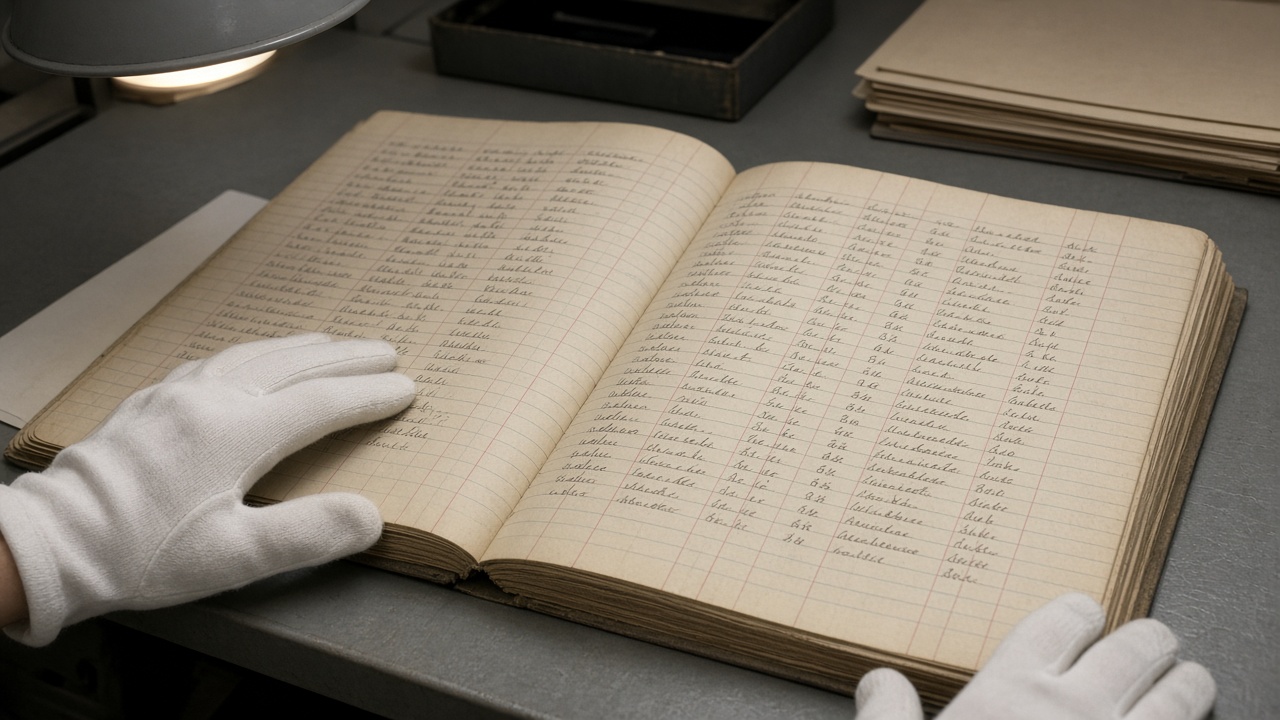
Museum Victoria has digitised more than 400 handwritten weather ledgers from regional post offices, handing climate scientists an extra 140 years of rainfall readings to stress-test drought models across the Murray-Darling Basin.
Why old paper still matters
Satellite-era data begins in the 1980s for many inland stations. The ledgers—some kept by postmasters between gold-rush mail runs—fill gaps that make modern projections shaky during multi-year dry spells. Samira Haddad’s desk notes that insurers and farmers both rely on the same pale records when arguing about “unprecedented” seasons.
Volunteers scanned pages at the Melbourne storage facility over 18 months, using double-key entry to catch faded ink. CSIRO will host the open dataset from December under a Creative Commons licence, with station metadata geocoded to current town names.
Modelling payoff
Early tests merged the archive with Bureau of Meteorology grids and found that late-19th-century droughts lasted longer than models trained on 1900–2000 data alone suggested. That matters for dam operators deciding whether current inflows are within normal variability or signal a step change from climate warming.
The project cost $2.1 million, split between the state government and a philanthropic grant from the Minderoo Foundation. No artefacts were removed from climate-controlled storage; only high-resolution images travelled to CSIRO’s Canberra servers.
Community science tie-ins
Local history societies in Bendigo and Ballarat contributed transcription volunteers, some of whom recognised great-grandparents’ handwriting in the ledgers. Museum Victoria plans travelling exhibits pairing scanned pages with oral histories about drought-driven migrations.
Farmers accessing the dataset through CSIRO’s portal will be able to overlay paddock boundaries to compare modern soil moisture probes with 1890s rainfall entries. That feature launches in beta next March, ahead of the next El Niño watch period flagged by the bureau.