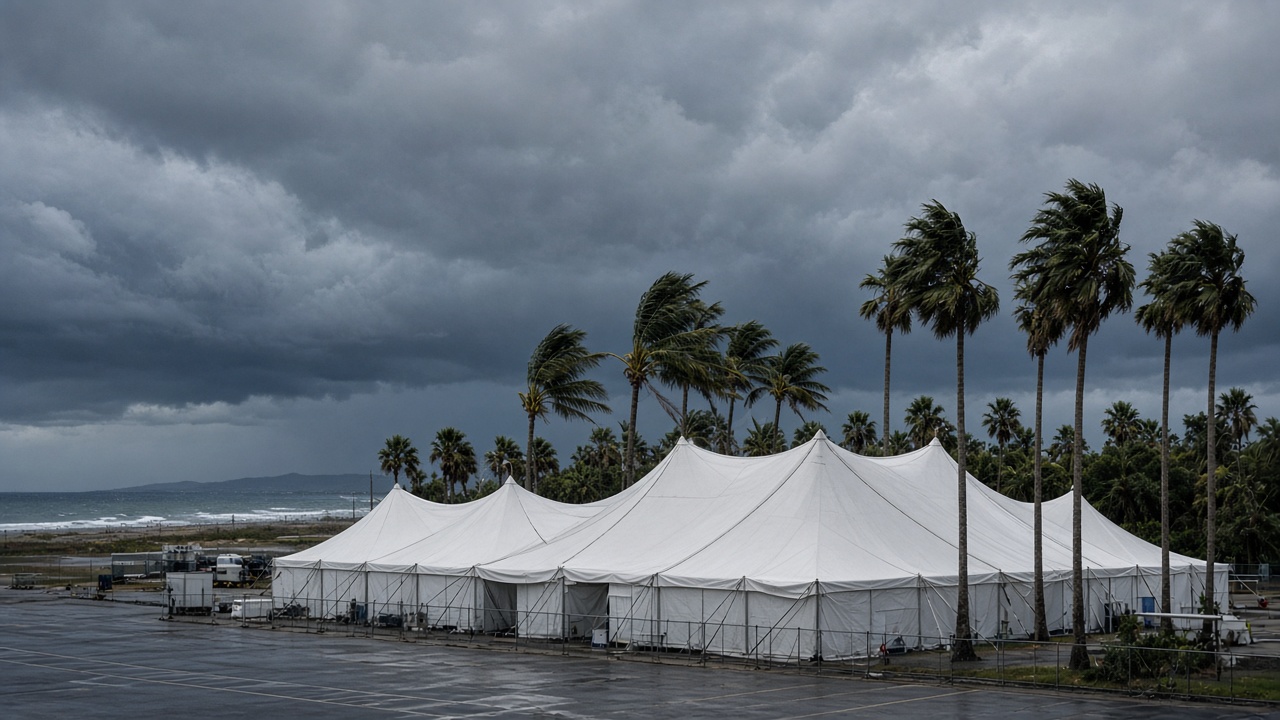
Organisers scrapped the remaining schedule of Okinawa’s 50th industrial fair after Typhoon Champa intensified on a track south of Miyako Island, saying tent structures and shuttle buses could not be secured safely if the storm brought the 65-meter-per-second gusts forecasters outlined for waters near the prefecture.
Forecast and timing
The Japan Meteorological Agency classified Champa as a large and violent typhoon, projecting it could reach very strong intensity while approaching Okinawa from the south by late week. Miyako and Ishigaki islands sit on the likely approach arc, with main-island Okinawa preparing for heavy rain bands even if the eye passes offshore.
Fair officials had already shortened activities when wind damaged minor equipment. The final cancellation notice cited risk of tent collapses injuring visitors and vendors who travel from across the prefecture to showcase manufacturing and tourism products.
Economic and civic cost
The industrial fair is a longstanding showcase for Okinawan food processors, craft makers, and defense-adjacent suppliers courting mainland buyers. Cancellation wipes a week of contracted sales for small firms that budgeted for booth fees and hotel blocks.
Local hotels face cancellations, while home centers report runs on tape and batteries as residents board windows. Military bases issued standard storm preparation reminders without changing public operations in statements reviewed Tuesday.
Preparedness lessons
Champa arrives weeks after a record rainy spell in parts of Japan drove up vegetable prices elsewhere. Okinawa’s exposure is different—wind and surge—but saturated ground on steep slopes still raises landslide watches when outer rain bands arrive.
Utilities staged repair crews on the main island; underwater cable operators monitored latency on routes to Taiwan and mainland Japan. Science desks note climate trends are increasing the fraction of late-season intense storms in the western Pacific, though any single typhoon cannot be attributed solely to warming.
Comparison with prior storms
Fair cancellations are rare but not unprecedented; typhoon pathways that graze Miyako often spare Naha only partially. Vendors asked whether future fairs should shift to hardened exhibition halls rather than tent cities on coastal lots.
Insurance for event cancellation remains limited in Japan; many booths will absorb losses unless prefectural relief programs activate after damage assessments.
Bottom line
Scrubbing the industrial fair is a precaution aligned with forecasts that place violent winds near Miyako. For Okinawa’s business community, the storm is both safety crisis and lost showcase—a reminder that climate risk now sits on the event calendar, not just the disaster manual.