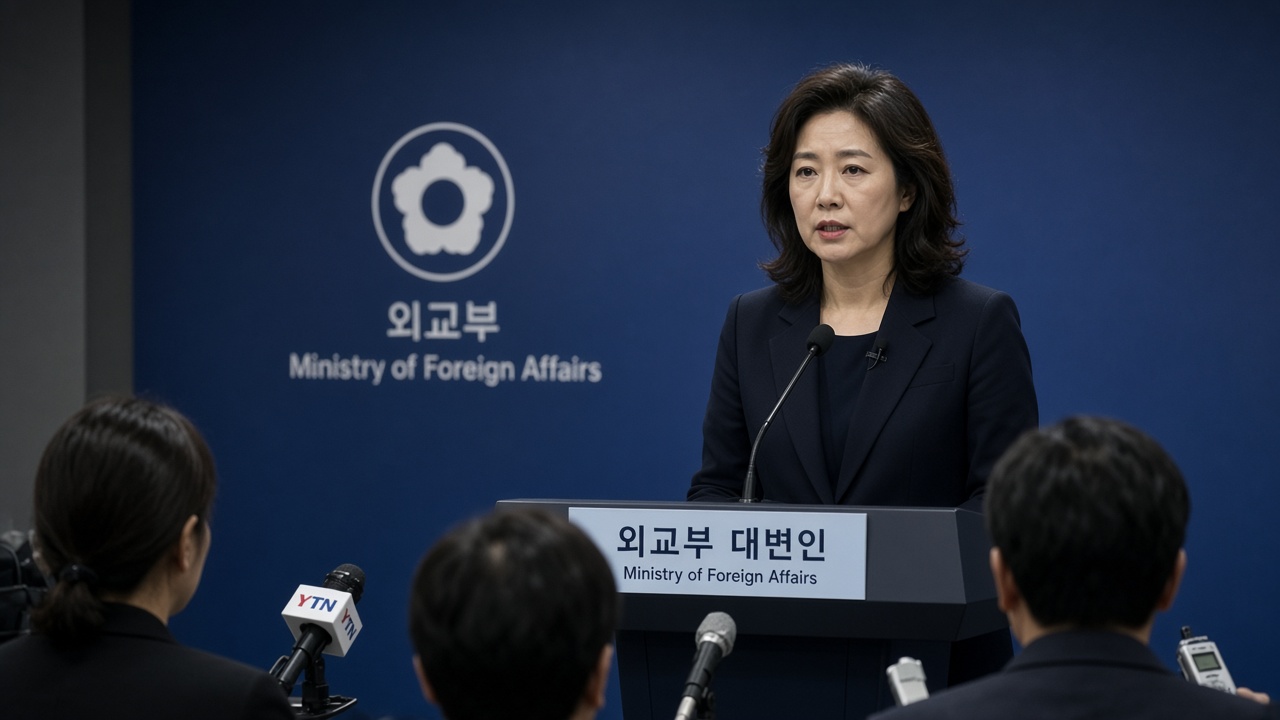
South Korea will pull roughly half of its diplomatic staff out of Ukraine, the Foreign Ministry said Tuesday, deepening a rift with Kyiv over the public disclosure of two North Korean prisoners of war whom Seoul had quietly repatriated.
Ministry spokesperson Park Doo-soon told reporters the drawdown reflects both the lack of "constructive steps" from Ukraine after Seoul recalled its ambassador earlier this month and the continued danger of Russian airstrikes across the country. Officials declined to publish exact head counts, but a ministry official speaking on customary anonymity said about half the mission would leave once logistics and security allow.
Why Seoul acted now
The dispute traces to President Volodymyr Zelenskyy's address to the United Nations General Assembly on Sept. 23, when he revealed that Ukraine had transferred two captured North Korean soldiers to South Korea. Seoul said the two governments had agreed to keep the handover confidential; Ukrainian officials have disputed that account.
South Korea recalled Ambassador Park Ki-chang on Oct. 8 and summoned Ukraine's charge d'affaires in Seoul. With no apology or explanation deemed sufficient, Tuesday's announcement marks the first time Seoul has reduced embassy presence in Kyiv since Russia's full-scale invasion in 2022, even though wartime security risks have persisted for years.
Who stays in Kyiv
Park said Charge d'Affaires Yoon Ji-wan will remain to lead political contacts, and every consular officer will stay to assist South Korean nationals. The embassy has identified about 85 citizens in Ukraine and plans to survey evacuation demand while offering safety updates.
Timing for the withdrawal depends on ground conditions and consultations with Ukrainian authorities, whom Seoul notified in advance through diplomatic channels, Park said. Kyiv has not issued a detailed public response to the staff reduction as of Tuesday afternoon in Seoul.
Broader stakes
The fight sits awkwardly between two U.S. partners: Ukraine, which depends on allied weapons and intelligence, and South Korea, which has supplied humanitarian aid while avoiding direct arms shipments to Kyiv. North Korea's deployment of troops to support Russia has made the POW issue a intelligence prize for both Seoul and Washington.
Analysts in Seoul said the partial pullout is designed to signal displeasure without severing ties, but it still narrows the channel Ukrainian leaders can use to court Korean investment and political support. Opposition lawmakers urged the government to clarify whether the move is primarily a security precaution or a punitive step tied to the POW dispute, warning that ambiguity could unsettle Korean businesses still operating in Poland and other frontline states.
Foreign Minister Cho Tae-yul did not hold a separate briefing Tuesday, but officials said Seoul will continue humanitarian assistance to Ukraine and coordinate with Washington on North Korean personnel inside Russia's war machine. A ministry official said the embassy drawdown should not be read as a withdrawal of political support for Ukraine's sovereignty, even as public opinion polls in South Korea show fatigue with distant conflicts.
For embassy families and local staff, the next question is how quickly rotations will shrink—and whether Kyiv offers concessions before planes leave.