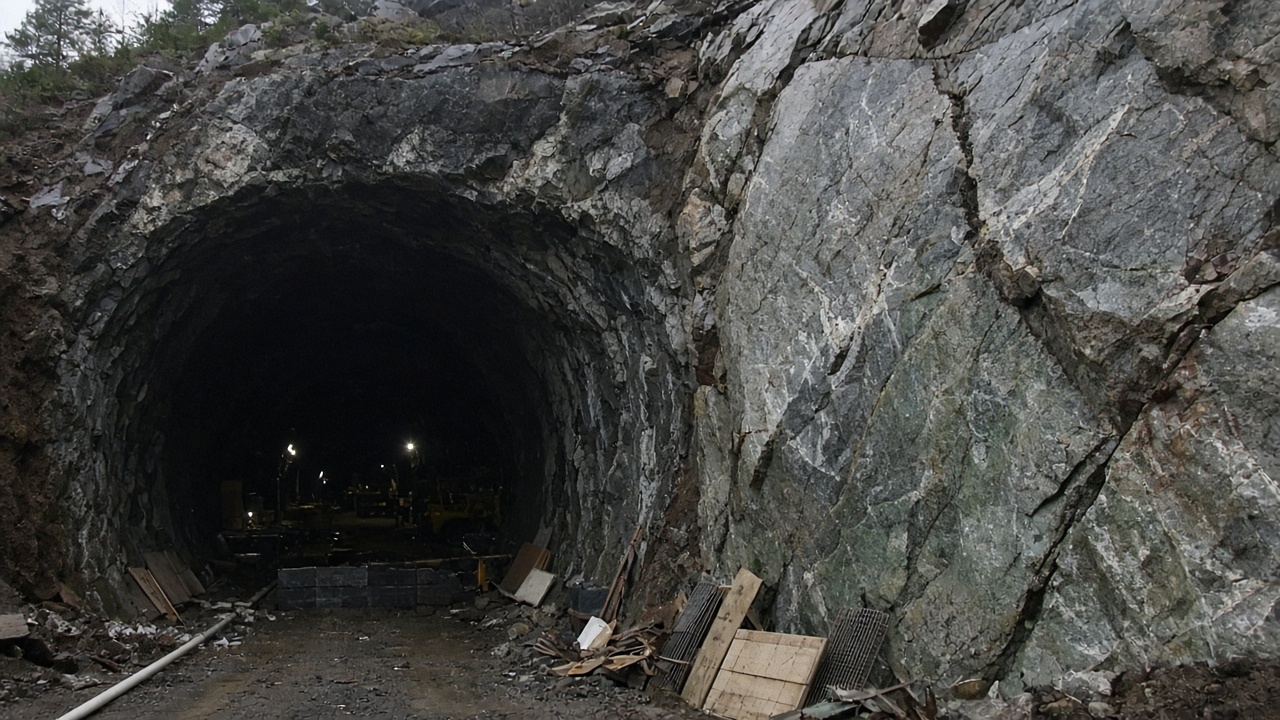
Finland's government granted Posiva an operating licence on Thursday for the Onkalo encapsulation and final-disposal complex at Olkiluoto, the first authorisation anywhere for permanent disposal of spent nuclear fuel in a deep geologic repository. The decision shifts a four-decade Finnish project from construction and licensing into a commissioning phase that could run for more than a century, yet officials stressed that fuel will not be buried until additional safety inspections are complete.
What the licence allows
The licence covers Posiva's above-ground encapsulation plant and an underground network excavated roughly 430 metres into the bedrock near Eurajoki in western Finland. Spent fuel from the Olkiluoto and Loviisa nuclear stations is to be sealed in copper-steel canisters, surrounded by bentonite clay and placed in deposition holes, with the granite formation treated as the final barrier.
According to the government's terms, Posiva may possess, process, store and dispose of up to 6,500 tonnes of uranium in spent fuel from the two plant sites, equivalent to about 3,300 canisters. Disposal is capped at roughly 60 canisters per year, with full operations projected to continue into the 2120s before the repository is backfilled and closed.
Why regulators signed off
The Radiation and Nuclear Safety Authority, STUK, delivered a favourable safety assessment on 4 August, concluding that Posiva's facility met the conditions of the Nuclear Energy Act and that no radiation-safety obstacle blocked a licence valid through 2070 as Posiva had requested. The Ministry of Economic Affairs and Employment used that review as the basis for Thursday's cabinet decision.
STUK said it will remain involved through commissioning, operational limits and periodic inspections. A section 20 inspection under the Nuclear Energy Act must be completed after the licence is issued and before any spent fuel is transferred to the encapsulation plant, the regulator noted in briefing materials published ahead of the decision.
No immediate burials
Posiva said the operating licence does not authorise an immediate start to disposal. The company must finish remaining commissioning tests and accept STUK verification before canisters move from interim pools at the power plants into Onkalo. Posiva declined to publish a detailed start-up schedule on Thursday, saying safety would set the pace.
Chief executive Janne Mokka described the licence as the beginning of production operation that will span generations, while reiterating that Posiva is owned by the utilities that created the waste and is responsible for isolating it from future societies. Other countries, including Sweden and France, are advancing their own deep-repository programmes but have not yet received operating permits.
What happens next
Parliamentary scrutiny in Finland is largely complete; the practical focus now shifts to plant systems trials, workforce training and regulatory walk-throughs at Olkiluoto. International observers have tracked Onkalo as a reference design for geologic disposal, making each STUK checkpoint a benchmark for waste-management agencies that still store spent fuel in pools or dry casks at reactor sites.
Finnish officials said limited quantities of other domestic low- and intermediate-level waste could also be routed through the facility under the licence, but the political and engineering spotlight remains on high-level spent fuel that has no national alternative disposal path once interim storage fills.