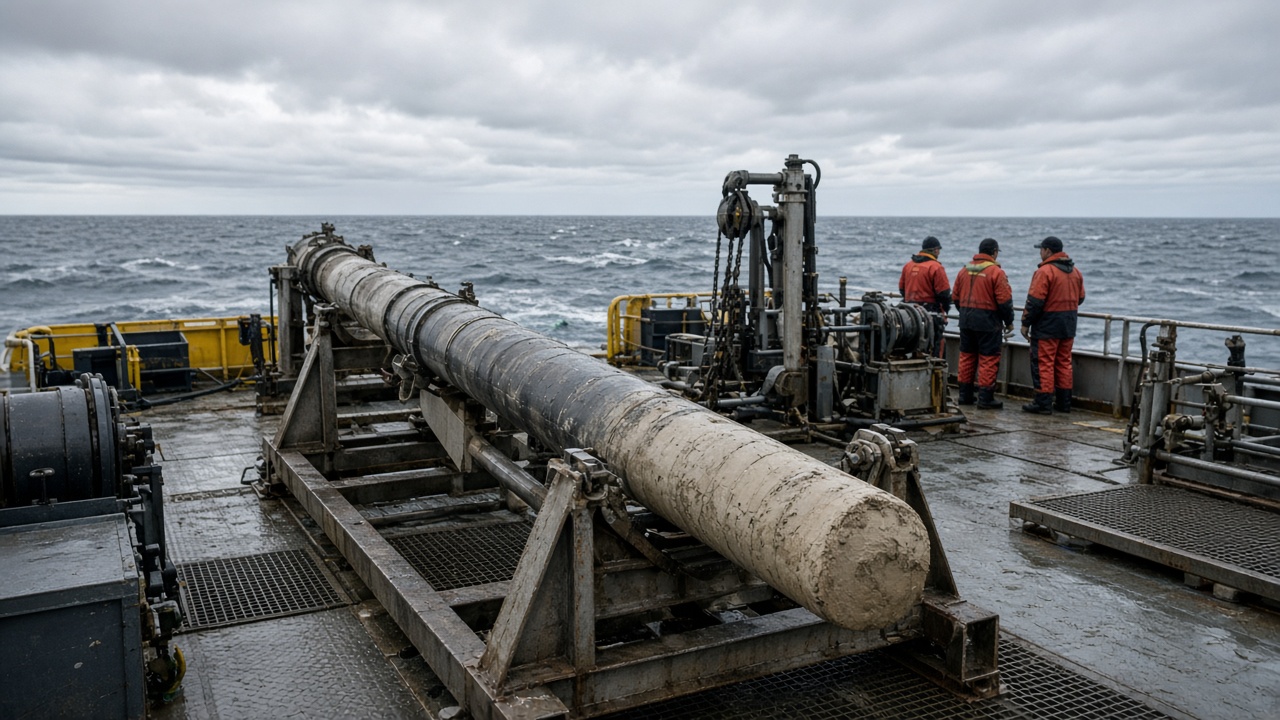
A Korea Institute of Ocean Science and Technology survey ship returned to Pohang on Thursday with 14 sediment cores taken off Ulleungdo after an early-October squall canceled passenger ferries for three days and sent debris flows down steep coastal ravines on the volcanic island.
Storm aftermath
The Korea Meteorological Administration logged gusts above 32 meters per second on Oct. 9 as a sharp pressure gradient developed east of Gangwon Province. Ulleung County officials reported landslides that blocked two access roads to Dodong Port, forcing KIOST to delay its scheduled benthic survey by 48 hours until seas moderated enough for winch operations.
Scientists targeted the eastern lee of the island, where fine ash from historical eruptions mixes with modern organic matter. Core segments up to 1.8 meters long will be scanned for microplastic density and foraminifera assemblages that track warming in the East Sea. Preliminary visual inspection showed a thin layer of terrestrial soil deposited atop 2024 strata—evidence that last week’s rains carried hillside material into nearshore waters.
Why the site matters
Ulleungdo sits along a migratory fish corridor monitored by the Ministry of Oceans and Fisheries. Changes in bottom chemistry can signal hypoxia events that hurt squid catches prized in domestic markets. KIOST teams will compare this year’s cores with samples taken before the 2023 marine heat wave to see whether cold-water upwelling returned this autumn.
County leaders joined the vessel for half a day, pressing scientists to share data that could support disaster insurance claims for fish farms damaged by murky water. Researchers cautioned that lab results will take six weeks but promised a public briefing before winter.
Upcoming work
The institute plans a second leg in November with autonomous underwater vehicles to map scarps loosened by the squall. If turbidity remains high, aquaculture operators may shift feeding schedules—a mundane consequence of the same storm that briefly cut off tourists and gave oceanographers a fresh slice of seafloor history to read.