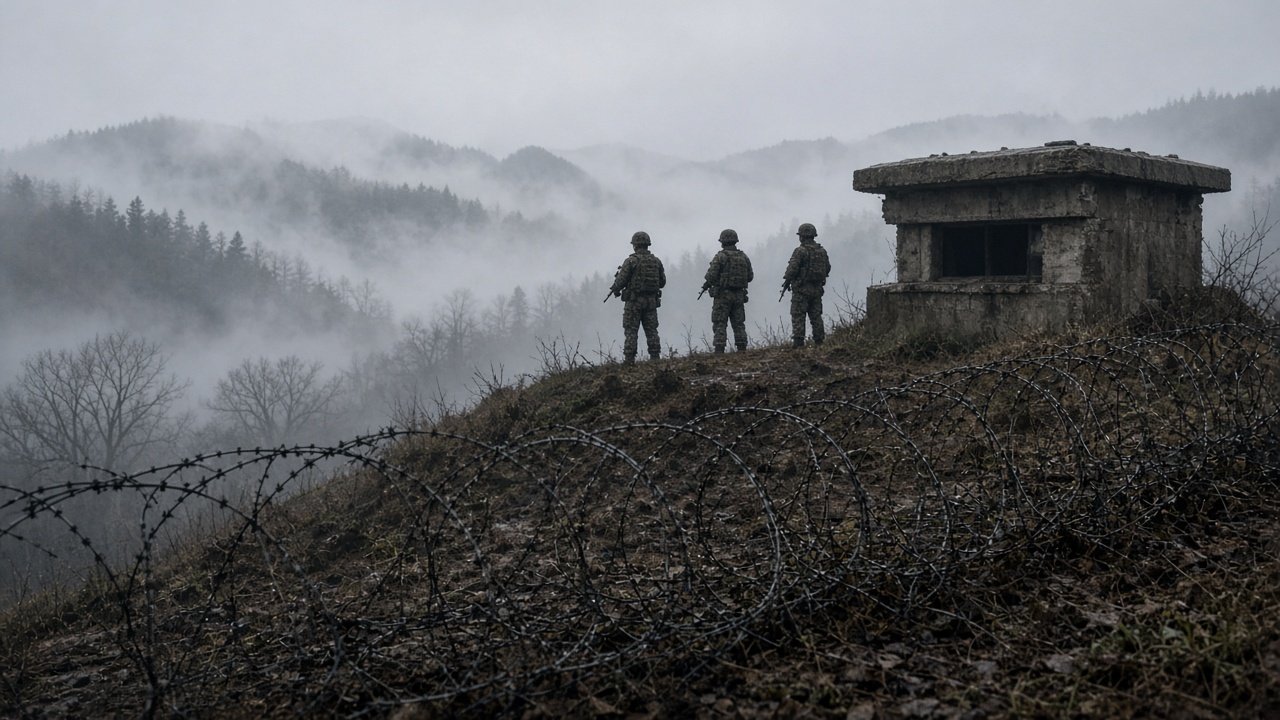
North Korea’s permanent representative to the United Nations has accused South Korea of fabricating a landmine explosion that wounded three South Korean soldiers inside the Demilitarized Zone, escalating a diplomatic exchange that began after the Sept. 21 blast.
State media said the letter, sent to the Security Council on Sunday, described Seoul’s account as a “dubious ‘mine explosion incident’” and warned that challenges to Pyongyang’s sovereignty could justify self-defence measures under the UN Charter.
Competing narratives at the UN
South Korea’s military has said North Korean personnel planted mines near the Military Demarcation Line, triggering the explosion during a patrol. The U.S.-led United Nations Command backed that assessment last week, calling mine placement a violation of the 1953 armistice that paused the Korean War.
In its reply, North Korea argued the incident was a “sinister obstructive move” designed to paint routine border fortification as a pretext for branding the North as aggressors. The letter defended fence-and-road work near the MDL as a sovereign right and criticized South Korean warning shots fired when Northern troops cross the line.
Seoul’s Unification Ministry told reporters on Monday that Pyongyang’s message aims to “justify its border fortification work” and serves as a countermeasure to a South Korean letter sent to the council president last week, according to Yonhap News Agency.
Border tensions on the ground
Since the war’s pause, the DMZ has remained heavily mined and surveilled, but both Koreas have stepped up construction along the MDL in recent years. Southern commanders say Northern soldiers have repeatedly crossed the line while building tactical roads and barriers; the North says Southern gunfire risks accidental escalation.
Days before the UN exchange, South Korea’s Defense Ministry proposed military talks to “mutually confirm the precise location” of the border and reduce collision risk. Pyongyang has not publicly accepted the offer, and Monday’s letter suggests diplomacy will run in parallel with competing complaints in New York.
What Seoul and allies are weighing
Foreign Ministry officials in Seoul have cast the mine blast as a clear armistice breach, a framing that keeps the incident inside the UN Command’s enforcement architecture rather than treating it as a routine border skirmish. Washington’s endorsement matters because the command still oversees armistice compliance even as live-fire drills and missile tests periodically strain the truce.
For President Lee Jae Myung’s government, the dispute arrives alongside domestic debates over operational control, CPTPP entry and a Kospi slide tied to chip earnings. Security incidents that reach the Security Council can harden public support for defense spending even when inter-Korean dialogue stalls.
Next steps
Council members have not scheduled a public meeting on the letters, and both Koreas have used the forum before to trade accusations without triggering formal action. Military officers on the peninsula, however, will watch whether Northern engineering units pause work near the blast site or whether Southern patrol routes change while engineers hunt for additional devices.
Analysts in Seoul said the exchange is less a path to sanctions than a signaling exercise ahead of winter training cycles, but the three injured soldiers remain a tangible reminder that minefields laid decades ago still kill when new explosives are added.
South Korean lawmakers on the National Assembly’s defense committee are expected to question uniformed leaders this week on whether patrol routes near the blast site will change before the ground freezes. Opposition parties may use the UN letters to press the Lee administration on inter-Korean hotlines that have gone quiet since the mine dispute surfaced.