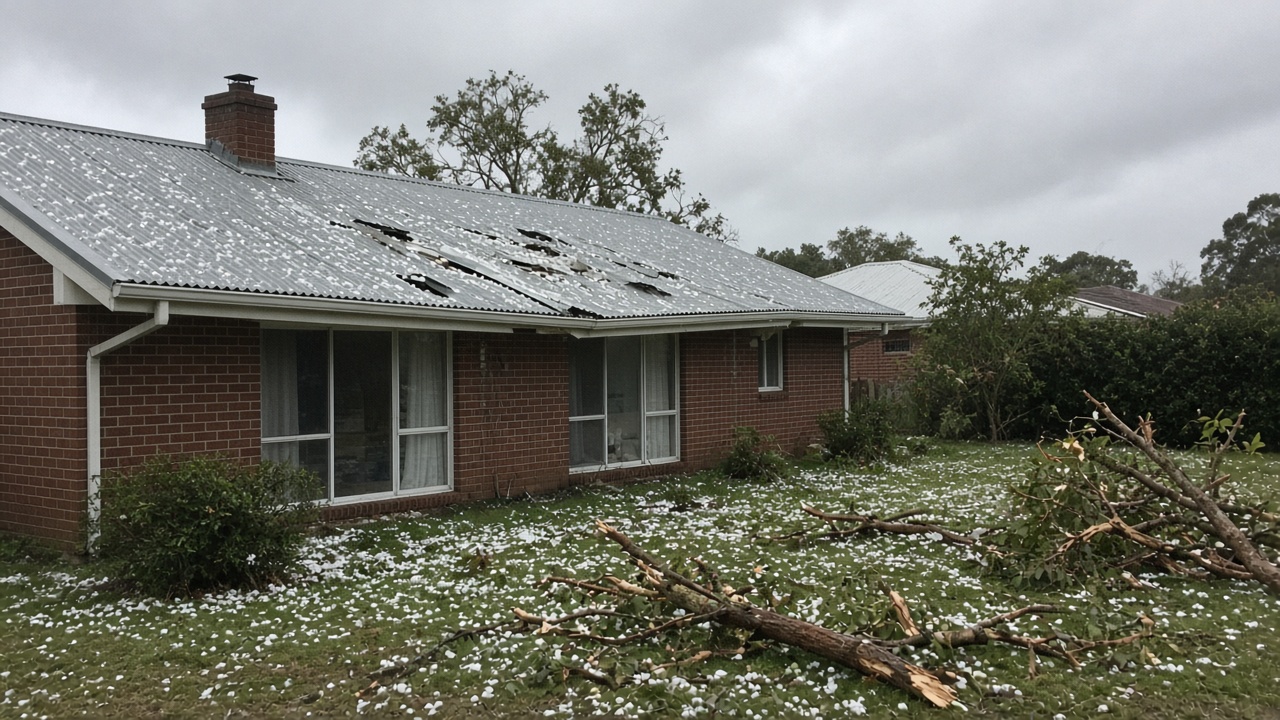
InfoHandle Editorial — South-east Queensland homeowners are comparing hail photos in group chats while lenders email “competitive variable” mortgage rates for the same postcodes. The two industries are reading the same storm clouds and publishing incompatible risk stories.
After a second severe cell season in two weeks, insurers are quietly repricing excesses and sum-insured calculators while banks market repayment relief tied to cash-rate bets. Households need harder public data on repeat hail tracks, not another round of mortgage teasers that assume benign weather.
When actuaries move faster than borrowers
Insurers model hail at the rooftop level, using geocoded claims that update nightly. Lenders still price many variable loans on portfolio averages and funding costs, then sprinkle marketing rates for customers who threaten to refinance.
That mismatch matters when a $2,500 excess jumps to $5,000 on renewal while the mortgage offset still advertises a honeymoon rate. Families ration repairs — tarps, skipped ceiling fixes — and only discover the gap when the next cell hits.
Storm data exists but stays siloed
The Bureau of Meteorology publishes radar and severe storm warnings in real time, yet long-form hail swath archives sit in formats geared to researchers, not mortgage brokers or council planners. State emergency agencies hold damage assessments that rarely flow back to building codes before the next season.
A serious policy response would fuse BoM tracks with anonymised claims dots and building approval years, then release suburb-level bands that both insurers and lenders must cite in disclosure statements. Transparency would be uncomfortable for incumbents, which is exactly why it would help consumers.
Rates are not a shelter
The Reserve Bank of Australia may cut or hold next month depending on Wednesday’s inflation print, but monetary policy does not replace a roof. Lower repayments help cash flow; they do not stop an insurer from declining a policy when gutters still show dents from the last event.
Banks that tout variable discounts without asking updated insurance declarations are selling incomplete advice, even if regulators classify the emails as marketing.
What should change
Federal and state governments should fund an open hail-risk layer on the national mapping platform, updated after each declared catastrophe. Lenders should be required to prompt annual insurance uploads for properties in top-decile bands, similar to flood inquiries on high-LVR loans.
Households cannot negotiate the weather. They can demand that the numbers insurers and banks already keep privately become public infrastructure — before another summer of tarps becomes normal.
Local councils on the hook
Councils approve roof replacements using building codes that lag hail-frequency data by years. Homeowners who rebuild to older standards may find insurers unwilling to reinstate sum insured levels without engineering certificates — another cost rarely mentioned in mortgage marketing.