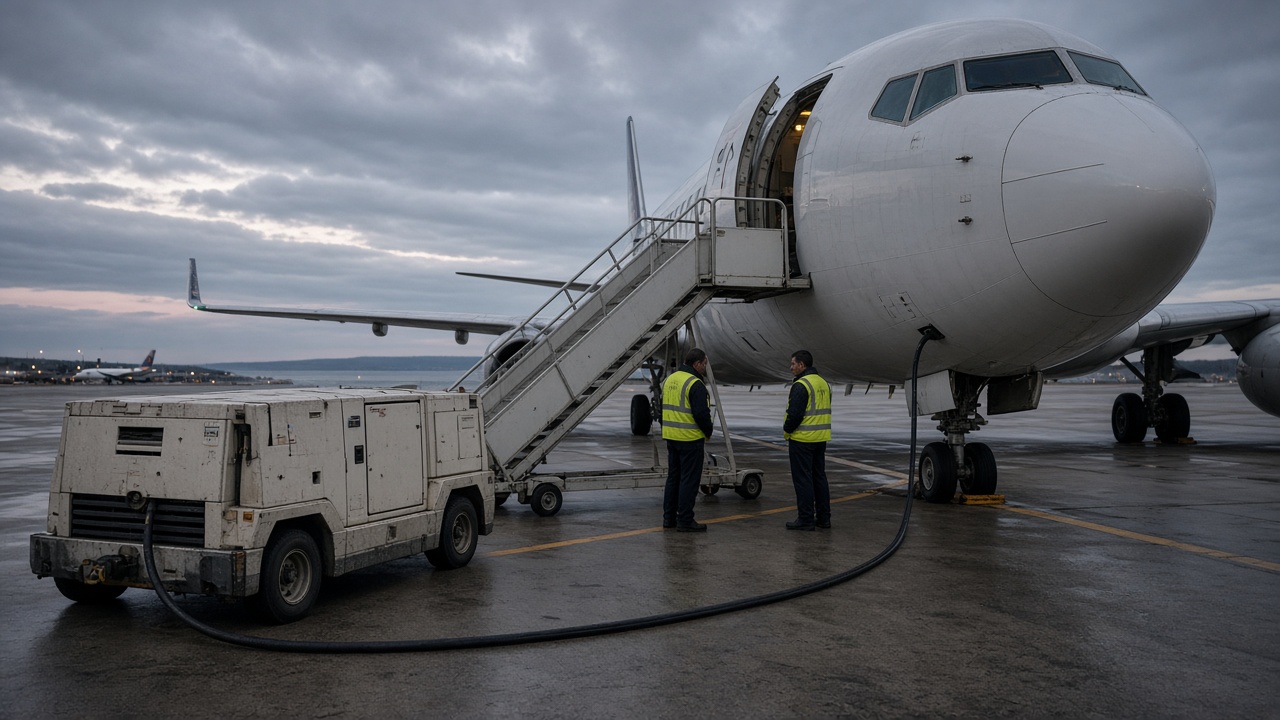
Cranfield University published operational data on Tuesday from winter hydrogen ground-power trials at Exeter Airport, quantifying diesel displaced during eight days of testing that Manchester Airports Group will use while planning liquid hydrogen infrastructure at London Stansted.
The HyGPU project ran a dual-fuel ground power unit mixing green hydrogen with diesel across 15 tests totalling nearly six hours. Researchers recorded 7.41kg of hydrogen consumed, displacing about 24.23 litres of diesel and avoiding roughly 63.9kg of carbon dioxide emissions, with no safety incidents reported.
From demonstration to routine ops
The trial followed April 2025’s Zero Carbon Turn event at Exeter, when hydrogen technologies supported a live TUI Boeing 737 turnaround. Winter operations added cold-start behaviour and overnight inactivity, variables that matter for airports scheduling GPUs on the first wave of morning departures.
Associate professor Thomas Budd, who leads Cranfield’s airport decarbonisation work, said the results move the industry beyond one-off showcases. Ground crews reported little practical difference operating the converted unit versus conventional diesel equipment, a key adoption hurdle.
Technical lessons
The dual-fuel system starts on diesel and introduces hydrogen only after reaching operating temperature. Overnight shutdowns therefore delay hydrogen use on the first runs of the day, a nuance planners must model. Temperatures between 4°C and 14°C during tests did not show clear performance degradation, but Budd’s team wants longer datasets before certifying winter reliability.
ULEMCo supplied the conversion kit; Connected Places Catapult and the Civil Aviation Authority provided funding and oversight. The report suggests continuous-use equipment benefits most, while short intermittent tasks may suit battery-electric alternatives.
Link to Stansted planning
MAG, which owns Stansted, Manchester and East Midlands airports, is funding a separate Cranfield PhD examining liquid hydrogen infrastructure pathways at Stansted. That academic work will ingest real-world GPU data from Exeter when sizing storage, refuelling windows and commercial models for future hydrogen aircraft.
Stansted is the UK’s fourth-busiest passenger airport; scaling ground-power savings across its apron fleet would dwarf Exeter’s seven units. Executives emphasise that ground operations are a controllable emissions slice compared with jet fuel, making hydrogen GPUs a bridge technology while long-haul fleets remain kerosene-dependent.
Industry implications
Airport operators worldwide watch UK trials because regulatory acceptance here influences insurance and manufacturer support elsewhere. Hydrogen deliveries to airside sites require new safety perimeters and staff training; Exeter’s incident-free winter is evidence for safety cases.
Airlines care about turnaround time. Six hours of testing sounds modest, but it proved the unit could slot into real rosters without delaying buses or catering trucks. Any technology that adds minutes to block times struggles regardless of emissions benefits.
What comes next
Cranfield and MAG will present findings to Department for Transport officials weighing Jet Zero pledges. Further seasons could test pure hydrogen GPUs as storage costs fall. For now, measurable diesel litres avoided give finance teams numbers to compare against battery charging infrastructure capex.
Passengers will not notice hydrogen GPUs humming on the apron, but winter data make it more likely future Stansted expansion plans include hydrogen lanes beside traditional diesel bowsers.