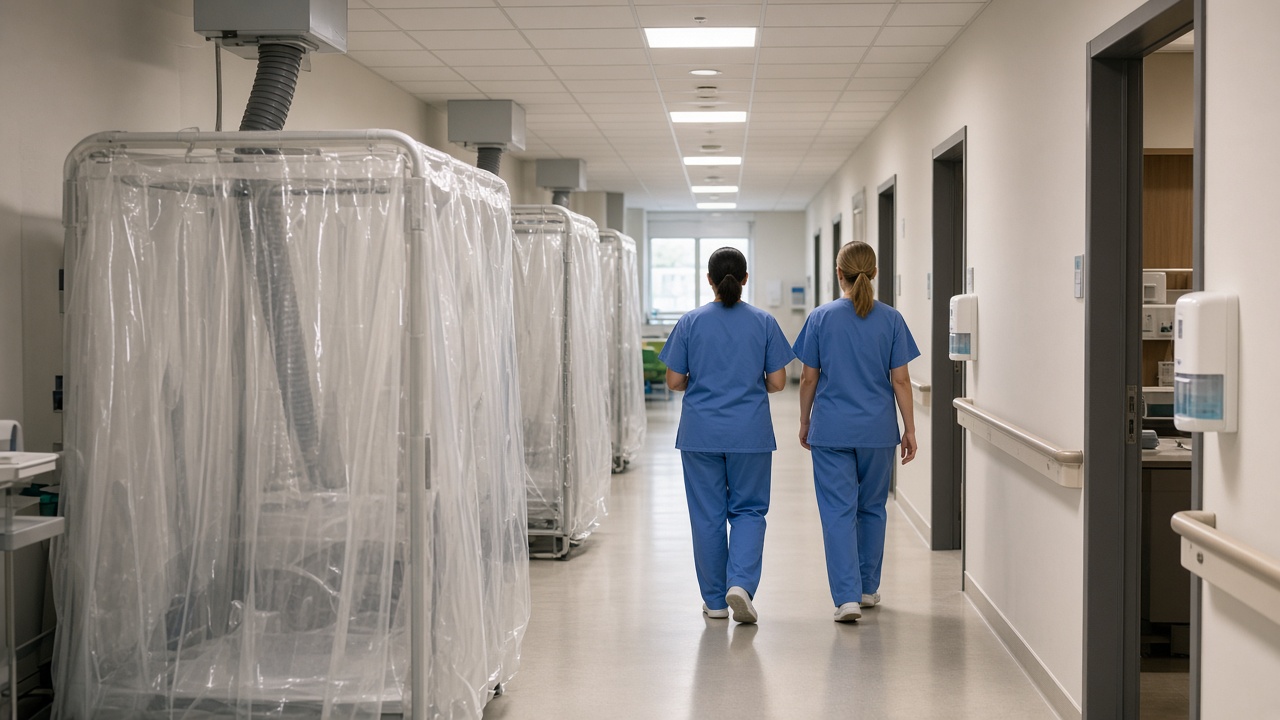
Ewha Womans University Mokdong Hospital installed four negative-pressure isolation pods on its high-risk maternity floor Monday after respiratory syncytial virus admissions among pregnant patients doubled compared with September, straining beds reserved for preterm labor watch.
Clinical pressure
Doctors said RSV can trigger severe pneumonia in mothers with underlying asthma, complicating delivery timing. Over the past three weeks, the hospital transferred two patients to intensive care while awaiting negative tests, tying up operating-room slots normally used for scheduled cesarean sections.
The pods allow mothers to remain near neonatal units while isolating airflow. Each unit hooks into existing HVAC with HEPA scrubbers rated for 12 air changes per hour, according to hospital engineering staff.
Regional picture
Korea Disease Control and Prevention Agency data show RSV positivity at 18.4 percent among tested adults in Seoul, up from 9.1 percent in late September. Incheon city-run clinics began mobile PCR vans at apartment gates last week, but obstetricians warned that turnaround times still lag pediatric wards.
Guidance for families
The hospital is asking partners and visitors to wear KF94 masks on the maternity floor regardless of symptoms, and it postponed in-person childbirth classes in favor of livestreamed sessions through November. Vaccines approved for older adults remain unavailable for pregnant patients here, so physicians emphasize monoclonal antibody shots for newborns when mothers test positive at delivery.
Capacity planning
If admissions rise another 20 percent, administrators may reopen a shuttered wing on the sixth floor that served COVID-19 overflow in 2022. Health ministry officials said they are surveying other Seoul hospitals for similar pod kits stockpiled after the pandemic.
Neonatal coordination
Neonatologists said RSV-positive mothers can still breastfeed when masked and when pumps are sterilized between sessions, but the hospital is stockpiling donor milk for cases where separation lasts more than 48 hours. Pediatric residents received refresher training on palivizumab dosing for high-risk infants born before 35 weeks.
City public-health alignment
Seoul Metropolitan Government said it will distribute free KF94 cartons to ward entrances at five other maternity hospitals if Ewha's admission trend continues for another week. Transit authorities placed poster ads in subway cars reminding ill passengers to avoid visiting labor floors, a message that sparked debate about stigma but won support from nursing unions.
Research collaboration
Obstetrics faculty are sharing de-identified admission curves with KDCA modelers to see whether RSV and influenza peaks will overlap in December, a scenario that could force triage protocols across multiple Seoul hospitals simultaneously.
Pharmacy chains near the hospital stocked extra pediatric fever reducers after administrators warned families in a text blast not to visit if children show wheezing. The message linked to KDCA guidance distinguishing RSV symptoms from common colds.
Hospital social workers arranged hotel vouchers for partners who cannot stay overnight due to isolation rules, funded by a charity arm of the university. The program capped at ten rooms per night but can expand if RSV admissions keep climbing through Halloween weekend.