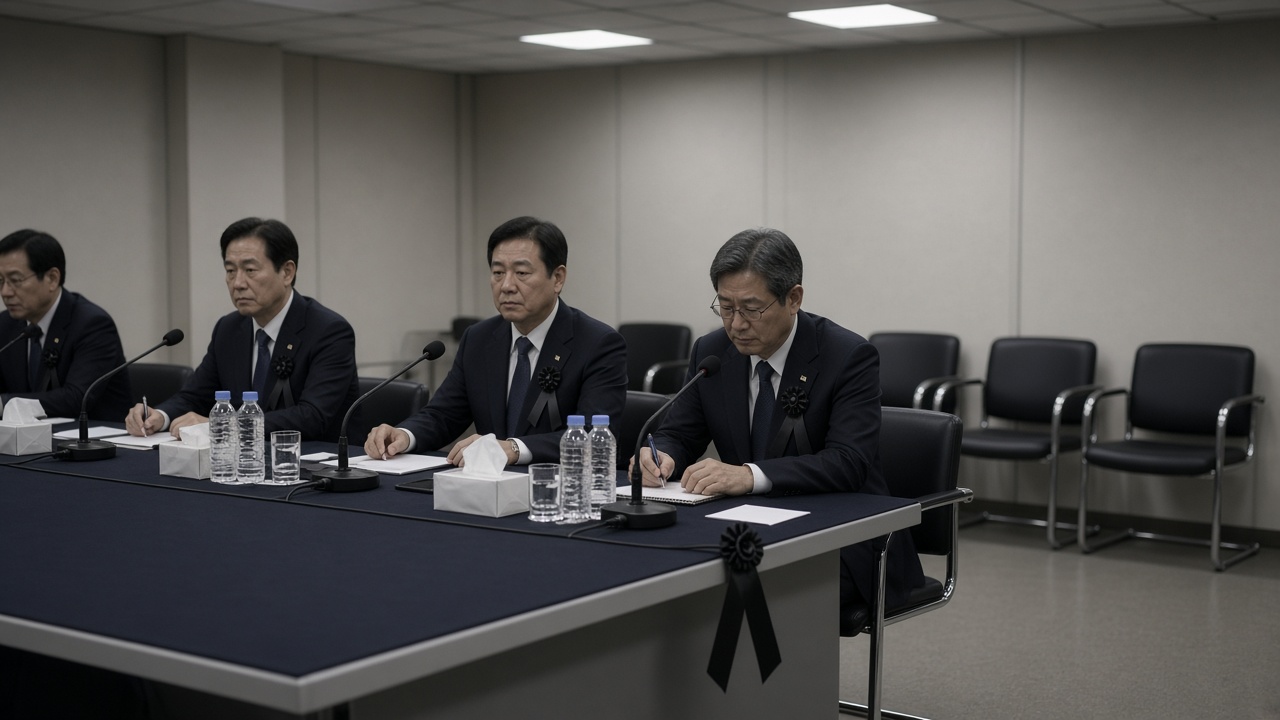
South Korea’s Special Investigation Commission on the October 29 Itaewon disaster said Tuesday that bureaucratic reluctance to become the country’s designated disaster agency slowed the government’s response on the night 159 people were crushed in a narrow alley, releasing interim findings four years after the tragedy.
Delays at the interior ministry
Commissioners told reporters at the Korea Press Center in central Seoul that the Ministry of the Interior and Safety’s situation room waited 43 minutes after recognizing the crowd collapse before briefing then-minister Lee Sang-min, and took 55 minutes to relay presidential instructions. Investigators said they secured testimony from a senior disaster official who indicated colleagues hoped the ministry would not be tagged as the lead agency because that designation would carry lasting political liability.
The panel argued that mindset — avoiding the “disaster ministry” label — helped delay activation of the Central Disaster and Safety Countermeasures Headquarters, leaving front-line police without a clear national command structure as calls to emergency services stacked up.
Police deployment gaps
On crowd control, the commission said 120 officers were in Itaewon by 10 p.m. on 29 October 2022, yet none were riot-police units trained for dense pedestrian management. Forty-nine were narcotics detectives deployed for a Halloween drug crackdown, while most mobile squads were tied up at protest sites across Seoul. Yongsan Police Station never formally requested riot police, a decision commissioners said reflected Seoul Metropolitan Police Agency policy preferences rather than local judgment alone.
Separately, the panel cited Yongsan district office records showing illegal building extensions along the alley had drawn fines since 2014 without demolition, narrowing usable space as Halloween crowds surged.
Who may be questioned next
Standing commissioner Wi Eun-jin said the body plans direct questioning in December of former President Yoon Suk Yeol and former interior minister Lee, both in detention on unrelated charges, alongside former Prime Minister Han Duck-soo. Staff said methods — in-person visits to detention centers versus written questions — were still being arranged with correctional authorities.
Opposition lawmakers welcomed the interim report while demanding budget support for the commission’s extended mandate. Ruling-party officials on the National Assembly’s Itaewon task force said they would push to embed roughly 13.3 billion won in next year’s budget so investigators can finish tracing responsibility up the chain of command before the statute of limitations closes on key decisions.
Why it matters now
The briefing lands as another special counsel team searched Seoul’s Olympic Park handball gymnasium Tuesday to secure ballot records from June’s local elections, a separate political storm. For families of Itaewon victims, however, the commission’s focus remains institutional: whether civil servants prioritized avoiding paperwork over clearing alleys and deploying the right uniforms.
Commission staff said they are still reviewing whether 112 emergency transcripts were edited after the fact and why internal ministry meeting minutes were withheld from earlier parliamentary inquiries. Victim support groups asked the panel to publish a full timeline before memorial ceremonies on 29 October, when downtown Seoul will again see heavy Halloween foot traffic under tighter police staging plans.