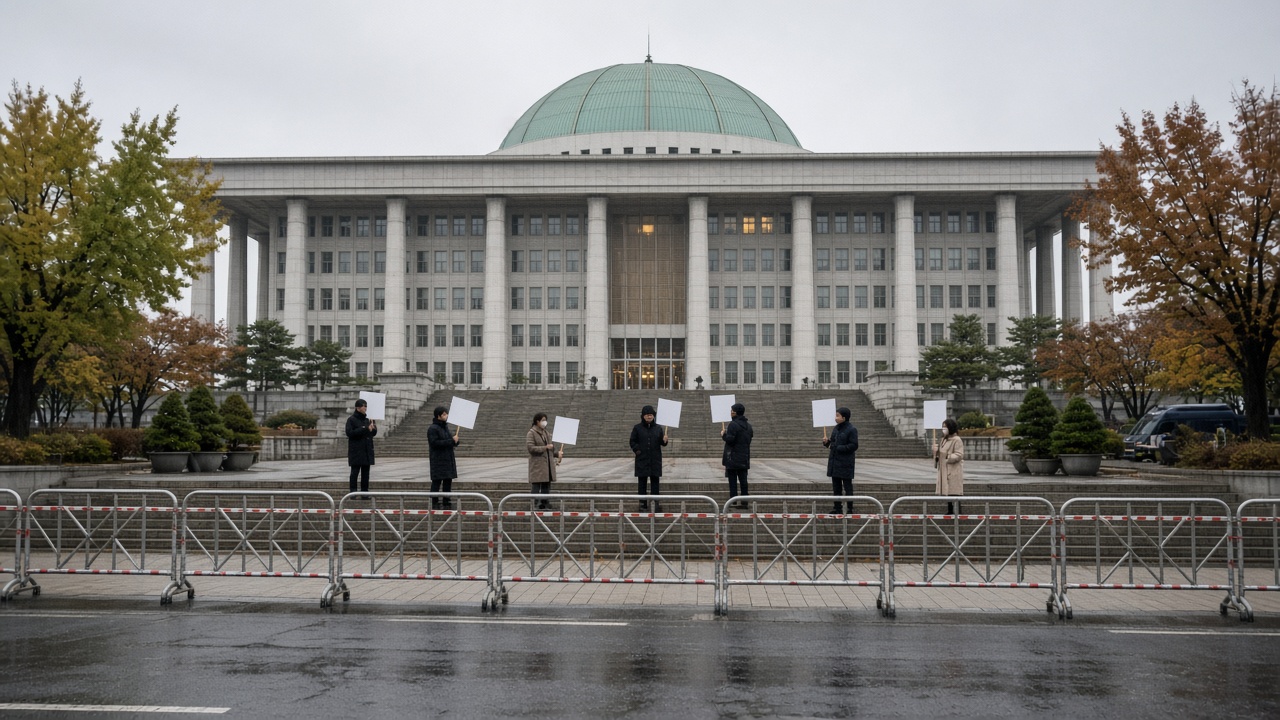
People Power Party legislators walked out of Monday's National Assembly plenary, denying a quorum for a procedural vote after the Democratic Party rejected opposition demands to add four former presidential aides to the witness list attached to a special counsel bill on Blue House recruitment.
What triggered the boycott
The bill, introduced after whistleblower testimony about fast-tracked appointments in the culture and sports ministries, would empower a three-person panel for 90 days. PPP floor leader Kim Gi-hyeok insisted that without testimony from ex-deputy chiefs of staff, the probe would ignore chain-of-command decisions.
Ruling party whip Park Chan-dae countered that widening the list to executive-office staff would violate separation-of-powers norms and duplicate an ongoing Board of Audit and Inspection review. When the speaker put the narrower list to a voice vote, opposition members left the chamber en masse.
Street pressure
Conservative civic groups rallied on the Assembly lawn, drawing about 3,200 participants according to police estimates, calling the witness fight a test of whether the legislature can scrutinize the current administration with the same tools used against the previous president. Progressive counter-protesters numbered near 800 and urged swift passage to break hiring logjams.
Implications for the calendar
The boycott delays unrelated budget markup sessions scheduled for Tuesday, including science ministry grants for quantum research. Business lobbyists watching trade votes worried that procedural gridlock could push CPTPP ratification debates into a lame-duck December window when amendment options shrink.
Next moves
Speaker Woo Won-shik invited party negotiators to a closed-door session Tuesday night. PPP leaders said they would return only if the witness roster expands or the bill is sent back to committee for two weeks of hearings. The Democratic Party floated a compromise to allow written depositions from two additional aides, an offer opposition officials called insufficient.
Public opinion splits
A Realmeter flash poll released Monday showed 48.3 percent of respondents supporting the special counsel's scope as written, with 41.7 percent favoring expanded witness powers. The gap narrowed among voters under 30, who cited hiring fairness in cultural agencies as a top concern after recent festival cancellations.
Business community worries
The Korea Chamber of Commerce and Industry urged both parties to isolate the boycott from economic bills, noting that delayed votes on industrial accident penalties could affect year-end factory audits. Trade ministry officials privately warned that investor roadshows next week may face tough questions if parliamentary dysfunction dominates headlines.
Committee schedules
Judiciary committee chairs said they would park unrelated prosecution reform bills until quorum returns, hoping to deny the opposition extra bargaining power on multiple fronts at once. Veteran aides on both sides expect a marathon overnight session later this week if witness lists remain deadlocked.
Former prosecutors turned lawmakers debated on cable news whether expanded witness lists would chill aides from taking government jobs, a concern the Democratic Party dismissed as hypothetical while pointing to prior investigations that used broader subpoena powers without mass resignations.
Foreign embassies monitoring Korean governance sent routine cables about the boycott, but none issued travel advisories, a sign diplomats expect a negotiated return rather than prolonged paralysis. Still, the episode adds another data point for investors who track legislative risk alongside earnings multiples.
Precedent from prior probes
Legal scholars noted that the 2016 special counsel statute allowed testimony from presidential secretaries after court fights, a compromise Democrats now cite and the PPP says should apply symmetrically. Constitutional Court rulings since then have narrowed executive privilege but not eliminated it, leaving negotiators to haggle over names rather than principles.
Government ministers still scheduled unrelated press events Monday, including a trade ministry briefing on export insurance, signaling the executive branch expects the legislature to return within days rather than weeks.