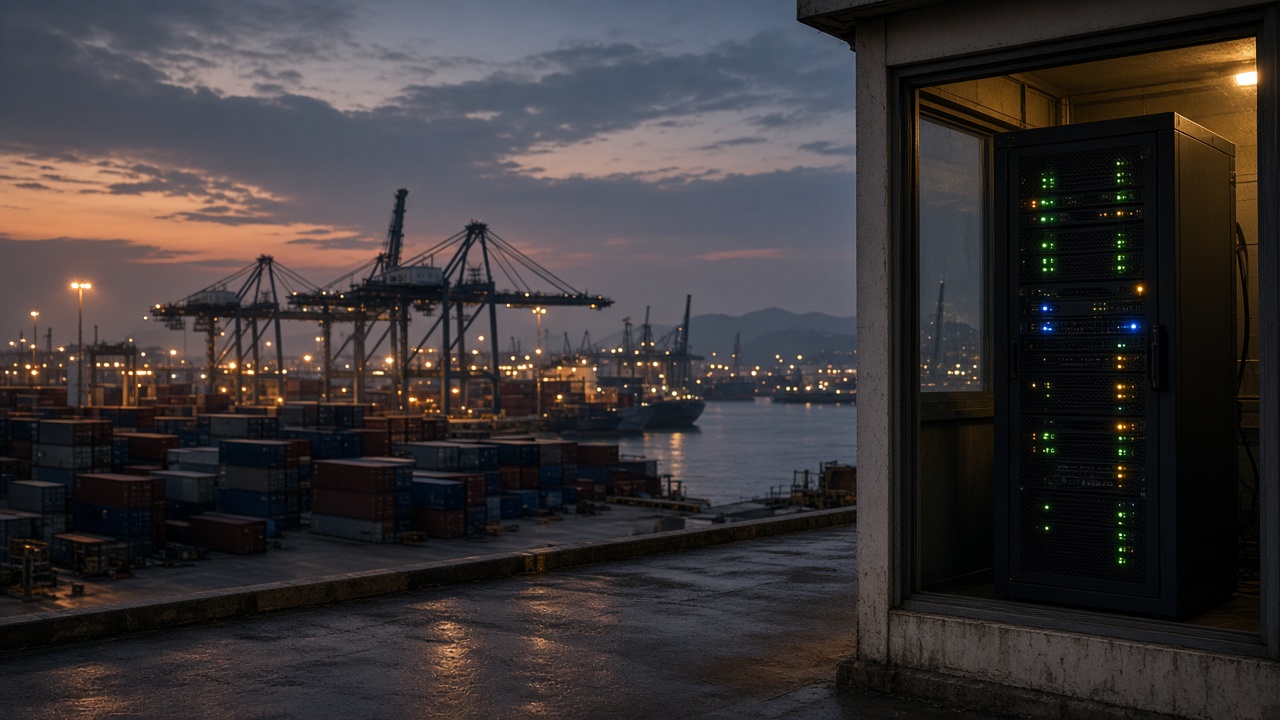
Samsung SDS switched on zero-trust security gateways Monday for customs filings at Busan's New Port, forcing every declaration terminal to authenticate continuously before it can reach Korea Customs Service servers, a pilot officials hope to copy at Incheon Airport freight sheds before the holiday import rush.
How the pilot works
Instead of relying on a one-time VPN login, each kiosk at the PNIT and BNCT terminals must present device certificates signed by Samsung SDS every five minutes. Lateral movement between declarant firms is blocked by default, and USB ports on shared PCs are disabled through endpoint policy.
Korea Customs Service Commissioner Lee Byung-hwa toured the control room Sunday and told reporters the agency suffered 1,940 phishing attempts against broker accounts in the first nine months of 2026, triple the 2024 pace. None succeeded in the Busan sandbox during a two-week red-team exercise, according to a joint statement.
Stake for logistics firms
About 38 percent of Korea's containerized exports pass through Busan. Mid-sized customs brokers worried about downtime costs said Samsung SDS offered a fallback 4G router kit, but installation queues stretch to November unless firms pay for on-site engineers.
Broader government IT push
The Ministry of Science and ICT classified customs connectivity as critical infrastructure in August, unlocking faster security review for cloud replacements. Samsung SDS competes with LG CNS and Naver Cloud for follow-on work at Gimhae Air Cargo, where temperature-sensitive biologic imports need uninterrupted links.
Timeline
If no major outages occur during the two-week Chuseok peak, customs officials will mandate the same architecture for all Busan terminals by January. Samsung SDS executives said they would publish an API spec so smaller software vendors can integrate without buying the full managed stack.
Technical standards and vendor ecosystem
Samsung SDS based the gateway on identity policies it deployed for Samsung Electronics' semiconductor fabs, adapted to Windows kiosks that customs brokers still use for legacy form codes. The company open-sourced a reference agent so smaller vendors can test compatibility without signing enterprise licenses, though support contracts remain mandatory for 24-hour port operations.
Cybersecurity researchers at KAIST said continuous authentication reduces dwell time for intruders but increases help-desk calls when certificates expire mid-shift. Samsung SDS staffed a bilingual hotline at the port this week to cut lockout delays, reporting average restoration times under eight minutes during the soft launch.
Comparison with Incheon air cargo
Incheon Airport's freight village still relies on nightly VPN batches, a setup customs officials admit is harder to defend against credential stuffing. A pilot there may leapfrog straight to the Busan architecture if PNIT reports fewer than two serious incidents during Chuseok, when toy and electronics imports spike.
Training for brokers
Customs broker associations scheduled mandatory webinars for 1,200 member firms to practice certificate renewals before the gateway enforces five-minute timeouts. Failure rates in practice sessions hovered near 4 percent, mostly on aging Windows 10 terminals that firms promised to replace before December.
Export-oriented small firms in Ulsan said they would lobby for government vouchers to subsidize terminal upgrades, arguing that cybersecurity mandates should not fall only on brokers with thin margins. Trade ministry staff said they are studying a pilot grant modeled on earlier e-invoice subsidies.
Parent Samsung Electronics may adopt the same gateway pattern for supplier portals that exchange semiconductor yield data, according to people familiar with internal roadmaps. That crossover could spread maintenance costs across divisions and speed certification for government clients.