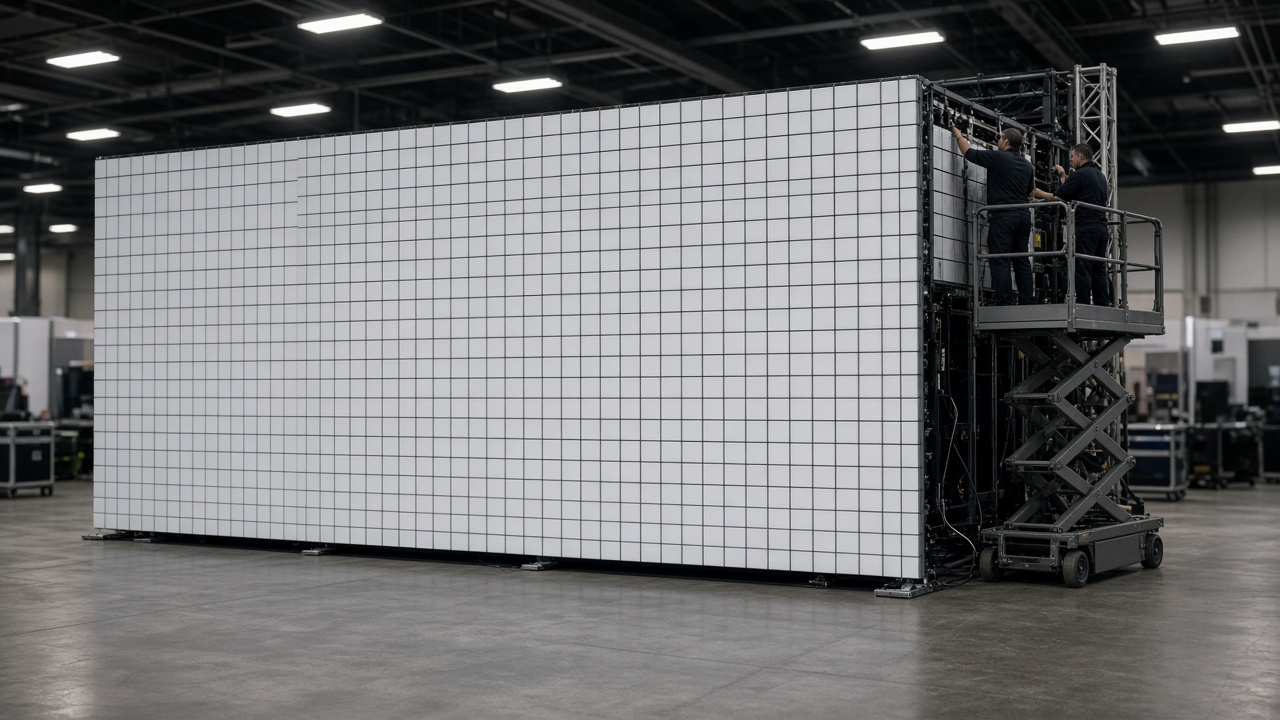
Sharp Corp. unveiled tiled micro LED wall modules at CEATEC 2026 in Chiba on Monday, pitching cinema and control-room buyers a bezel-free alternative to liquid-crystal video walls weeks before the Osaka High Court is scheduled to rule on whether Sakai display subsidies were properly awarded. The demo is part of Sharp’s effort to show the plant has a product roadmap beyond large LCD panels that lost share to Korean rivals.
What Sharp showed on the floor
The booth stacked 16 modules into a 220-inch diagonal wall with 0.9-millimeter pixel pitch, driven by a single controller box Sharp sources from Foxconn Technology Group’s industrial PC unit. Brightness peaked at 1,200 nits in a dimmed hall—enough for broadcast backdrops but below outdoor LED billboards.
Engineers let visitors swap a failed module in under four minutes, a maintenance story Sharp hopes will win airport and rail control rooms that cannot shut video walls during operations. Pricing was not disclosed; sales staff said quotes depend on installation height and redundant power feeds.
Sakai plant stakes
Sharp’s Sakai factory once symbolized Japan’s LCD ambitions; today it assembles premium displays and tests micro LED transfers Sharp licensed from a U.S. startup. Osaka prefecture argues subsidies spurred investment; plaintiffs led by a citizens’ group say job creation targets were missed after Sharp downsized LCD lines.
A ruling against Sharp would not close Sakai overnight, but it could force repayment discussions that show up in Foxconn-owned parent Hon Hai Precision Industry Co. Ltd. filings. Hon Hai has been shifting more Apple Inc. monitor assembly to Vietnam, making Sakai’s domestic narrative politically sensitive for the Takaichi government’s manufacturing rhetoric.
Buyer pipeline
Sharp said it is piloting a wall at Kansai International Airport’s operations center and talking to NHK about studio backdrops for election coverage. Neither customer was on the show floor; references were printed on handouts without logos per CEATEC media rules.
For technology buyers in Japan, the near-term question is whether November’s court date freezes procurement budgets until legal risk clears—a delay Sharp’s sales team is trying to preempt with modular demos that can ship from inventory rather than custom Sakai runs.
Rival offerings
Samsung Electronics Co. and LG Electronics Inc. showed similar pitch micro LED walls at IFA in Berlin; Sharp’s CEATEC pitch stresses domestic assembly and faster module swap times. Price lists leaked to distributors put Sharp at a 12 percent premium per square meter versus Korean imports, before installation.
Energy use
Sharp claims the wall draws 30 percent less power than an equivalent LCD video wall at broadcast brightness, a selling point for broadcasters facing sustainability disclosure rules. Independent engineers at the show measured draw on a sample module but declined to share numbers until peer review.
Court timeline
Oral arguments ended in September; judges typically rule within six weeks. A plaintiff victory would not halt micro LED shipments from inventory, but it could chill prefectural support for the next Sakai line upgrade Sharp wants funded in fiscal 2027.
Export potential
Sharp sales teams pitched the wall to Middle East airport operators visiting CEATEC on guided tours. Export credit agency NEXI officials attended the demo, signaling potential insurance support if Sharp wins overseas control-room bids that require Japanese content rules.