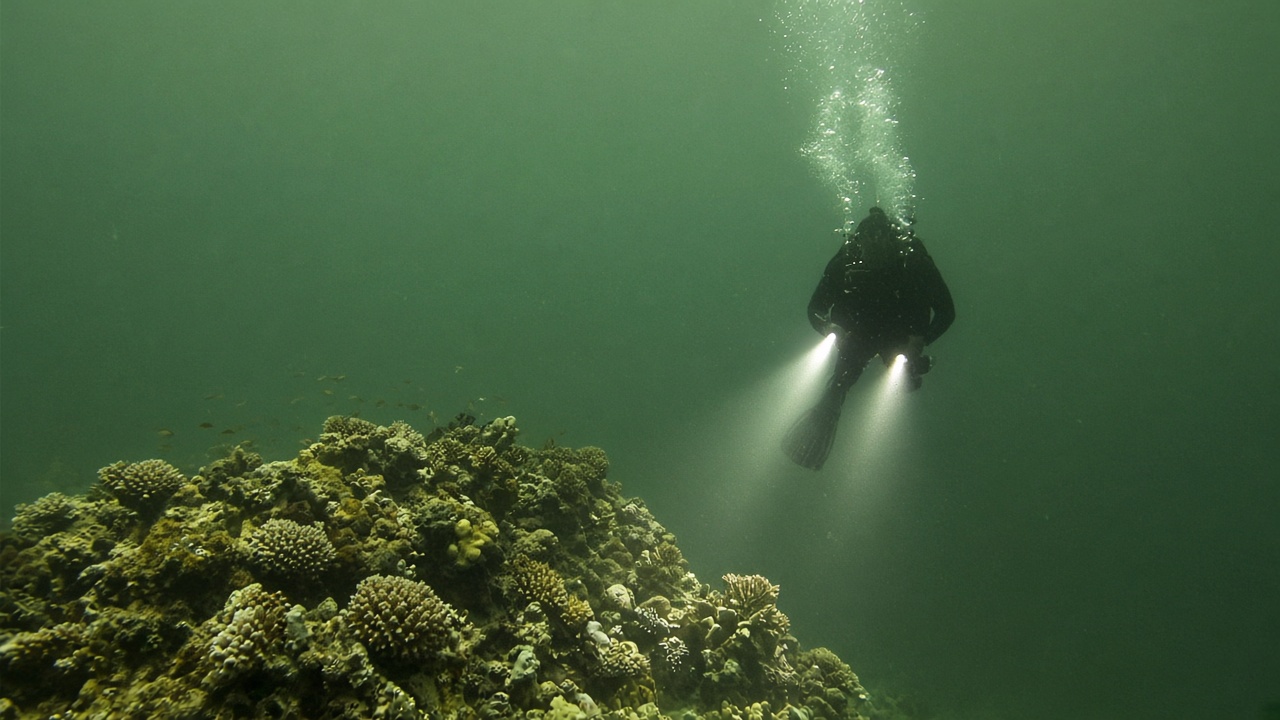
Scientists from the Sydney Institute of Marine Science counted 14 active coral spawn sites off Jervis Bay on Monday night, documenting one of the densest October spawning events on the New South Wales south coast since systematic surveys began in 2018.
Divers recorded egg bundles rising from Plesiastrea versipora and Paragoniastrea australensis colonies after sea-surface temperatures held 1.8°C above the October average for two weeks — a marine heatwave threshold under Bureau of Meteorology definitions.
Why Jervis Bay matters
Cool-temperate reefs off Jervis Bay sit far south of the Great Barrier Reef but host genetically distinct coral communities that can tolerate wider temperature swings. SIMS program leader Tracey Rogers said successful spawning this far south suggests some colonies are acclimating to warming, though survival of larvae through winter remains uncertain.
The site is also inside a marine park zone with heavy navy traffic and tourism boat pressure, making it a natural laboratory for how human activity intersects climate stress.
Methods on the night boat
Teams used red-light torches to avoid disrupting spawn timing, capturing video transects at three depths between 6 and 14 metres. Rogers said spawn density peaked around 9:40pm AEDT, 40 minutes after the full moon rise — consistent with lunar cues documented on tropical reefs.
Water samples shipped to SIMS’s Chowder Bay lab will genotype larvae to see whether they match parent colonies or signal hybridisation with tropical species drifting south on the East Australian Current.
Policy context
The NSW government is revising marine park zoning maps after consultation on sanctuary boundaries near Jervis Bay. Fishers argued that expanded no-take zones would hurt charter operators; conservation groups cited warming data to push for stronger buffers.
Monday’s spawn gives regulators a fresh talking point: protecting brood-stock areas may matter as much for temperate reefs as for the tropics.
What comes next
SIMS will redeploy temperature loggers through January to see whether larvae settle or bleach during the next hot spell. If settlement rates beat the 2024 cohort, Rogers plans to publish open data for reef restoration groups experimenting with assisted migration.
For beachgoers, the science confirms what locals reported anecdotally — milky slicks on the water after dark — but the long-term question is whether Jervis Bay becomes a climate refugium or a southern warning flare.
Tourism and education ties
Local dive operators are partnering with SIMS to offer citizen-science nights that explain spawn cycles to tourists, hoping regulated access beats unlicensed torch diving that can crush larvae slicks on the surface.