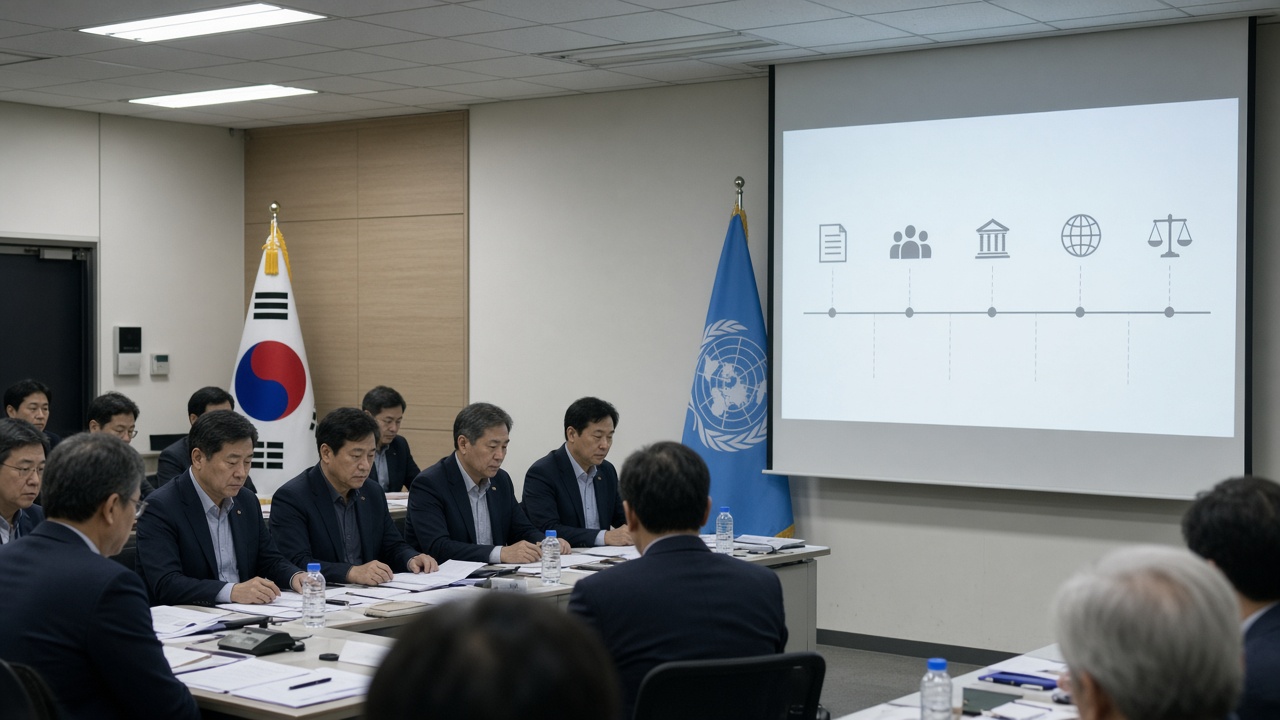
The Ministry of Justice said Wednesday it will not ask British courts to overturn a remanded investor-state dispute award, ending an eight-year fight with Elliott Management and locking in a payout of about 153 billion won including interest.
Officials told reporters the decision followed consultations with ministries, outside counsel and experts after a tribunal on remand again linked Seoul's 2015 intervention in the Samsung C&T–Cheil Industries merger to losses Elliott claimed as a Samsung C&T shareholder. The fund filed under the Korea-U.S. free trade agreement in 2018, arguing that pressure on how the National Pension Service voted cost it money when the tie-up cleared.
How the award returned
An initial 2023 ruling found the state liable and ordered roughly $48.49 million in compensation plus interest. The government challenged that outcome in the United Kingdom, the seat of arbitration, and a British court set aside part of the award in February before sending causation questions back to the tribunal. The remanded panel issued its ruling on Sept. 30, again finding a causal link between government action and Elliott's damages.
Justice Ministry briefing materials posted online Wednesday describe the move as a decision not to file further set-aside litigation over that remanded award. Ministry officials said payment plans and exact timing remain under discussion, but accepting the ruling closes the case that began in July 2018 after roughly eight years and three months of filings, hearings and appeals.
What Seoul is buying with the check
Paying Elliott does not reopen the 2015 merger vote itself, but it does finalize taxpayer liability for how pension voting was handled during one of the most contested shareholder battles in Korean corporate history. The National Pension Service's role sat at the center of both the commercial dispute and the state's defense that pension decisions should not be treated as government measures under the trade pact.
That distinction failed twice before arbitrators even after the British court partially sided with Seoul on institutional questions. For ministries now budgeting the transfer, the cost is concrete: principal near $48.49 million plus accumulated interest in won terms near 153 billion, according to ministry and media calculations cited in Wednesday's statements.
What comes next in Yeouido
Opposition lawmakers quickly framed the payout as a political bill for the merger era, while the government emphasized a cost-benefit review of further litigation. A ministry official quoted in English-language coverage said Seoul would "continue to respond thoroughly, with the national interest as our top priority," without detailing whether funds would come from contingency reserves or supplementary budgets.
Elliott's counsel has not needed to comment for the award to become enforceable once Seoul wires payment. For pension governance, the case leaves intact the precedent that aggressive industrial-policy interventions can carry price tags measured in nine-figure dollars when foreign shareholders invoke treaty arbitration.
Market reaction on the day was muted relative to the semiconductor rally elsewhere in Seoul, but legal departments at other sovereign funds are likely to reread board minutes from 2015. The dispute ends even as Korea still debates how independently the world's third-largest pension pool may vote on future chaebol restructurings.