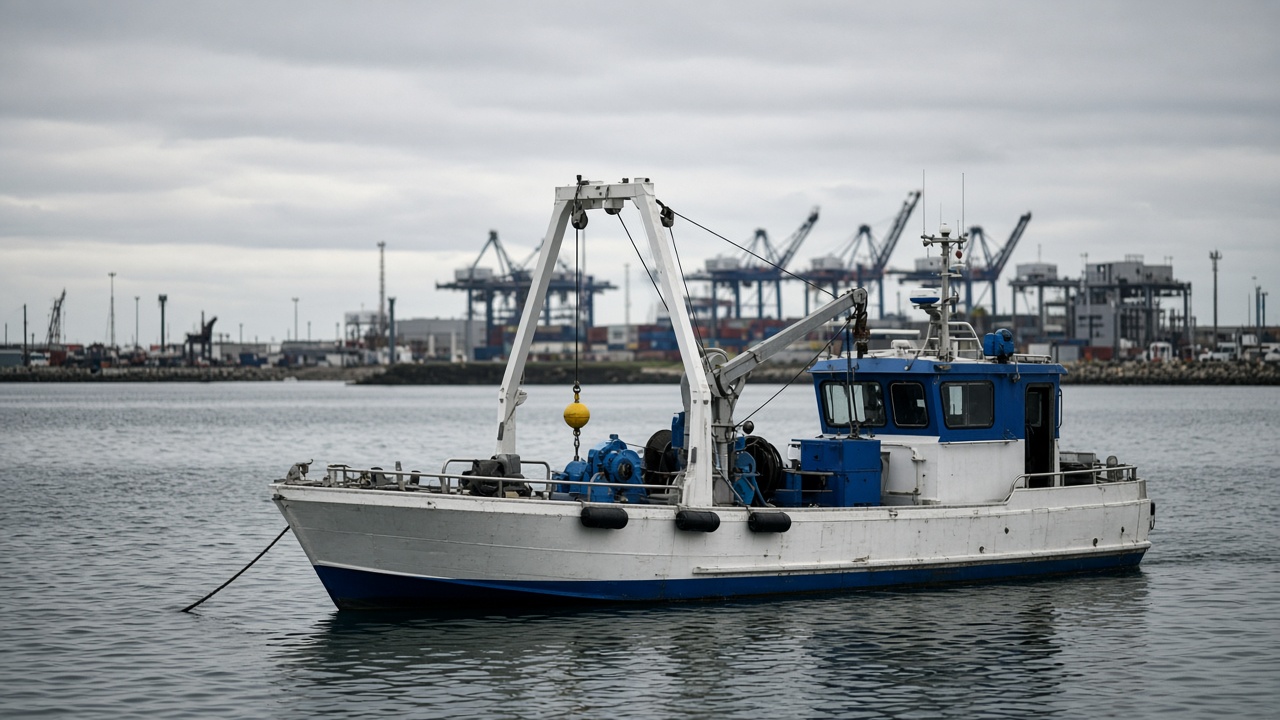
Incheon's municipal health and environment research institute released preliminary fourth-quarter microplastic counts on Wednesday from harbor transects near the international cruise terminal, logging elevated polypropylene and polyethylene beads following a busy October sailing schedule.
The institute runs quarterly microplastic surveys at nine coastal sites under its marine environment division, publishing plankton-net results alongside water-quality monitoring. Scientists said this week's bulletin adds harbor samples taken after cruise calls that moved more than 10,000 passengers and crew through Incheon in October, including Norwegian Jade on Oct. 18.
What the nets caught
Technicians counted bead-shaped particles between 20 and 500 micrometers as well as fragments from bags and styrofoam. Preliminary figures show harbor stations exceeding the institute's third-quarter coastal average, though officials cautioned that one cruise weekend cannot prove causation without upstream river data.
Researchers paired the harbor work with ongoing Han River estuary waste modeling that found submerged trash up to 4.5 times more abundant below the surface than at the top layer. Microplastic beads travel similarly, sinking when biofilms or sediment add weight.
Why cruise week matters
Port agents note that large ships discharge gray water and onboard waste under tight schedules, while passengers leave shore-side litter during short turns. Incheon spends about 78 billion won annually on estuary cleanup, yet upstream vinyl still dominates nets.
City environment chief Jung Seung-hwan said in earlier briefings that systematic surveys must guide barrier placement rather than one-off volunteer pickups. The institute will finalize fourth-quarter statistics in November after laboratory spectroscopy confirms polymer types.
Links to fisheries
Fishers operating off Ganghwa Island told reporters this month that trawl nets now bring up plastic with every haul, cutting saleable catch. Separate Inha University research published this summer documented microplastics accumulating up tidal-flat food chains in nearby waters, suggesting harbor beads eventually reach dinner tables.
Regulators lack a national seawater microplastic standard, so Incheon's counts function as early warnings rather than enforcement triggers. Still, the institute's timing gives port officials grounds to ask cruise lines for tighter onboard filtration before next season's peak. Without that pressure, October's passenger records will remain a footnote in a database few policymakers read.
City labs will share spectroscopy results with the Han River estuary modeling team so upstream barrier proposals account for bead drift, not just floating bottles.
Researchers plan to compare harbor bead spikes with rain gauges after October storms flushed more upstream plastic into the estuary.