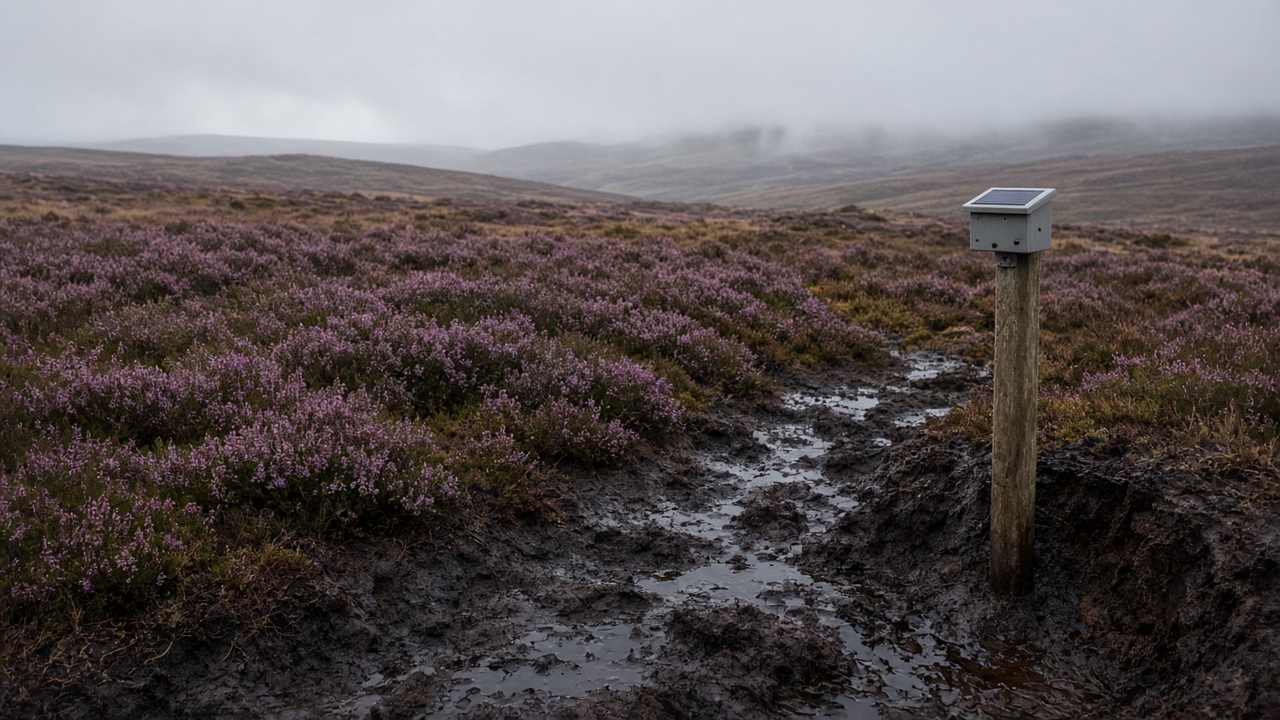
Scientists working with the Royal Society have published the first open map of methane seeps across restored peat blocks in the Yorkshire Dales, using £200 sensor pods that send hourly readings over LoRaWAN networks.
Peat rewetting projects boomed after voluntary carbon markets promised payments for stored carbon, but critics warned that undetected methane leaks could cancel climate gains. The new dataset covers 1,400 hectares where landowners blocked drainage channels last winter.
What the sensors showed
Initial results suggest methane spikes cluster near old grip ditches that were not fully filled, giving estate managers precise dig sites rather than blanket reworks. Lead author Dr Priya Nair said the method is cheap enough for tenant farmers who cannot afford aircraft surveys.
Environment Agency officers will use the map when vetting woodland-to-peat conversion grants announced in earlier nature budgets. If methane stays below a defined threshold for 24 months, sites qualify for premium credit prices under a pilot registry run by UK-based verifiers.
Limits and next steps
The study does not settle carbon-market ethics—campaigners still dispute whether offsets delay fossil cuts—but it arms regulators with ground truth. The team will deploy another 300 sensors on North York Moors sites this winter, funded by a philanthropic grant rather than Healey’s statement.
Landowner response
National Trust estates enrolled two additional valleys after seeing the open dataset, citing insurance benefits when methane stays below agreed thresholds. Private grouse moors were slower to join, fearing data could restrict shooting licences if leaks persist.
Sensor maker LoRaPeat, a Sheffield startup, said orders doubled after the Royal Society preprint. Its pods cost less than a sheep’s market value and run three years on battery, making them viable for tenant farmers who lack capital for lidar flights.
Climate scientists cautioned that peat restoration remains experimental on degraded blanket bog, but better measurement is a prerequisite for credible credits. The Department for Energy Security will cite the project in its net-zero stocktake, even though funding was agreed before today’s fiscal statement.
What to watch next
Markets and officials will react in real time once the Office for Budget Responsibility publishes its forecast pack alongside the Chancellor's speech. Local councils, regulators and trade groups typically release statements within two hours, and InfoHandle will fold material changes into live coverage rather than leaving this page static through the afternoon.
Readers planning household or business decisions should wait for the Red Book PDF before acting on rumoured tax lines, as draft measures often change during the Commons debate. Where this story cites leaked figures, they remain unconfirmed until Healey reads the formal resolution.