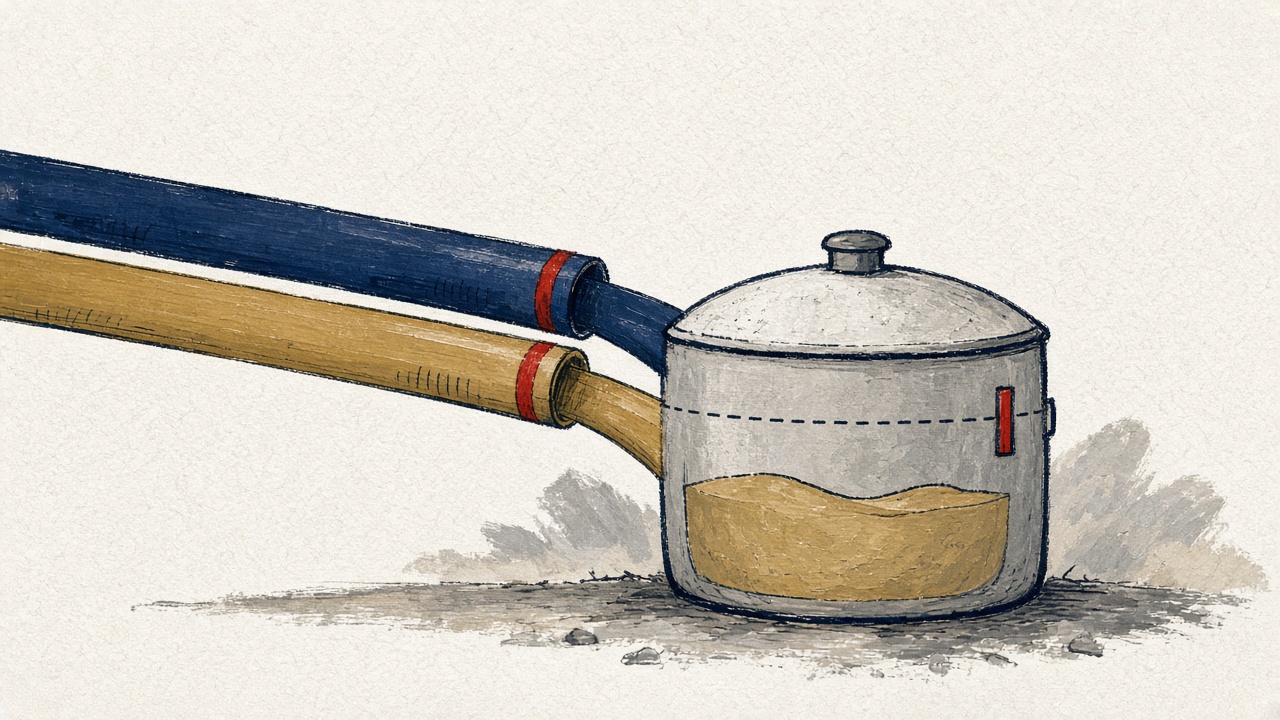
In the Central Provident Fund Board’s worked example for 2024, an employee below age 55 earns $7,000 in ordinary wages every month and receives $100,000 in additional wages across the year. January’s bonus tranche is $12,000, and CPF is computed on the full $12,000. June adds another $10,000, and CPF still applies, but only on $8,400 of it. December is different: the same employer pays $78,000 in additional wages, and the table shows zero additional wages subject to CPF, with no employer share and no employee share on that line.
Nothing in the contribution rate table changed between January and December. The employee did not turn 55. The puzzle is why a payslip can still show a large bonus with a CPF line that reads zero while earlier, smaller bonus payments attracted the full 37% total rate on the amounts that counted.
Singapore employers and payroll teams see the pattern every fourth quarter, especially in sectors that pay a thin monthly salary and a thick variable component. The CPF Board examples are not fringe cases. They use round bonus figures to show how the additional wage ceiling behaves when ordinary wages already consume most of the annual salary cap.
The December line that reads zero
CPF Board publishes the example to teach employers how to compute the additional wage ceiling. The employee’s monthly salary is $7,000, but only $6,800 counts as ordinary wages subject to CPF each month in 2024 because that was the ordinary wage ceiling for the year. Twelve months of capped salary consume $81,600 of ordinary wages subject to CPF, leaving $20,400 of room inside the annual cap for additional wages.
The example spreads $100,000 of bonuses across the year: $12,000 in January, $10,000 in June, and $78,000 in December. By the time December arrives, earlier bonus payments have already used the entire $20,400 allowance. The December cheque is real money; it simply sits outside the portion of wages that must attract CPF for that calendar year with that employer.
June’s line is easy to miss because CPF still appears on the payslip. Only $8,400 of the $10,000 June payment counts toward the ceiling, which is exactly the $20,400 allowance minus the $12,000 already consumed in January. After June, the running additional wage balance is zero even though most of the calendar year remains.
That gap between gross bonus and CPF-assessed bonus is the number colleagues argue about when the year-end payslip lands. The question is not whether bonuses count for CPF. They do. The live question is how much of a given bonus still fits inside a limit that ordinary pay has already been filling since January.
Two buckets, one annual pool

CPF law sorts every cash payment from an employer into one of two buckets before rates are applied. Ordinary wages are payments tied to the month’s employment and due by the fourteenth of the following month, typically the monthly salary. Additional wages are everything else that still counts as wages, including annual wage supplements, performance bonuses, and commissions that fail the ordinary-wage timing test.
Both buckets draw from the same annual salary ceiling of $102,000 per employee per employer per calendar year. CPF Board states that total wages—the sum of ordinary and additional wages in a month—attract contributions subject to separate ordinary and additional wage ceilings. The ordinary ceiling is applied month by month. The additional ceiling is whatever remains of the $102,000 after ordinary wages subject to CPF are summed across the year.
Annual wage supplements and bonuses are explicitly CPF-payable. The board’s allowance table marks annual wage supplement and bonus with CPF payable set to yes. The surprise is not exemption. It is exhaustion: the rate applies only until the annual pool for additional wages is full.
The subtraction formula

The additional wage ceiling is written as a single subtraction. CPF Board’s employer guidance gives the formula as $102,000 minus total ordinary wages subject to CPF for the year. For 2024, the examples use $102,000 minus $6,800 multiplied by twelve, which equals $20,400. That $20,400 is the maximum additional wages that can attract CPF across all bonus payments in the year if ordinary pay hit the monthly cap every month.
Example 1 follows the arithmetic month by month. Ordinary contributions continue on $6,800 each month. Each bonus payment is allocated to “additional wages subject to CPF” until the $20,400 is used up. January takes $12,000. June takes the remaining $8,400 of headroom on a $10,000 payment. December’s $78,000 arrives after the pool is empty.
Employers are told to estimate the ceiling whenever they pay additional wages and to re-calculate in December, or in the employee’s last month, using actual ordinary wages subject to CPF, then pay any shortfall or apply for a refund if they overshot. The December zero on the example is the end state of that ledger, not a separate bonus rule.
The ordinary wage ceiling itself moves on its own schedule. CPF Board’s January 2025 contribution rate table caps ordinary wages at $7,400 per month while the annual salary ceiling stays at $102,000. Each time the monthly cap rises, a full year of maxed salary occupies a larger share of the annual pool before any bonus is paid.
Why order and timing change the bill
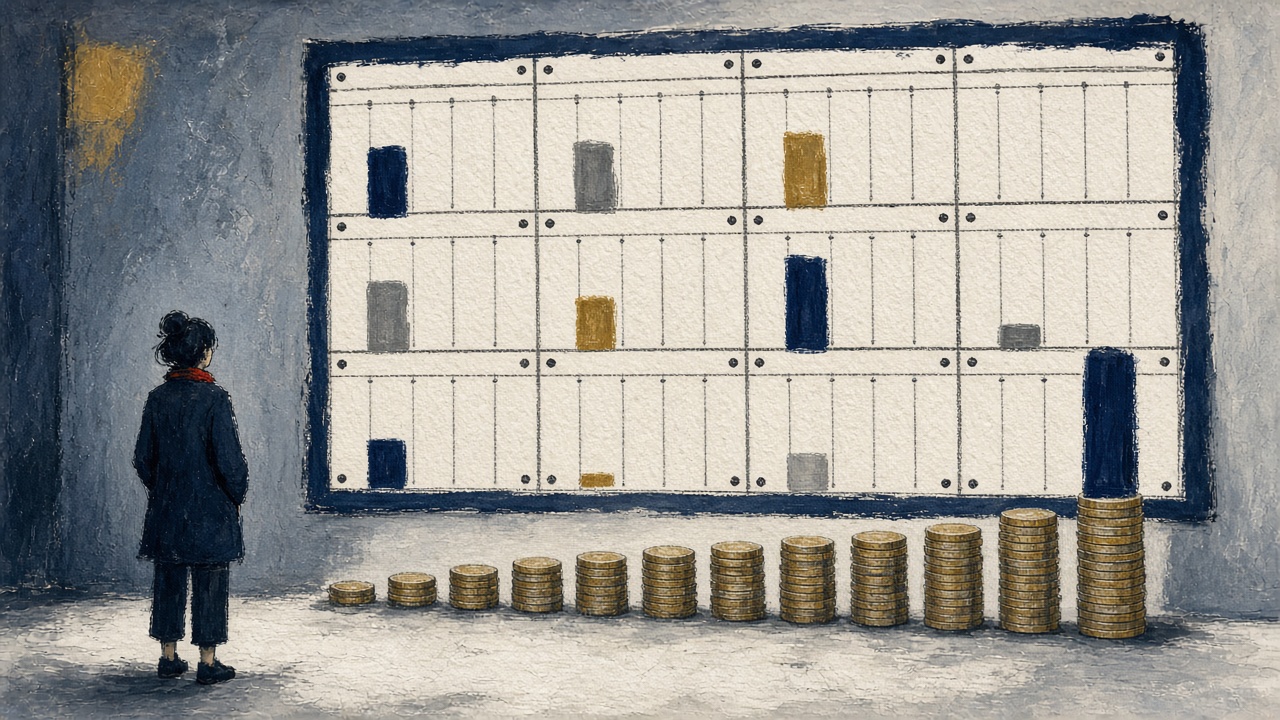
Order matters because the ceiling is a running balance, not a fresh cap per payment. CPF Board’s third example makes the point with a pay increase. An employee earning $4,500 from January to March 2024 looks as if $48,000 of additional wages could attract CPF—$102,000 minus $4,500 times twelve. When salary rises to $6,000 from April onward, the board recomputes the ceiling as $102,000 minus the actual ordinary wages subject to CPF: $4,500 for three months and $6,000 for nine months. The revised additional wage room is $34,500, not $48,000.
January’s $20,000 bonus already counted fully toward CPF under the old estimate. After the raise, only $34,500 total can ever count. April’s $30,000 payment fits inside the revised ceiling, but December’s $50,000 tranche shows zero additional wages subject to CPF, the same pattern as Example 1, this time triggered by a salary increase mid-year rather than a single oversized December line.
Which year’s ceiling applies depends on when the bonus is due and payable, not when work was performed. CPF Board notes that a 2023 bonus due and payable in 2024 uses the 2024 additional wage ceiling. That rule can shift headroom when companies delay declaration or when resignations trigger a final recomputation before December.
Employees who change jobs mid-year carry separate ledgers with each employer. The $102,000 cap is per employer, so a bonus paid by a new firm starts fresh even if the previous employer already filled the pool.
A rising monthly cap on a flat annual cap
Budget 2023 raised the ordinary wage ceiling in steps—$6,300 from September 2023, $6,800 from January 2024, $7,400 from January 2025, and $8,000 from January 2026—while leaving the annual salary ceiling at $102,000. CPF Board’s 2025 change notice repeats that the $102,000 annual figure is unchanged even as the monthly ordinary cap moves to $7,400.
For someone whose ordinary wages hit the monthly ceiling every month, the arithmetic is blunt. At a $6,000 ordinary ceiling, the additional wage headroom was $30,000, from $102,000 minus $72,000 of ordinary wages subject to CPF. At $7,400 in 2025, the headroom falls to $13,200. When the ordinary ceiling reaches $8,000 in 2026, only $6,000 of additional wages can attract CPF in a full year of maxed salary, unless policymakers lift the annual cap.
The chart assumes maxed ordinary wages for the whole calendar year. Real payslips differ when someone joins mid-year, takes unpaid leave that lowers ordinary wages subject to CPF, or holds two employers, each with its own per-employer ceiling. The direction still holds: a higher monthly cap with a flat annual cap compresses bonus room.
There will be no change to the current CPF annual salary ceiling of $102,000. This will be reviewed periodically to ensure that it continues to cover about 80% of employees.
When the Ministry of Finance explained the design in 2023, it described the annual figure as seventeen times the monthly ceiling to accommodate bonuses of about five months’ salary, fixed at $102,000. Raising the monthly ceiling without moving the annual number reallocates the same pool toward salary months and away from bonus months for high earners who already touch the cap.
Who wins, who pays the true-up

The policy case for a shared annual ceiling is equal treatment across pay structures. Two employees with the same total cash in a year should receive similar total CPF if they share age and status, whether one takes a thin salary and a fat bonus or the reverse. Holding the annual cap steady while lifting the monthly ordinary ceiling still increases CPF on salary for middle-income workers. The 2016 FAQ expected about 544,000 workers to benefit when the monthly ceiling rose from $5,000 to $6,000, even as bonus headroom narrows for those who already max ordinary wages all year.
Employers bear the bookkeeping friction. CPF Board requires estimation at each additional wage payment and a true-up when ordinary wages are known. Contribution rates themselves stay familiar: 37% total for employees aged 55 and below from January 2025, split 17% employer and 20% employee on wages that count, but the base shrinks on the bonus line even when the percentage printed beside it does not.
Back to the same December cheque
Return to the CPF Board employee on $7,000 a month and $100,000 in bonuses. The December payslip still shows $78,000 in additional wages paid. It also shows zero additional wages subject to CPF, because $20,400 was the entire additional allowance for 2024 and January and June already spent it. The rate did not vanish; the pool did.
That December line will look wrong if you treat each payslip as an isolated 37% exercise. It looks coherent once you read the year as a single $102,000 ledger filled first by capped salary and only then by whatever bonus tranches still fit: the same employee, the same employer, the same statutory percentages, and a bonus cheque that can be large while the CPF column beside it stays empty.