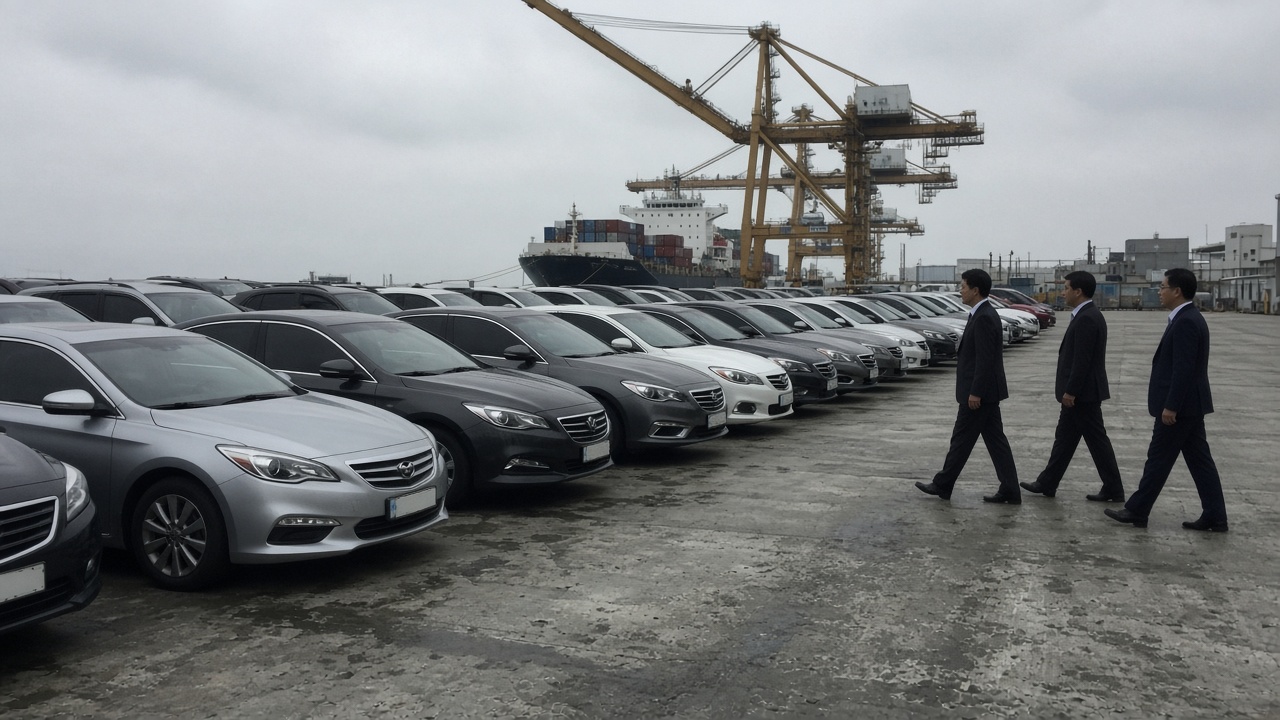
South Korea and the United States closed the remaining gaps in their trade package on Wednesday, hours before President Lee Jae Myung hosted Donald Trump for a summit dinner in Gyeongju. Presidential policy chief Kim Yong-beom told reporters that Washington would keep “reciprocal” tariffs at fifteen percent on Korean goods and cut sectoral duties on automobiles and parts to the same level, down from twenty-five percent.
The agreement also structures Seoul’s three-hundred-fifty-billion-dollar investment pledge into two buckets: two hundred billion dollars in cash instalments and one hundred fifty billion dollars for shipbuilding cooperation, including the “Make American Shipbuilding Great Again” initiative. Kim stressed that cash would not leave Korea in a single lump sum. Transfers will be capped at twenty billion dollars per year and paced to business milestones so the won is not overwhelmed.
What changed after July’s framework
Negotiators had settled the headline tariff rate in July but fought for months over how quickly Korea must fund US projects. Washington initially pushed for upfront payments; Seoul countered with loans, guarantees, and profit-sharing tied to commercial returns. Kim said the memorandum of understanding now embeds “commercial rationality” and splits profits equally until investments are recovered.
Pharmaceuticals and lumber will receive most-favoured-nation treatment, while aircraft parts, generic drugs, and natural resources the United States does not produce domestically will enter duty-free. Semiconductor tariffs will be set no less favourably than those applied to Taiwan, Korea’s main chip rival, Kim added. Agricultural markets for rice and beef will not face further opening, a red line Lee’s team advertised to farmers ahead of the summit.
Market and industry reaction
Hyundai Motor and Kia shares rallied in Seoul as investors priced in lower export costs to American showrooms. The won strengthened slightly against the dollar after Kim’s briefing, reflecting relief that the annual cap would limit immediate foreign-exchange pressure. The Korea Herald reported that Trump also acknowledged Korea’s pursuit of nuclear-powered submarines, though security details were left for a separate fact sheet expected within days.
Implementation still requires a special act in the National Assembly. Kim said lower tariffs would apply retroactively from the day the bill is submitted, giving the National Assembly time to scrutinise safeguards that allow Seoul to reopen talks if Washington seeks investments without committee review.
What comes next in Gyeongju
Lee and Trump were scheduled to appear together at the Asia-Pacific Economic Cooperation leaders’ meetings after the dinner, with trade and North Korea policy on the agenda. Opposition lawmakers warned that the investment pledge could burden future budgets, while business groups welcomed the clarity after a summer of uncertainty.
For Korean exporters, Wednesday’s numbers matter on the factory floor: fifteen percent is now the tariff ceiling they can plug into 2026 planning models, provided parliament ratifies the deal Lee’s negotiators signed in Gyeongju.