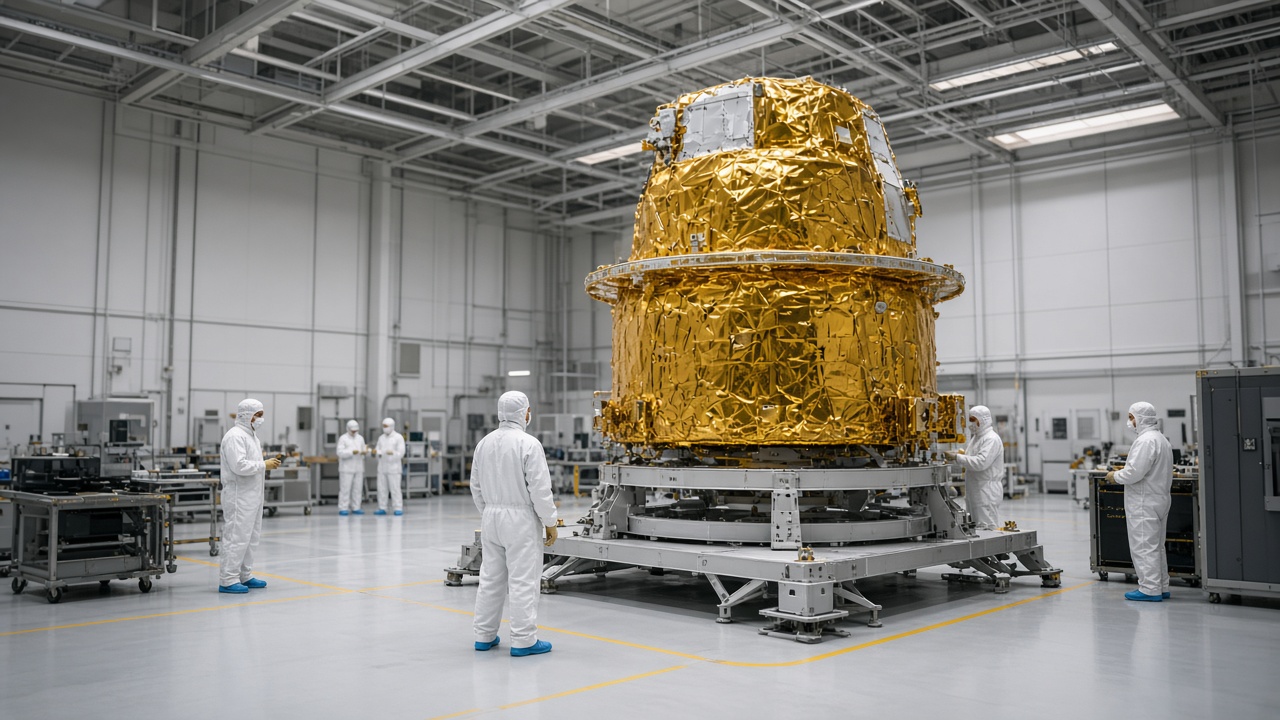
The Korea Astronomy and Space Science Institute confirmed a November launch window for COMS-3, a geostationary weather satellite that will replace an aging COMS observer covering Korea, Japan, and eastern China sea lanes.
Mission profile
COMS-3 carries improved infrared channels for typhoon eye discrimination and fine aerosol tracking over the Yellow Sea. Data will feed Korea Meteorological Administration nowcasts and aviation briefings at Incheon and Gimpo. The institute said ground systems in Boeun and Jeju finished compatibility tests last week.
Launch logistics
Ariane-class procurement gave way to a domestic launch service contract after delays; KASI now targets two backup dates in mid-November depending on range weather. Shipping the bus to the pad completed Oct. 20 with vibration tests passed. Fueling rehearsals start next week under KARI oversight.
Why replacement timing matters
COMS-2 exceeded design life in 2024, operating on reduced thruster margin. Forecasters relied on Japanese and Chinese companions for gap-fill imagery during monsoon season. COMS-3 restores sovereign coverage before winter fog events that disrupt ferry routes to Jeju.
Data users
Airlines, fisheries, and solar farm operators subscribe to KMA high-frequency products derived from COMS feeds. Insurance modelers use satellite wind estimates for typhoon landfall scenarios along the southern coast. KASI will publish open calibration datasets for universities after a 60-day commissioning phase.
Risks
Previous COMS programs slipped on supplier quality holds; KASI added redundant battery strings after a 2023 review. Launch insurance is placed; failure would force extended reliance on foreign satellites and delay Korea’s next multipurpose communications craft.
After launch
Controllers will drift COMS-3 to 128.2 degrees east, running parallel checks with COMS-2 before deorbiting the old bus. Public web imagery resumes once validators sign off—expected before year-end storm season peaks.
International partners
Japan Meteorological Agency and Hong Kong Observatory receive COMS feeds under existing bilateral memoranda. KASI will host calibration workshops so foreign analysts understand new infrared channel limits during typhoon rapid intensification events.
Ground segment
Boeun and Jeju antennas completed failover drills switching between COMS-2 and the COMS-3 test signal. Technicians replaced aging amplifiers ahead of launch to reduce downtime during commissioning when both satellites will temporarily share downlink windows.
Budget oversight
National Assembly science auditors reviewed COMS-3 spending in October, signing off on launch insurance premiums and foreign component customs fees without opening a new probe.