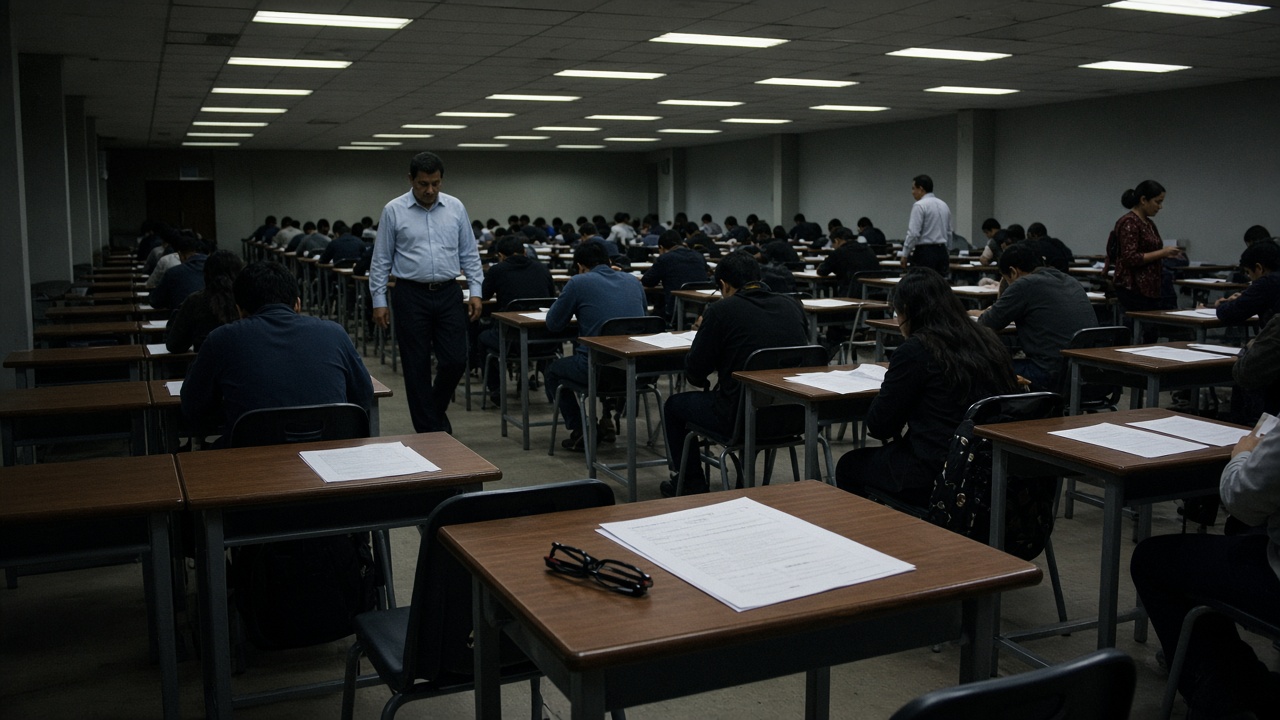
South Korea’s Education Ministry said Thursday it will treat artificial-intelligence smart glasses as a serious cheating threat on the national College Scholastic Ability Test, pledging criminal referrals and longer exam bans ahead of the 19 November sitting.
From discipline to prosecution
Officials said students caught using AI glasses to cheat could be reported to police on charges such as obstruction of official duties through fraudulent means and business interference. The ministry described the conduct as an intentional effort to disrupt a state-run exam, citing precedents including a 2005 scheme that used mobile phones and led to suspended prison terms.
The ministry also wants to lengthen disqualification from retaking the CSAT from one year to three for smart-glass violations, pending legislative changes to the Higher Education Act. It added smart glasses to the list of prohibited items in July and will urge universities to apply the same standard on essay tests and interviews after incidents this month at the University of Seoul and Yonsei University.
Deploying inspectors before 19 November
For this year’s exam, the government will station 1,312 trained specialists—one at each of the 1,312 test centers—to help supervisors identify suspicious eyewear. Regional education offices and the ministry will run a rapid-response network when devices cannot be classified on site, coordinating with the Korea Institute for Curriculum and Evaluation.
Five smart-glass cheating cases were reported between May and June, according to ministry summaries cited in local media, with three candidates referred to prosecutors after proctors spotted lens displays activated by button presses. Officials said they are reviewing radio-frequency detectors developed by a specialized agency and could deploy them nationwide as early as next year’s exam if trials succeed.
The CSAT remains the main gateway to elite universities, making even small cheating scandals politically sensitive. The new policy signals that wearable AI hardware is now treated as a national-exam security problem, not a classroom novelty.
How schools are preparing
Education officials said inspectors will receive training to distinguish ordinary eyeglasses from devices that can project answers or stream prompts. Supervisors who cannot resolve a dispute on site can escalate to the rapid-response teams rather than delaying start times for hundreds of candidates.
Retailers in Seoul have begun marketing AI-enabled frames to students, prompting the ministry to warn that possession alone is not a violation but activation during an exam triggers the new enforcement track. Universities that run early-admission interviews this autumn were told to mirror CSAT rules so applicants cannot switch venues to evade scrutiny.
Opposition lawmakers largely backed tougher penalties after photos of lens displays circulated online, though some educators cautioned that criminal probes could overwhelm courts if enforcement is uneven. The ministry said it would publish guidance for parents and hagwon cram schools before registration deadlines for the November test.