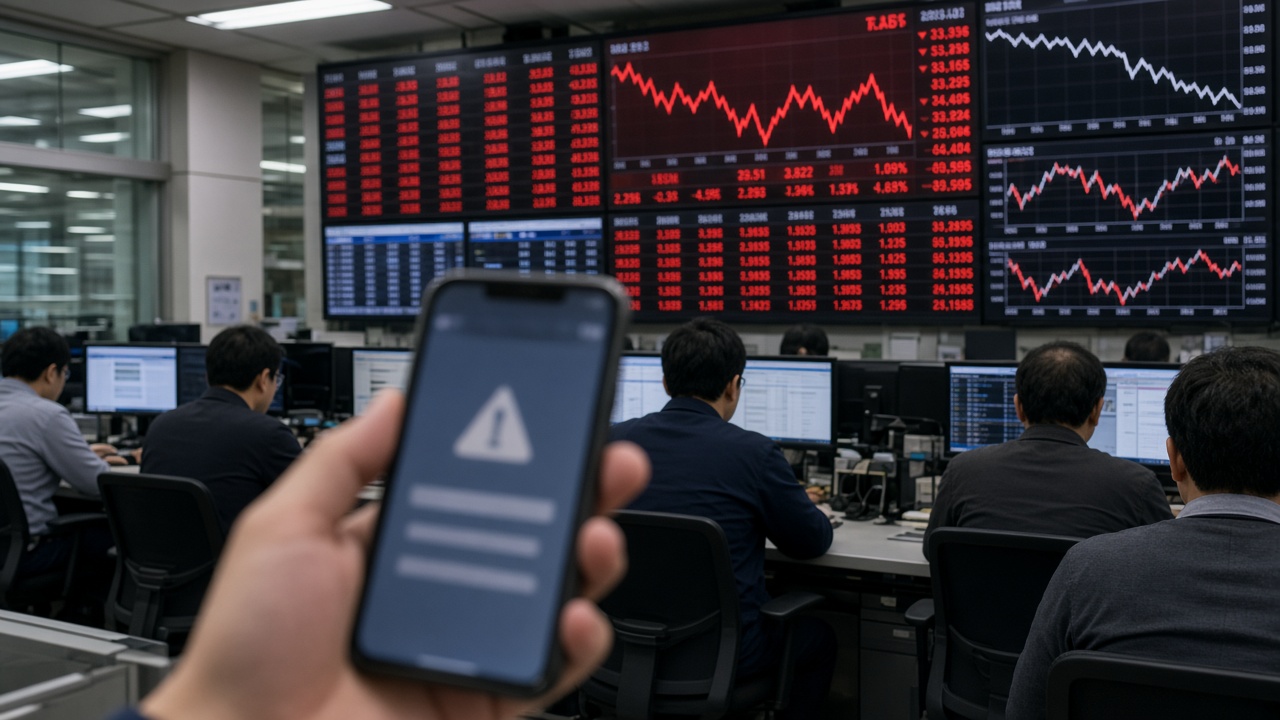
South Korea’s won-denominated crypto exchanges issued back-to-back withdrawal warnings on Friday after Binance, the world’s largest digital-asset platform, suspended deposits and withdrawals while investigating a suspected multi-billion-dollar theft that rippled into Seoul equities.
Upbit posted a notice at 7:46 a.m. saying security incidents and signs of stolen assets had been confirmed at Binance and that it could restrict outbound transfers to the exchange if investor protection required it. Bithumb, Coinone and DigitalX followed with similar cautions, pledging to cooperate with freeze requests under Korean law.
Scale of the Binance incident
Industry reports citing blockchain analytics put the apparent loss in the tens of billions of won, with Binance telling users it would cover shortfalls from its safety fund and corporate reserves. The company said it had frozen roughly $3 billion on chain and aimed to resume withdrawals within 48 hours after hardening wallet security, while keeping deposits operational.
On-chain trackers described rapid swaps of stolen tokens into ether, a pattern that often precedes attempts to launder proceeds across bridges. Bitcoin traded near a six-week low and ether at a two-month low in global markets as the news broke.
Why Korean stocks moved with crypto
The Kospi fell more than 5 percent in early trading, triggering a sell sidecar for the second time in less than two weeks. Samsung Electronics and SK hynix led declines as Alphabet’s overnight earnings miss raised questions about AI-related capital spending that feeds memory demand.
Foreign investors net sold more than 550 billion won in the main market by mid-morning, according to exchange data cited in local reports, while retail buyers stepped in but could not offset the slide. The benchmark briefly dipped below 5,630 after reclaiming 6,000 only days earlier.
What regulators and exchanges watch
Korean exchanges must trace whether any stolen coins move through domestic on-ramps. Upbit said it would act on Binance cooperation requests, including asset freezes, under applicable procedures. Financial authorities have tightened oversight since earlier exchange failures, and Friday’s notices show how quickly global platform risk becomes a local compliance task.
Binance’s timeline for reopening withdrawals will determine whether Korean notices stay advisory or become hard blocks. Until then, traders face a dual shock: illiquid crypto rails offshore and an equity market repricing tech and semiconductor exposure on the same session.
The Financial Services Commission has not issued a separate statement as of mid-morning, but exchange notices reference cooperation duties under the Virtual Asset User Protection Act. Market veterans compared the session to prior global exchange failures that forced domestic platforms to halt inbound flows from compromised wallets.
Memory chip traders said the simultaneous Alphabet guidance and Binance uncertainty created a rare cross-asset feedback loop: lower risk appetite in US tech dragged Seoul semiconductors even as crypto liquidity dried up offshore. Whether the Kospi stabilizes later in the day may depend as much on Binance’s 48-hour reopening pledge as on fourth-quarter earnings revisions.