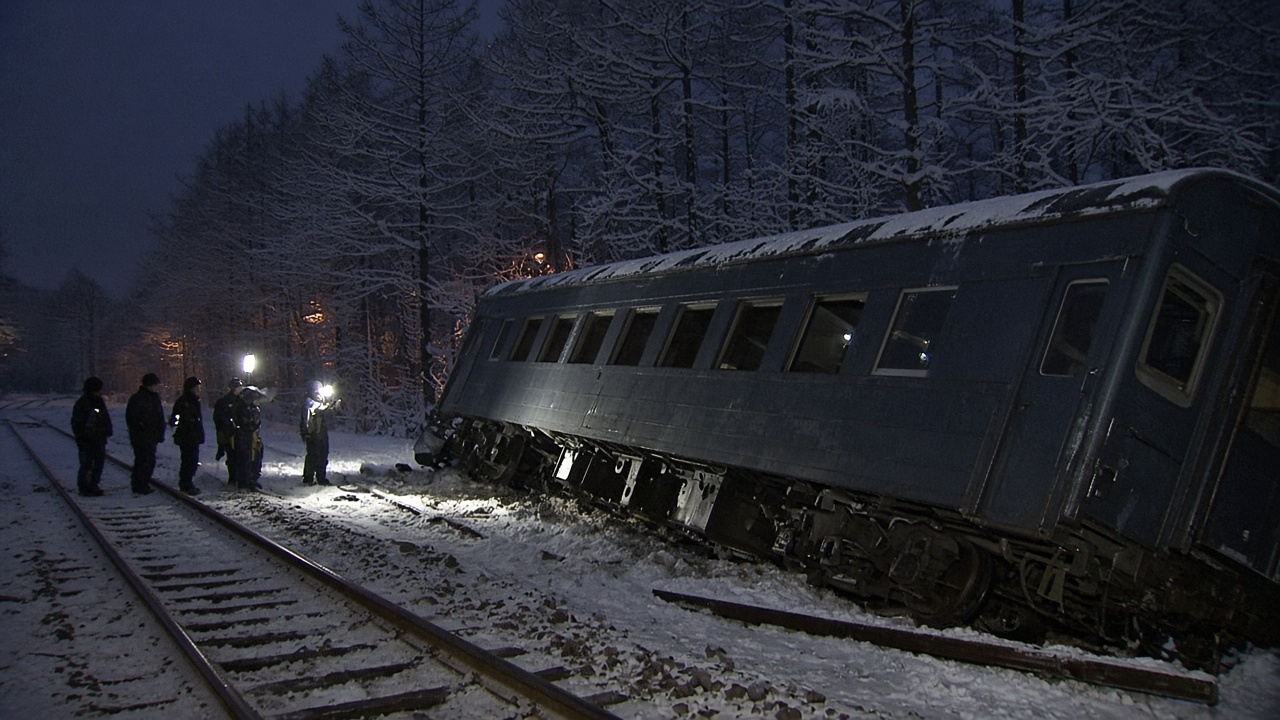
A Sarobetsu limited express train bound for Wakkanai derailed late Friday night after colliding with a bear on JR Hokkaido’s Soya main line, the railway said. None of the thirty-two passengers or crew aboard the four-car formation were injured, but the first vehicle left the rails and downstream services toward Japan’s northernmost city were halted for safety inspections.
How the collision unfolded
According to JR Hokkaido, the train was traveling between Teshio-Nakagawa and Toikambetsu stations when it struck the animal around 10:50 p.m. The impact derailed the lead car while the remaining coaches stayed upright on the track. Emergency crews evacuated passengers at the scene and buses were arranged for the final leg toward Wakkanai once inspectors confirmed the formation was stable enough to transfer people without using the damaged car.
Local police and prefectural wildlife officials were notified because bear encounters on Hokkaido rail corridors have risen in recent years as animals search for food before hibernation. Autumn grain spills near rural crossings and delayed fruit harvests in adjacent fields often draw bears toward rights-of-way, especially on lines that cut through forested Sarobetsu plain segments with limited fencing.
Service disruption
JR Hokkaido canceled Sarobetsu and related limited express runs on the Wakkanai segment through Saturday morning while cranes and track teams worked to rerail the lead vehicle and inspect signals and overhead wiring. Substitute buses covered stops between Horonobe and Wakkanai, adding two to three hours to typical travel times for residents who rely on the overnight train for medical appointments in Asahikawa and Sapporo.
Freight operators sharing the Soya line faced cascading delays because single-track sections near the derailment site could not accept opposing movements until engineers certified the formation stress had not shifted underlying ballast. Tourism operators in the Rishiri-Rebun ferry connection also reported missed transfers, though summer peak season had already ended.
Wildlife and safety policy
Hokkaido prefecture maintains a bear-sighting database and sends automated alerts to municipalities when animals approach populated areas, but rail-specific mitigation remains largely voluntary. Some operators have tested ultrasonic emitters and cleared sightlines at curves, yet long rural segments make complete exclusion impractical. Friday’s incident will renew calls from local assemblies for speed restrictions after dusk on known migration routes.
Transport ministry officials in Sapporo said they would await JR Hokkaido’s formal incident report before deciding whether to order network-wide reviews. Past derailments involving deer and bears on northern lines have led to vegetation trimming and improved station lighting, but not to the kind of continuous barrier fencing used on high-speed Shinkansen segments in Honshu.
What passengers should expect
Travelers heading to Wakkanai over the weekend were advised to monitor JR Hokkaido’s disruption page for bus bridge schedules and to carry extra cold-weather gear if forced to wait at rural stops. The railway promised refunds for unused reserved seats on canceled Sarobetsu services and said compensation forms would be available at major stations once the exact downtime was confirmed.
For the thirty-two people aboard the train that hit the bear, the outcome was fortunate: a lead-car derailment at night on a single-track line could easily have produced injuries or a collision with a following freight movement. Inspectors will examine whether automatic braking systems activated quickly enough after the engineer spotted the animal, a detail JR Hokkaido has not yet released publicly.