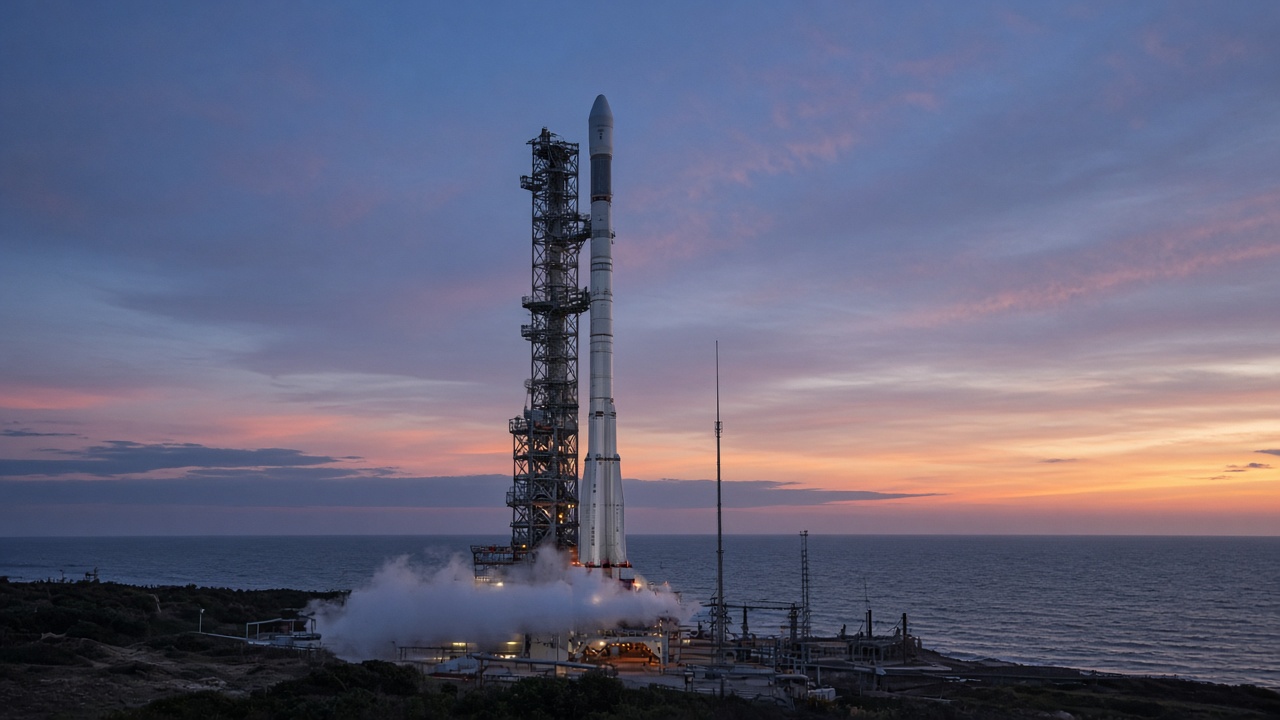
India’s space agency lifted the third Next Generation NavIC Series satellite from Sriharikota at 6:12 a.m. local time on Thursday, October 30, using the geosynchronous satellite launch vehicle marked GSLV-F18 to deliver roughly 2,250 kilograms of payload into a geosynchronous transfer orbit.
What NVS-03 adds to the constellation
NVS-03 joins two earlier NVS spacecraft launched since 2023 to modernize the NavIC regional navigation network, which provides positioning over India and surrounding waters without relying on foreign military signals. Each NVS bus carries L-band navigation payloads, search-and-rescue repeaters, and encrypted ranging channels aimed at civil aviation and maritime users.
Ground controllers at the Indian Space Research Organisation’s master control facility in Hassan will spend the next two weeks raising the orbit and deploying antennas before handing the satellite to the navigation cell for signal certification.
Commercial fishing fleets along the Gujarat coast already download NavIC-enabled transponders under a pilot subsidy programme; NVS-03 expands the number of simultaneous channels those transponders can lock onto during storms when GPS multipath errors spike.
Indigenous rubidium timing
The headline upgrade on NVS-03 is an atomic clock built by Indian laboratories rather than imported units that flew on legacy IRNSS satellites. Rubidium standards keep onboard time stable to within nanoseconds, which downstream receivers translate into meter-level accuracy on phones, fishing vessels, and drone guidance kits.
Domestic timing sources reduce exposure to export-control delays and let engineers tune clock redundancy for India’s hot launch cycles. Programme managers said the clock passed vibration and thermal vacuum tests duplicated from earlier NVS missions, with additional screening for the heavier payload mass this flight carried.
Scientists at the Space Applications Centre in Ahmedabad will compare clock drift telemetry from NVS-03 against ground cesium references to certify the indigenous unit for operational duty.
Launch vehicle performance
GSLV-F18 flew in the configuration that pairs a cryogenic upper stage with solid and liquid boosters tuned for geosynchronous insertion. Telemetry reviewed in the mission control gallery showed the cryogenic stage firing for the planned duration, separating the satellite near the target apogee.
The flight continues a recovery streak for the vehicle after earlier underperformance reviews; each successful NVS launch frees scarce foreign exchange that would otherwise fund commercial launches abroad for government payloads.
Range safety officers cleared the sea corridor northeast of Sriharikota after NOTAM notices kept commercial air traffic away from the drop zones for spent stages.
User services on the horizon
NavIC chip mandates for smartphones sold in India from 2025 onward depend on refreshed on-orbit capacity. Handset makers have certified dual-frequency receivers that can fall back to NavIC when GPS urban canyons degrade fixes. Aviation regulators are evaluating approach procedures that reference the constellation for regional airports lacking ground-based augmentation.
Scientists caution that consumer maps will not change overnight. Receiver firmware updates and control-segment calibrations must converge before drivers notice tighter lane guidance. Still, placing a domestically timed NVS satellite on orbit before the fiscal year closes gives policy makers a tangible answer to questions about self-reliance in critical infrastructure—one that engineers can measure in seconds, not slogans.
Defence planners watch the same launches for redundancy against signal jamming scenarios discussed in joint exercises with friendly navies; civilian and military users share the uplink architecture even if their receivers apply different encryption keys.
University engineering departments already queued internship slots at Hassan so students can observe orbit-raising manoeuvres, part of a broader effort to keep talent in the public space programme as private launch startups hire aggressively from the same graduate pools.
Insurance underwriters for maritime shippers said they would review premium tables once NavIC coverage maps show the third NVS slot active, because some policies already offer small discounts when vessels carry dual-navigation kits.
Small satellite operators watching the launch said NVS spare capacity might eventually host piggyback payloads if the navigation cell certifies interference margins, though no commercial manifest was announced for this flight.