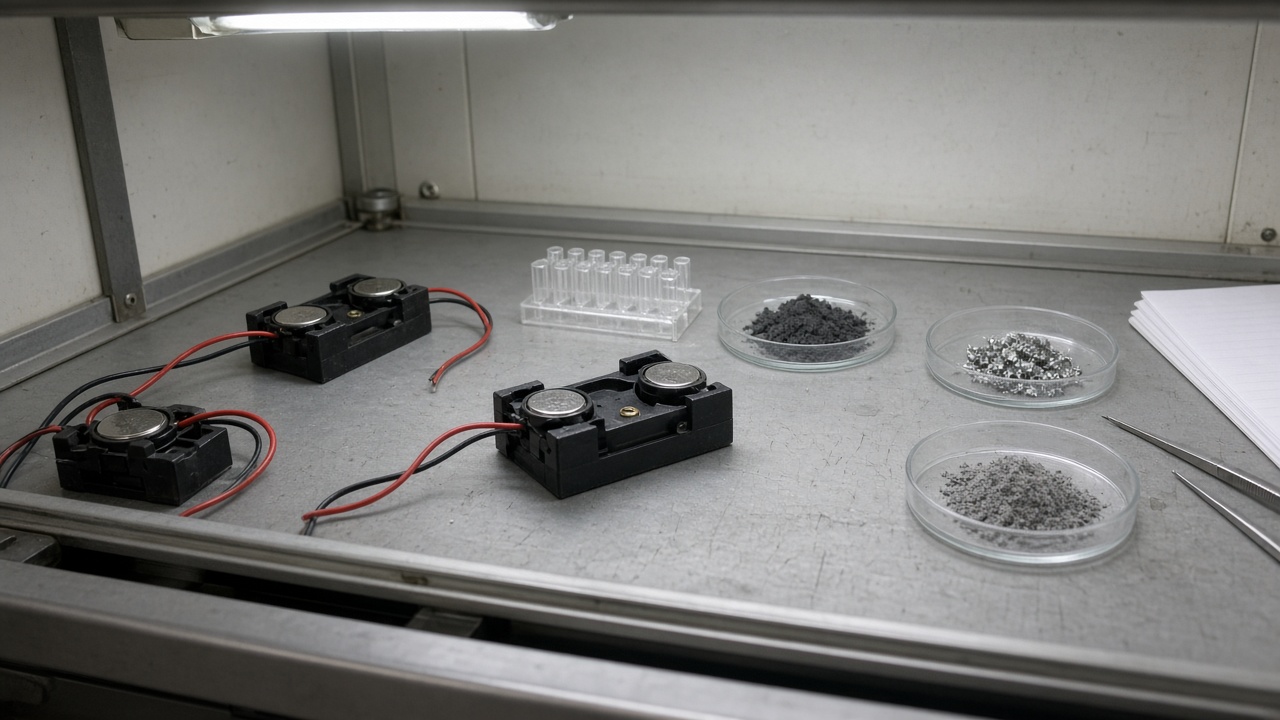
A joint team from Pohang University of Science and Technology and the Korea Institute of Energy Research said a hard-carbon and tin nanocomposite anode maintained 1,500 cycles under 20-minute fast charging in lithium-ion cells while delivering strong sodium-ion performance in the same structure.
The work, published in ACS Nano, embeds sub-10-nanometer tin particles in a hard-carbon matrix using a sol-gel process and thermal reduction. Professor Soojin Park’s group said tin catalyzes carbon crystallization and participates in reversible Sn–O conversion reactions that boost capacity.
Why sodium-ion matters here
Sodium ions react poorly with conventional graphite anodes. The POSTECH–KIER electrode kept stable kinetics in sodium environments, suggesting one material platform could serve both lithium EV packs and lower-cost sodium grid batteries.
From paper to pilot
Funding came from the Ministry of Trade, Industry and Energy and the Ministry of Science and ICT. No Korean automaker has yet announced a pilot line using the anode, so commercial timing remains open.
Peer context
Separate Korean groups continue cathode work in Nature Communications on layered oxide sodium cells, but this anode result targets the charging-speed bottleneck that limits urban EV adoption.
Market participants said the story would stay in the headline rotation until regulators and companies publish hard numbers rather than summit-stage talking points.
Analysts cautioned that one session’s momentum can reverse quickly if overnight U.S. tech earnings disappoint or if the won swings on trade headlines.
Retail investors should watch Friday volume and foreign flow data on the Korea Exchange website when planning next week’s orders.