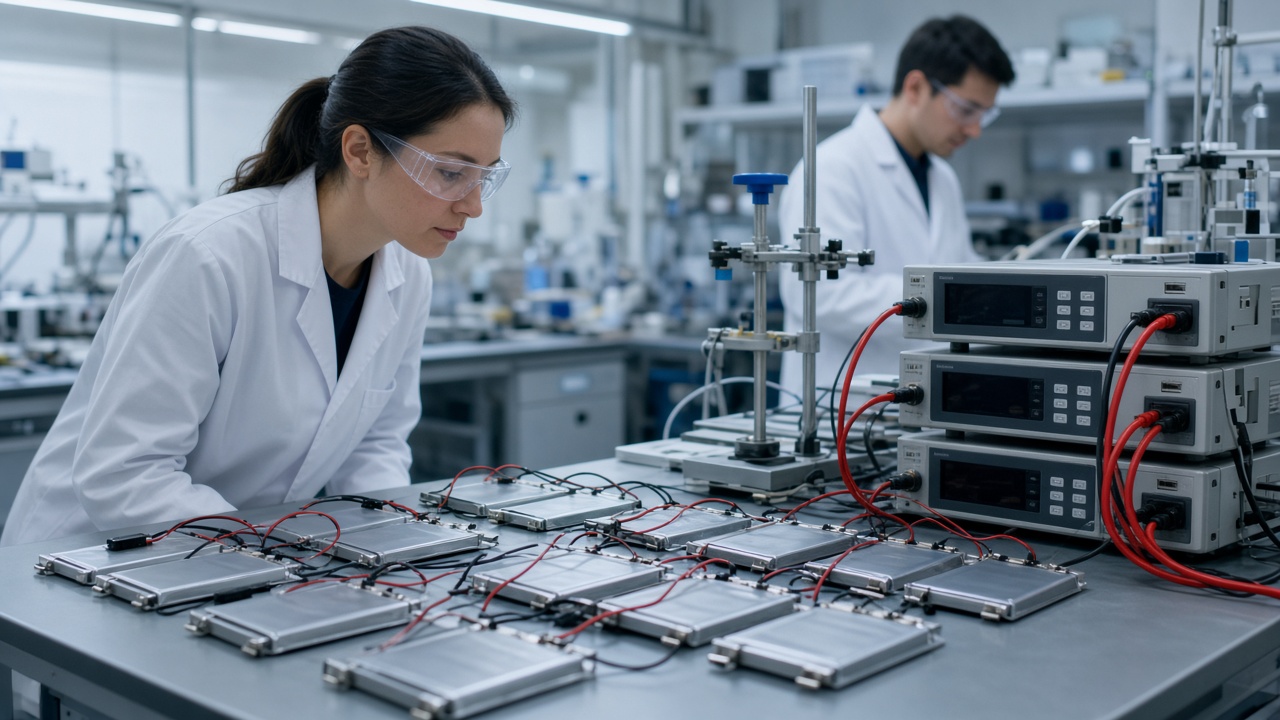
Ulsan National Institute of Science and Technology said Friday it registered a domestic patent on an electrolyte blend that reduced thermal runaway temperatures in nail-penetration crash tests on pouch cells, a step toward safer mass-market electric vehicles.
The formula mixes conventional carbonate solvents with a phosphate additive that forms a stabilizing layer on cathodes when cells deform, according to the research team led by professor Kim Soo-jin. In lab trials, peak surface temperatures fell 18 percent compared with baseline electrolytes used in 2023 model-year packs.
Why Ulsan cares
Ulsan hosts production lines for major battery makers and shipbuilders experimenting with electric ferries. City officials have pushed for locally developed safety chemistry after a warehouse fire involving discarded cells last year raised insurance premiums for logistics firms.
UNIST is negotiating non-exclusive licenses with two mid-sized electrolyte producers in the industrial district, hoping to pilot the blend in e-buses before passenger car adoption.
Limits of lab results
The patent covers laboratory pouch formats, not full vehicle packs with cooling plates and module spacing. The team acknowledged that scale-up often erodes safety margins when production lines optimize for energy density instead of crash margins.
Independent reviewers at the Korea Electrotechnology Research Institute said the results are promising but called for third-party replication before regulators consider rule changes on mandatory fire tests.
Funding and next experiments
The project drew 4.6 billion won from the Ministry of Trade, Industry and Energy’s battery safety program, part of a broader push to keep Korean suppliers competitive with Chinese chemistry advances. Next steps include vibration and overcharge tests mimicking fast-charging stations.
Commercial timeline
License partners hope to ship electrolyte drums to bus makers by the second quarter of 2027 if factory qualification succeeds. UNIST will publish open data from nail tests to help smaller labs compare results without paying licensing fees for academic use.
Environmental groups asked whether phosphate additives increase recycling costs; researchers said early dismantling tests showed no significant change in recovery yields compared with standard packs.
Field trials
Ulsan city buses on industrial pilot routes will test modules with the new electrolyte starting in January if transport officials approve fire-suppression retrofits on two depots.
Trade ministry officials listed the patent among eligible projects for export marketing support at next month’s battery safety showcase in Seoul, citing UNIST’s open-data pledge.
Analysts said follow-up data due next week would show whether the trend persists beyond a single holiday weekend.