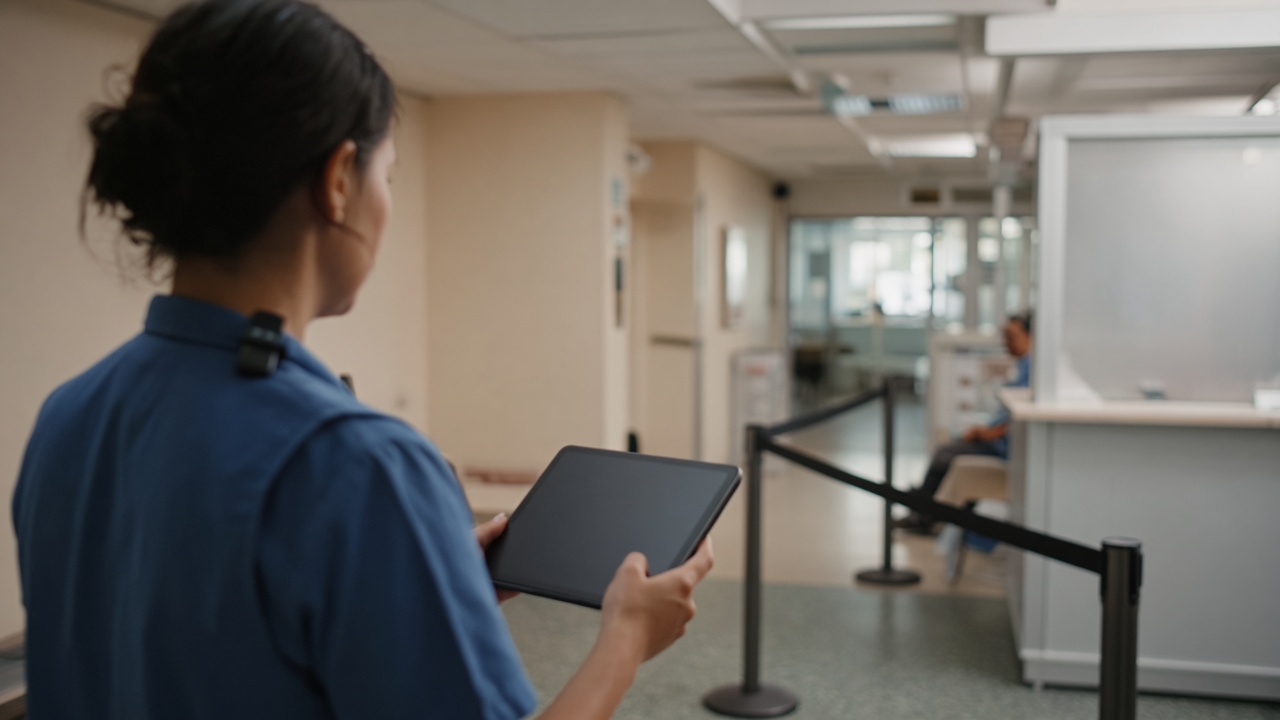
Chi Mei Medical Center in Tainan began piloting a Mandarin voice-capture assistant in emergency department triage booths this weekend, letting nurses dictate chief complaints and medication lists while the software drafts structured notes for physician review.
How the booth workflow runs
Patients still register at the counter and receive triage categories from nursing staff. In the new flow, a nurse activates a tablet-mounted microphone, speaks a summary of symptoms and vital signs, and the on-device model returns bullet points mapped to the hospital’s electronic medical record fields. No audio leaves the booth until the nurse approves the draft.
Hospital information officers said the tool runs on a sealed appliance without cloud inference, a requirement from the privacy board after generative AI vendors pitched fully hosted scribes last year. Latency averages under four seconds for thirty-second dictations in internal tests.
Clinical guardrails
Attending physicians must sign encounters; the AI output is marked as nurse-entered draft text. The system blocks auto-insertion of diagnosis codes or prescription suggestions, limiting scope to history-taking sections. Chi Mei’s chief medical officer said the hospital treats the pilot as documentation support, not decision support.
Training emphasized dialect and Taiwanese Hokkien loanwords common in southern Taiwan. The vendor retrained acoustic models on de-identified Chi Mei audio with patient consent forms posted at booth entrances.
Why Tainan ER first
Chi Mei’s ER volume spikes during dengue and enterovirus seasons, when waiting times stretch and nurses repeat documentation tasks. Administrators hope shaving minutes per chart will free staff for vitals and patient education rather than keyboard typing in cramped booths.
MOHW digital health officials visited the site Friday and noted the pilot in a monthly AI-in-medicine bulletin without endorsing wider rollout. Other medical centers in the south have asked for test data before committing budgets.
Privacy and retention
Raw audio deletes after successful upload to the EMR according to hospital policy. Failed drafts log metadata only. Cybersecurity staff run weekly penetration tests on the appliance VLAN, segregated from guest Wi-Fi in waiting areas.
Patient advocates asked for opt-out signage; Chi Mei placed bilingual notices explaining nurses can still type manually. Uptake in the first forty-eight hours showed roughly sixty percent of eligible cases using voice capture when booths were staffed with trained nurses.
Evaluation plan
The three-month pilot will compare documentation completeness scores and time-to-physician metrics against last year’s November baseline. If error rates stay below internal thresholds, Chi Mei may expand to orthopedic ward rounds where similar dictation burdens exist.
For Taiwan’s hospital AI push, Chi Mei’s conservative on-prem design offers a counterpoint to cloud scribes marketed nationwide—speed with a nurse still holding the pen.