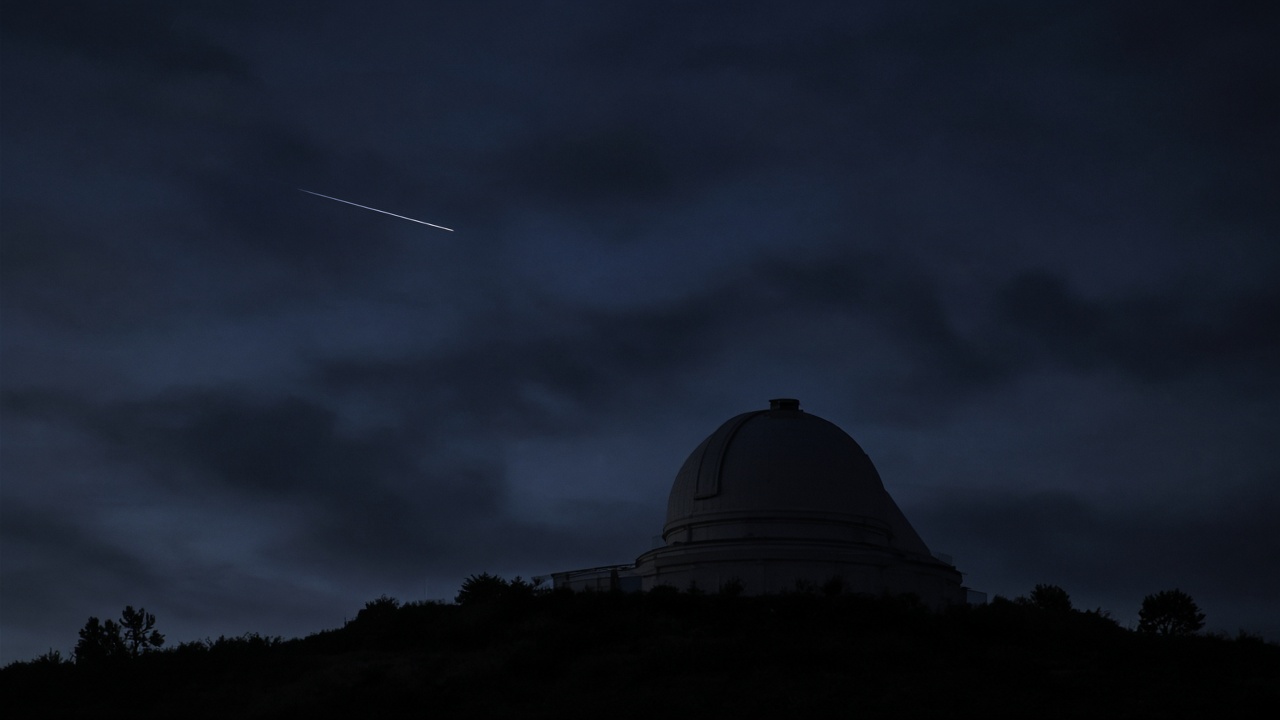
Volunteers at Royal Observatory Greenwich captured a handful of Orionid meteors through gaps in Sunday morning cloud as the shower’s post-peak tail coincided with lingering geomagnetic jitter from late October.
The Orionids, debris from Halley’s Comet, peaked in mid-October but produce observable rates for days afterward when skies cooperate. England’s south-east woke to broken cloud after Saturday’s Halloween aurora displays farther north, giving public astronomers a narrow window before dawn.
What the team recorded
Educators on the Greenwich hill used low-light cameras aimed east toward Orion’s radiant, logging short streaks between 04:00 and 06:00 GMT despite intermittent mist rolling up the Thames. Counts were modest—single digits per hour—not the fireworks seen during the Geminids in December, but enough for social clips aimed at half-term families.
Geomagnetic conditions remained elevated compared with quiet summer weeks, a hangover from coronal mass ejections that painted auroras over Scotland and northern England on Halloween. Space weather forecasts suggested activity would slowly decline through the new week.
How to catch the tail end
Meteor hunting requires dark sites away from sodium street lighting. Binoculars are unnecessary; naked-eye sweeps of Orion and Gemini after midnight offer the best odds. Rural parts of Kent and Sussex fared better than inner London, where light pollution washed out fainter grains.
The observatory reminded viewers that clocks shifted to GMT on Sunday, so planning charts must use standard time rather than British Summer Time.
Broader science context
Professional networks continue radar measurements of meteoroid influx for satellite collision models, while public counts feed citizen-science databases used to calibrate shower models. The Orionids’ parent comet will not return to the inner solar system until the next century, making each October stream a recurring natural laboratory.
Public programmes
The observatory’s weekend planetarium shows tied Orionid footage to comet Halley history, helping families connect shower peaks with classroom astronomy curricula. Ticket revenue supports free school visits during term time.
Photography tips
Smartphone cameras struggle with faint meteors unless mounted on tripods with night modes enabled for 10-second exposures. Local astronomy clubs posted safe viewing sites on the South Downs away from Greenwich light pollution for serious imagers.
Next showers
The Northern Taurids overlap early November, producing slower, brighter bolides at lower hourly rates. Geminids in mid-December will dominate winter stargazing if clouds cooperate.
Historical tie-in
Halley's Comet last passed Earth in 1986; debris streams continue independently of the nucleus, which will not return until the 2060s. Educators at Greenwich linked the shower to Newton's work on gravitation displayed in the museum collection.
Amateur societies across the Home Counties posted observation logs to the British Astronomical Association database, contributing to long-term flux models.
Sunday partial clearings were forecast only hours ahead by Met Office cloud models, illustrating how quickly autumn weather can erase a meteor watch.